Deep beneath the earth's surface, a bustling, unseen world of microscopic organisms wields an astonishing influence over our planet's future climate. New examinations underscore the profound role these 'soil microbes' play in regulating the global carbon cycle, a process critical to the planet's thermal equilibrium. The sheer volume of carbon locked within the soil – an estimated three times that held in the entire atmosphere – makes its microbial management a matter of profound planetary consequence.
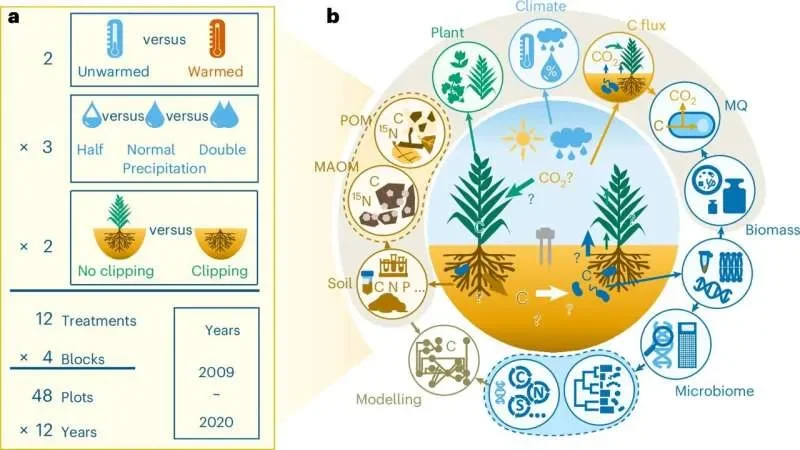
The state of soil moisture appears to be a primary determinant of carbon's fate. In wetter conditions, soil microbes tend to sequester more carbon, keeping it bound within the ground. Conversely, when soils become parched and hot, these microscopic life forms face stressful environments. This stress compels them to metabolize more carbon simply to survive, a process that releases a significant portion of it into the atmosphere as carbon dioxide. Should even a fraction of this stored carbon escape, it could dramatically accelerate global warming.
Read More: UK Sees Earliest Spring Ever With Bluebells Blooming in March 2024
Investigations have employed specialized 'soil chambers' to meticulously measure total soil carbon, the mass of developing plant life, and the gas emissions released from the soil. These measurements provide crucial data points in understanding the intricate feedback loops between soil conditions, microbial activity, and atmospheric carbon.
Recent findings suggest that prolonged warming trends may be altering microbial behavior in unexpected ways. Some research indicates that during warmer periods, certain soil microbes are releasing less carbon dioxide because they are, in essence, starving. This appears linked to long-term warming negatively impacting the health of deciduous trees, the very source of dead leaves upon which these microbes depend for sustenance. Such shifts have significant implications for climate models, requiring a more nuanced understanding of how soil carbon cycles operate under changing environmental pressures.
Read More: Artemis II astronauts share first Earth photos from moon journey
Beyond carbon, soil microbes also participate in the regulation of other gases pertinent to the planet's climate. Human activities such as deforestation, soil compaction, pollution, and the ongoing climate change itself are identified as major disruptors of these vital microbial communities, potentially destabilizing this crucial natural regulatory system.
The complex interplay between microbial communities and the physical properties of soil is a frontier of ongoing research. Factors such as soil aggregation – the clumping of soil particles – influence microbial biomass and biological processes. The availability of oxygen within the soil also dictates which microbes are dominant in processing organic carbon, particularly in environments like paddy fields. Even the decomposition of fungal remains and the presence of viruses within the soil are recognized as drivers of biogeochemical turnover and ecosystem functions.
The capacity of soil microbes to shape ecosystems and influence climate has been recognized for some time. While they are key players in maintaining a balance within the global carbon budget, the threat of rising global temperatures accelerating their respiration and thus increasing CO₂ emissions from the soil remains a significant concern. The diverse functionalities of microbial communities mean that not all soil ecosystems respond uniformly to environmental changes, adding another layer of complexity to predictions and potential mitigation strategies.
Read More: India Plastic Rules Give Companies More Time to Recycle Amid Safety Rules
BACKGROUND
The soil beneath our feet represents a vast, often underestimated, reservoir of carbon, holding an amount considerably larger than that present in the atmosphere. This subterranean ecosystem is teeming with microbial life – bacteria, fungi, archaea, and protists – which form the bedrock of many crucial ecological processes. These organisms are not merely passive inhabitants; they actively engage in the decomposition of organic matter, the cycling of nutrients, and the very structure of the soil itself.
Historically, research has focused on the more visible aspects of the environment, but a growing body of work is now illuminating the profound, yet often invisible, influence of soil microbes on Earth's systems. Their activity directly impacts soil fertility, plant growth, and water retention, creating cascading effects throughout terrestrial ecosystems.
The dynamic relationship between these microorganisms and their environment is characterized by a delicate balance. Factors such as temperature, moisture, oxygen availability, and the composition of organic matter all shape the types of microbes present and their metabolic activities. This intricate web of interactions is susceptible to disruption, and understanding these vulnerabilities is becoming increasingly critical as the planet navigates a changing climate.
Read More: Why is the Moon's far side colder and different from the near side?