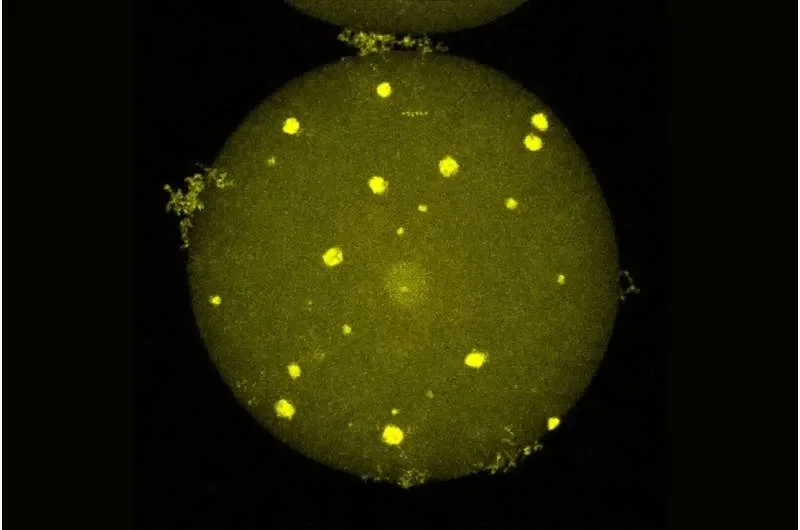
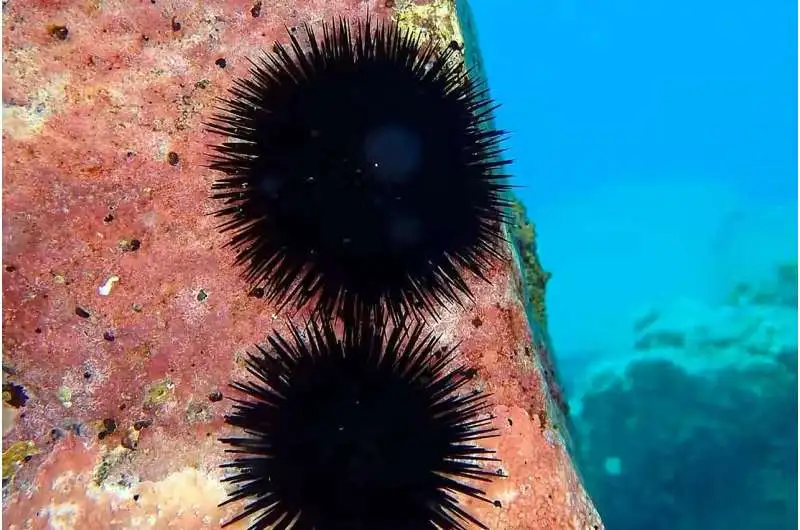
Researchers have uncovered that the eggs of the sea urchin Arbacia lixula contain plastid-derived structures, specifically chromoplast-derived carotenoid crystals and associated metabolites. These inclusions appear to confer a significant advantage to developing larvae, enhancing their growth, development, and overall survival. The findings challenge the long-held notion that marine invertebrate development from fertilization through juvenile stages is largely a precarious venture prone to starvation due to limited initial energy provisioning.
Functional experiments indicated a light-dependent role for these incorporated components. By comparing larval development in illuminated and darkened conditions, scientists observed that the presence of these plastid-derived structures influenced phytohormone and lipid metabolism. This light-dependent activity is posited to contribute to increased morphological plasticity and resilience in the offspring. The research suggests a previously unknown strategy employed by sea urchins to bolster the fitness of their progeny.
Read More: Indigenous Data Rights Now Key in Conservation Genomics
The mechanism involves the incorporation of these chromoplast-derived materials into the sea urchin eggs. While the exact pathway of transmission is still under examination, the outcome is clear: the developing larvae benefit from this maternal provisioning. This finding opens new avenues for understanding the intricate strategies employed by marine organisms for successful reproduction and dispersal, moving beyond simple nutritional reserves.