Deep-Sea Find Yields Clues to Enigmatic Creature
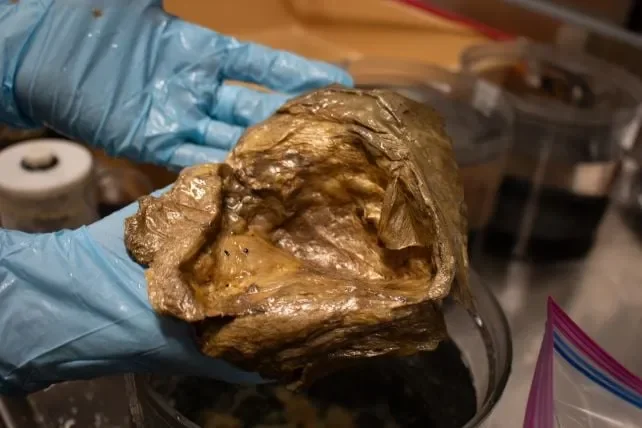
The baffling "golden orb" discovered submerged off Alaska's coast, a puzzle for scientists since its 2023 retrieval, has been definitively identified. It represents the shed cuticle—a protective outer layer—of a Relicanthus daphneae, a species of giant deep-sea anemone. This revelation, achieved through detailed cellular and genetic analysis, brings a curious chapter of marine exploration to a close, though the precise nature of the anemone itself remains largely unseen and subject to ongoing inquiry.
The sample, cataloged as USNMIZ1699903, was initially collected during a NOAA Ship Okeanos Explorer expedition using a remotely operated vehicle named Deep Discoverer. The shimmering, orb-shaped mass, found adhered to a rock at a depth of over 3,250 meters (more than two miles), confounded researchers due to its lack of readily apparent animalistic features. Initial theories ranged from egg cases to unknown organisms.
Read More: New 'Recombitron' Tool Edits DNA in 15 Bacterial Species
Further investigation at the Smithsonian Institution’s National Museum of Natural History involved meticulous study of the orb's physical structure. Key to the identification were specialized cells known as spirocysts, a hallmark of aquatic invertebrates called cnidarians, which are utilized for capturing prey. Whole-genome sequencing provided critical supporting evidence, revealing a significant amount of genetic material consistent with deep-sea anemones.
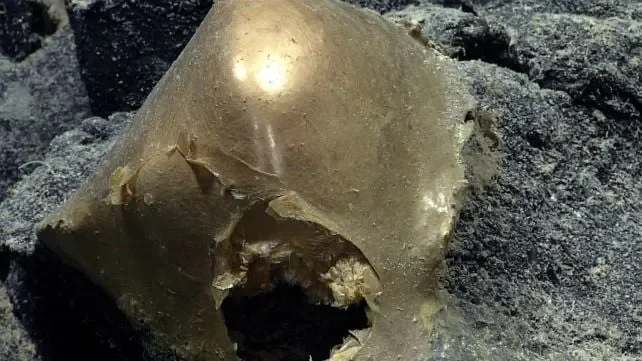
The Missing Creature and Lingering Questions
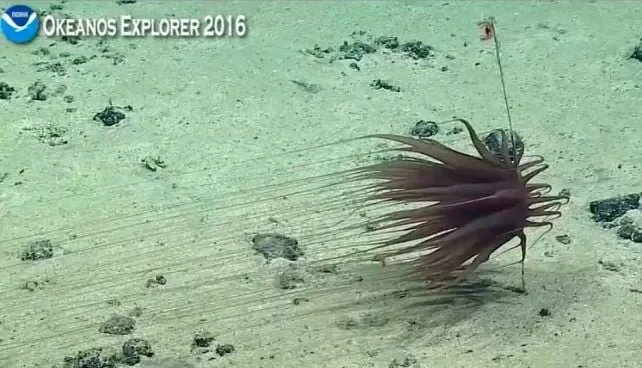
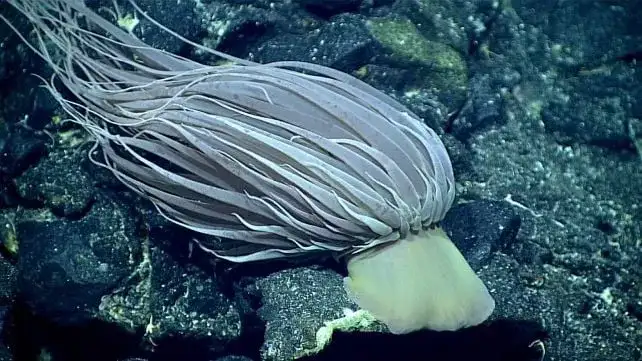
While the orb’s identity as a Relicanthus daphneae cuticle has been established, the creature itself remains elusive. This particular species of anemone is characterized by a cylindrical, pink body that can extend up to three feet in diameter, and tentacles that may reach lengths exceeding two meters.
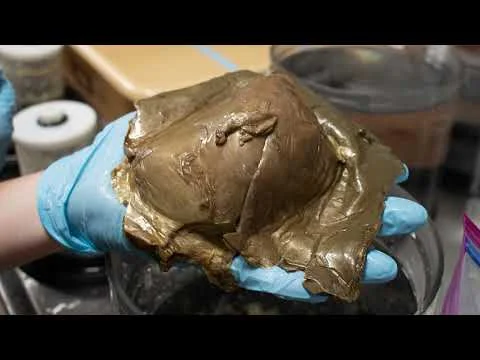
"Scientists aboard the NOAA ship Okeanos Explorer came across the mass while observing a live feed as they controlled the remotely operated vehicle Deep Discoverer. Tightly adhered to a rock was an orb-shaped mass of golden material that shimmered in the bright lights of the ROV Deep Discoverer, appearing to be something no one had ever seen before."
The anemone's ability to shed its cuticle might explain why the orb was found detached. This biological mechanism allows the creature to shed this outer layer, potentially as it grows or moves. However, the expedition primarily documented the orb, leaving the full scope and behavior of the adult Relicanthus daphneae in this specific deep-sea environment as a subject for future investigation. The specimen is now publicly accessible within the Smithsonian's Invertebrate Zoology Collection.
Read More: UK Debate: Ban Artificial Grass Due to Environmental Worries