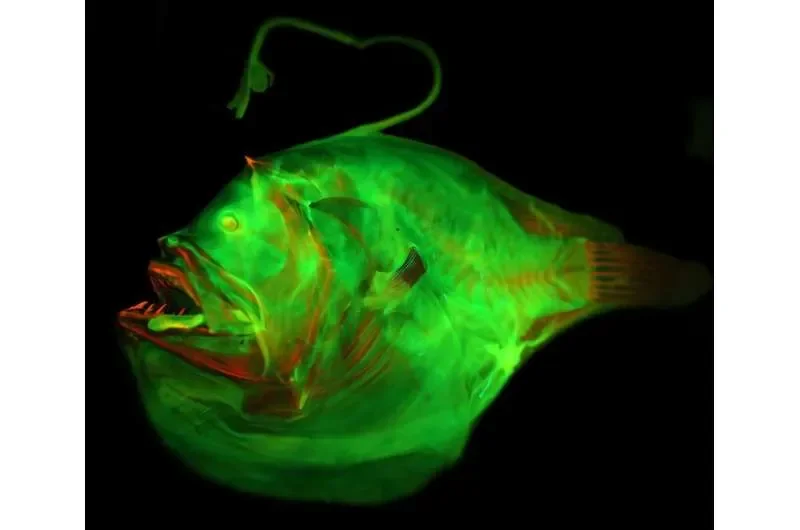
Recent revelations illuminate the complex adaptive strategies of female anglerfish, revealing their famed bioluminescent and chemical lures serve a dual purpose: ensnaring meals and attracting partners. This dual functionality is not a recent development but appears deeply rooted in their evolutionary past, with evidence suggesting these specialized appendages emerged as far back as 72 million years ago.
The critical insight is that the anglerfish's lure, a hallmark of its adaptation to the perpetual darkness of the deep sea, has evolved to simultaneously address two fundamental biological imperatives: sustenance and procreation. This dual utility underscores a remarkable efficiency in evolutionary design, maximizing the return on such a significant biological investment.
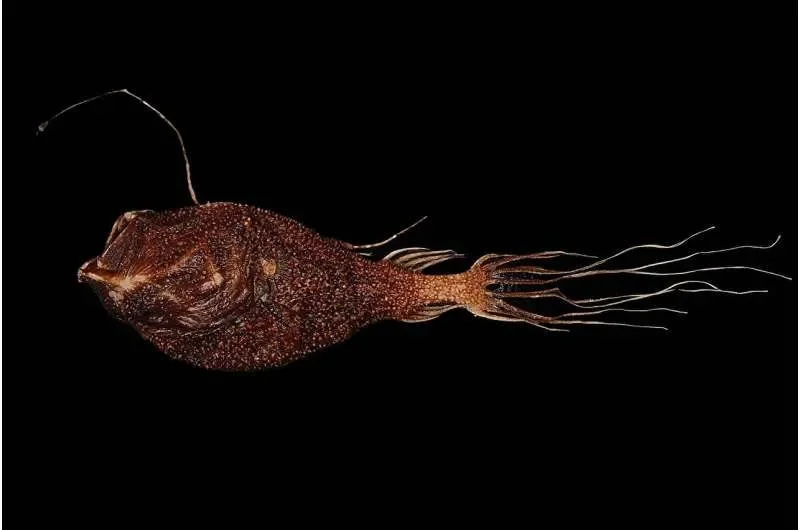
Research, examining over 100 species and incorporating physical and genetic data, points to the diverse manifestations of these lures – from steady glows to pulsating lights, and even chemical secretions. Such variations suggest that different anglerfish lineages have honed distinct signalling methods, tailoring their approach to attract prey and potential mates within their specific ecological niches.
Read More: Indigenous Data Rights Now Key in Conservation Genomics
A Deeper Look at the Anglerfish Arsenal
The anglerfish's evolutionary journey is a testament to nature's capacity for radical adaptation under extreme environmental pressures. Their distinctive lures, often described as bizarre or alien, are an extension of their dorsal fin, a specialized fishing rod dangling in the abyss.
Light Shows and Chemical Whispers: Some species employ bioluminescence, emitting light in varying patterns – steady, pulsating, or flashing – to draw in unsuspecting prey. Others have evolved lures that release specific chemical compounds, acting as olfactory lures in the lightless depths.
A Matter of Timing and Intensity: The intensity and color of these luminous displays appear to be species-specific, hinting at a sophisticated communication system designed to avoid inter-species confusion and optimize the chances of finding a suitable mate or a meal.
Beyond the Bite: While the primary function of attracting prey is evident, the secondary role of mate attraction is gaining significant attention. This dual purpose allows females to address their reproductive needs without necessarily expending the energy required for separate mating behaviours or relying solely on chance encounters.
Origins in the Abyssal Past
The development of these lures predates many extant anglerfish species, solidifying their importance in the group's long evolutionary trajectory. The study of these deep-sea dwellers, notoriously difficult to observe in their natural habitat, continues to unveil layers of complexity in their survival strategies.
Ancient Adaptations: The origins of the anglerfish lure trace back to significant evolutionary pressures, demonstrating the power of adaptation in overcoming severe environmental challenges.
Dietary Diversity: While known for their predatory prowess, some anglerfish also feed on invertebrates like clams, mussels, and worms found in sandy substrates, showcasing a broader dietary range than previously assumed for some species.
Evolutionary Reconstruction: Researchers from the University of Kansas, analyzing extensive data, are piecing together the intricate evolutionary history of these famed appendages, providing unprecedented detail on their development and diversification.