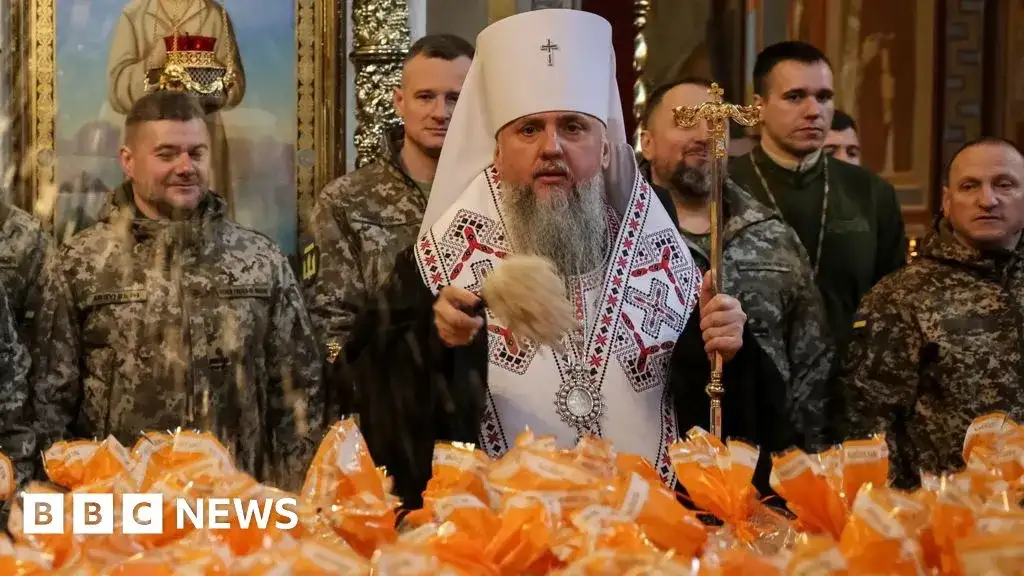
A 32-hour ceasefire, announced by Russian President Vladimir Putin, is set to commence on Saturday afternoon, coinciding with Orthodox Easter, and extend through midnight on Sunday. The Kremlin has framed this as a temporary humanitarian measure, while Ukrainian officials have urged a continuation of the truce beyond the holiday and a resumption of talks to end the protracted conflict. However, a palpable skepticism pervades Kyiv, with residents recalling previous truces that were swiftly broken, and analysts noting the current stalemate in US-backed peace negotiations.
Ukrainian Foreign Minister Andrii Sybiha voiced his nation's desire for an extended pause in hostilities, drawing a parallel to a recent two-week ceasefire involving the United States, Israel, and Iran. This comes as Ukrainian President Volodymyr Zelenskyy had previously indicated Kyiv's openness to a potential Easter truce, specifically calling for a halt to attacks on energy infrastructure during the holiday period.
Read More: Beirut Heavily Bombed Wednesday Killing 254 People After Ceasefire
The Kremlin's envoy, Kirill Dmitriev, has reportedly traveled to the United States for discussions, though these are understood to be focused on economic matters and will not involve Ukrainian negotiators. This development occurs against the backdrop of the US administration issuing limited waivers for the sale of Russian oil, a move aimed at influencing global oil prices and indirectly impacting Moscow's war funding.
A History of Broken Pledges
This latest ceasefire announcement echoes similar moves from the past, including a 30-hour ceasefire declared by Putin last Easter. On that occasion, both sides ultimately accused the other of violating the terms. The current announcement comes amid what is described as an increasingly volatile phase of the Russia-Ukraine War, marked by intensified operations across various regions.
Geopolitical Currents
The fragile pause in fighting unfolds amidst a broader landscape of escalating global tensions. The peace talks between Ukraine and Russia have been languid since the United States and Israel initiated actions against Iran. Kyiv's willingness to observe the ceasefire is described as a complex strategic calculation, particularly given its recent increase in drone attacks targeting Russian energy exports. Moscow, meanwhile, insists on agreeing to a peace deal before any prolonged cessation of hostilities, leading to accusations from Kyiv that Russia is not genuinely committed to ending the fighting.
Read More: Polish F-16s Intercept Russian Spy Plane Over Baltic Sea Thursday



/2026/04/08/879186760p.jpg)