

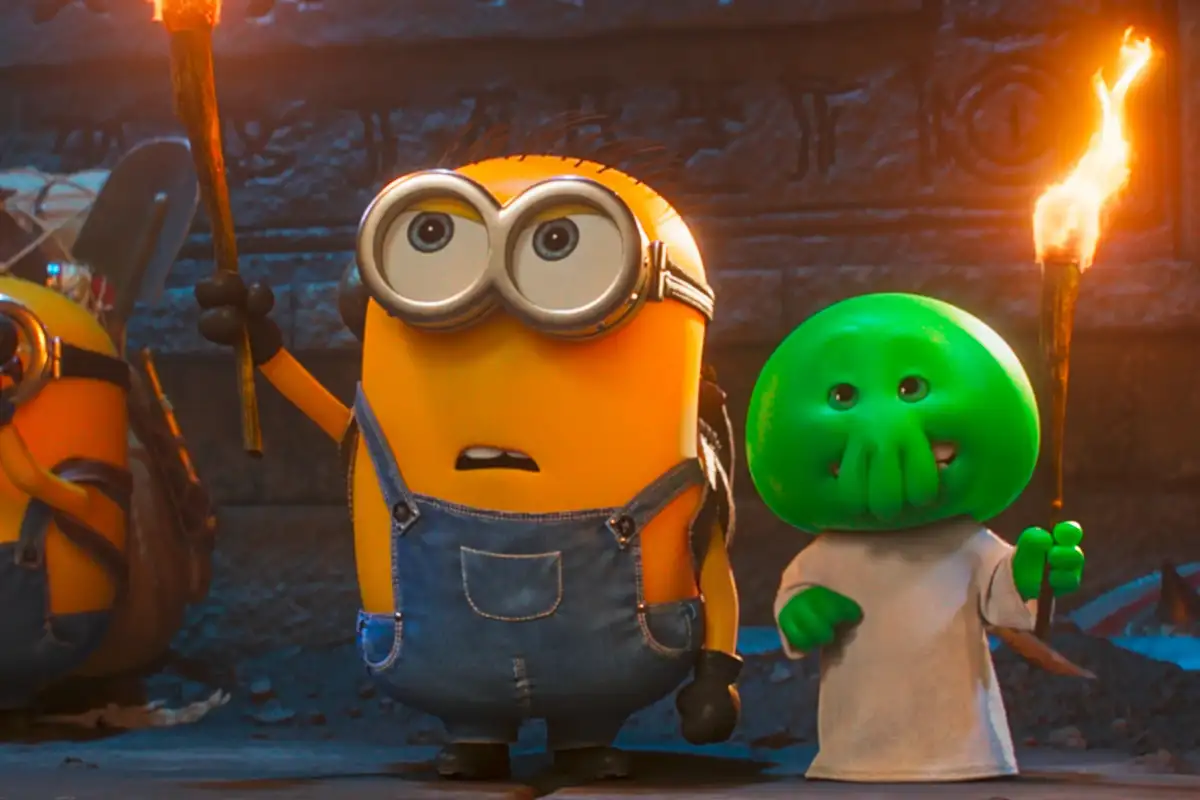
In its seventh iteration, the Minions franchise attempts a pivot toward structural self-awareness. Directed by Pierre Coffin, the film tracks two protagonists, James and Henry, as they navigate the transition from silent films to talkies within 1920s Hollywood. While early reviews acknowledge a sharp, nostalgic energy in the film’s first half, critics observe that the narrative momentum dissolves as it reverts to the franchise’s standard reliance on chaotic, non-sequitur set pieces.
Core Critical Observations
Genre Homage: The film leans into historical tropes, drawing visual inspiration from Buster Keaton, Charlie Chaplin, and the aesthetics of the Gilded Age to ground its slapstick in early film history.
The Narrative Shift: The central conceit—the Minions as silent comedy stars whose unintelligible language renders them obsolete once "talkies" arrive—is cited as a high-water mark for the series' writing.
Structural Decay: The second and third acts are widely described as cluttered, introducing extraneous characters such as a robot (Jesse Eisenberg) and an alien being (Trey Parker) that move the film away from its focused, cinephilic premise.
Commercial Paradox: Despite critical fatigue regarding the series' ubiquity, observers note that Minions & Monsters succeeds in being a "love letter" to the communal theatrical experience, serving as an atypical experiment for a blockbuster mascot-driven property.
| Metric | Perspective |
|---|---|
| Stylistic Merit | Praised for aesthetic playfulness and historical nods to Sunset Boulevard and Singin' in the Rain. |
| Plot Cohesion | High in the first act; deteriorates into traditional franchise chaos in later stages. |
| Target Audience | Effective for children; arguably sophisticated enough to hold interest for adults via cinematic references. |
The Mechanics of the "Banana-bylon"
The film serves as an interrogation of the studio system itself, positioning its leads as "creative misfits" within a sea of yellow drones. This attempt to establish a Minion counterculture allows the director to bypass the usual "servant-to-a-villain" arc that defined earlier entries. However, the eventual inclusion of an ancient spell book and a massive, screen-filling blob indicates a forced return to the established "Despicable Me" formula.
Read More: Taylor Swift and Travis Kelce Marry at Madison Square Garden
While the film attempts to distance itself from the perception that the franchise represents a "loss of attention span," it struggles to maintain its own identity. By the final act, the tribute to Hollywood history is subsumed by the very modern, loud animation conventions it originally sought to critique. Whether this represents a genuine evolution or merely a veneer of "smart" irony remains a point of contention for reviewers.

:max_bytes(150000):strip_icc()/MORTAL-KOMBAT-II-LEWIS-TAN-050826-f54556c368f34929b0ed2ea7f658c792.jpg)


:max_bytes(150000):strip_icc():focal(799x0:801x2)/nyc-sky-taylor-swift-travis-kelce-wedding-070326-2dc0d912004b400eac2c8c8b5adeff2a.jpg)
