

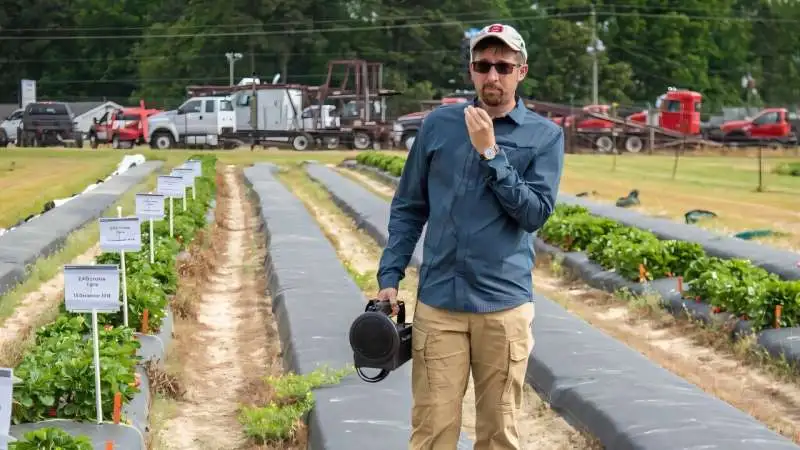
Researchers at North Carolina State University have identified the rapid escalation of Neopestalotiopsis (Neo-P), a fungal pathogen previously categorized as opportunistic, as a primary hazard to commercial strawberry agriculture. Austin Wrenn, a grower based in Zebulon, was among the first to document significant crop failure linked to this organism, which causes rapid rot and foliage collapse.
| Factor | Status |
|---|---|
| Pathogen Name | Neopestalotiopsis (Neo-P) |
| Primary Region | North Carolina (USA) |
| Core Impact | Greenhouse/Field crop mortality |
| Research Status | Active investigation |
Current efforts focus on:
Establishing protocols for containment within greenhouses.
Investigating the specific environmental triggers that shifted Neo-P from a latent presence to an aggressive threat.
Developing integrated management strategies to reduce dependency on broad-spectrum fungicides.
"While acknowledging the severity of the pathogen, he advocates for a calm, research-based approach to Neo-P."
Background: The Mutation of an Opportunity
The fungus Neopestalotiopsis was historically viewed as a benign occupant of the agricultural environment, rarely impacting host yields under standard conditions. Observations starting several years ago indicate a behavioral shift; the pathogen now displays high-velocity spread and resistance to conventional maintenance cycles. This Pathogen Shift forces a re-evaluation of current soil and air-handling protocols in controlled-environment agriculture. Because Neo-P exploits minor vulnerabilities, industry observers suggest that standard sanitation benchmarks are no longer sufficient to secure harvest outcomes. Research teams at NC State are now treating the situation as a long-term adjustment to the state's biological landscape rather than a transient pest issue.
Read More: New Wheat Makes Bigger Starch for Food and Industry


:max_bytes(150000):strip_icc():focal(999x0:1001x2)/kyle-busch-1a5340ca5f7d4a45806b78b9bb6669b8.jpg)