Recent scientific findings suggest that known geological and non-biological processes alone may not fully account for the quantities of organic compounds discovered on Mars. A study published in the journal Astrobiology indicates that the abundance of these molecules in Martian rock samples exceeds what common non-biological sources can produce. This leads researchers to propose that living organisms could potentially be responsible for their formation, a hypothesis that requires further investigation. The stakes are high, as understanding the origin of these organic materials is a crucial step in the ongoing search for evidence of past or present life beyond Earth.
Discovery of Martian Organic Molecules
NASA's Curiosity and Perseverance rovers have made significant discoveries regarding organic molecules on Mars.
Curiosity Rover: This rover has detected complex organic macromolecules in ancient lakebed samples from Gale Crater, described as similar to fossilized building blocks of oil and gas found on Earth. It has also identified the largest organic compounds found on Mars to date, including decane, undecane, and dodecane. These findings build upon previous discoveries of smaller, simpler organic molecules, suggesting a progression towards the complexity needed for life's origin.
Perseverance Rover: This rover has found a diverse array of organic molecules in rocks within Jezero Crater. Using the SHERLOC instrument, which allows for fine-scale mapping and analysis of organic molecules, Perseverance has provided evidence of organic compounds in multiple locations.
The consistent detection of diverse organic molecules by both rovers across different Martian locations underscores the widespread presence of these compounds.
Read More: New StructureMASST tool helps find molecules in samples
Questioning Geological Explanations
A recent analysis published in Astrobiology has directly questioned whether geological processes are sufficient to explain the observed levels of organic compounds.
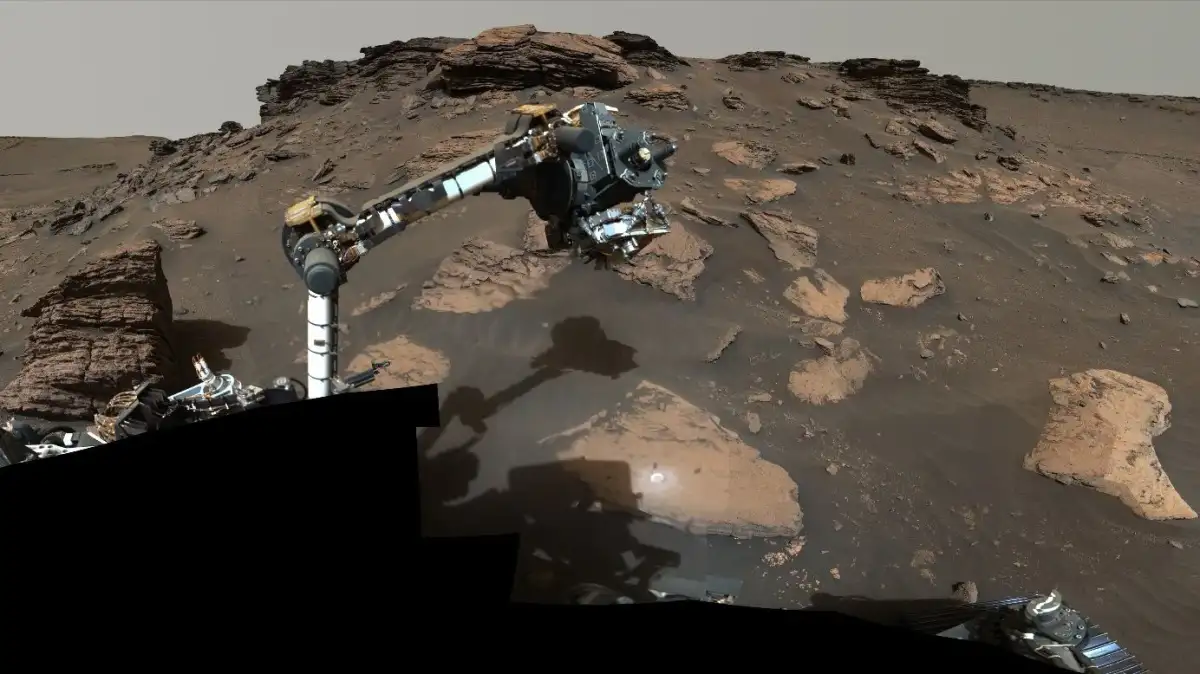
The Study's Findings: Researchers evaluated whether known geological and external sources could produce the discovered organic compounds in the amounts found. The study specifically focused on compounds from a drilled rock sample in Gale Crater.
Radiation's Role: The team utilized the concept of radiation-driven organic molecule destruction to assess past organic material. Their analysis concluded that more organic material likely existed in the past than common non-biological processes could generate.
Incomplete Explanation: The core assertion of the study is that the assessed non-biological methods could not completely explain the quantities of organic compounds discovered. This raises the question: if geology alone doesn't fully explain it, what else could?
This study's conclusion that non-biological processes are insufficient to explain the abundance of Martian organics is a pivotal development, opening the door to considering alternative origins.
The Biological Hypothesis and Its Caveats
The discrepancy between detected organic quantities and their expected non-biological production leads to the hypothesis of biological origins. However, scientists are careful to note the complexities and limitations.
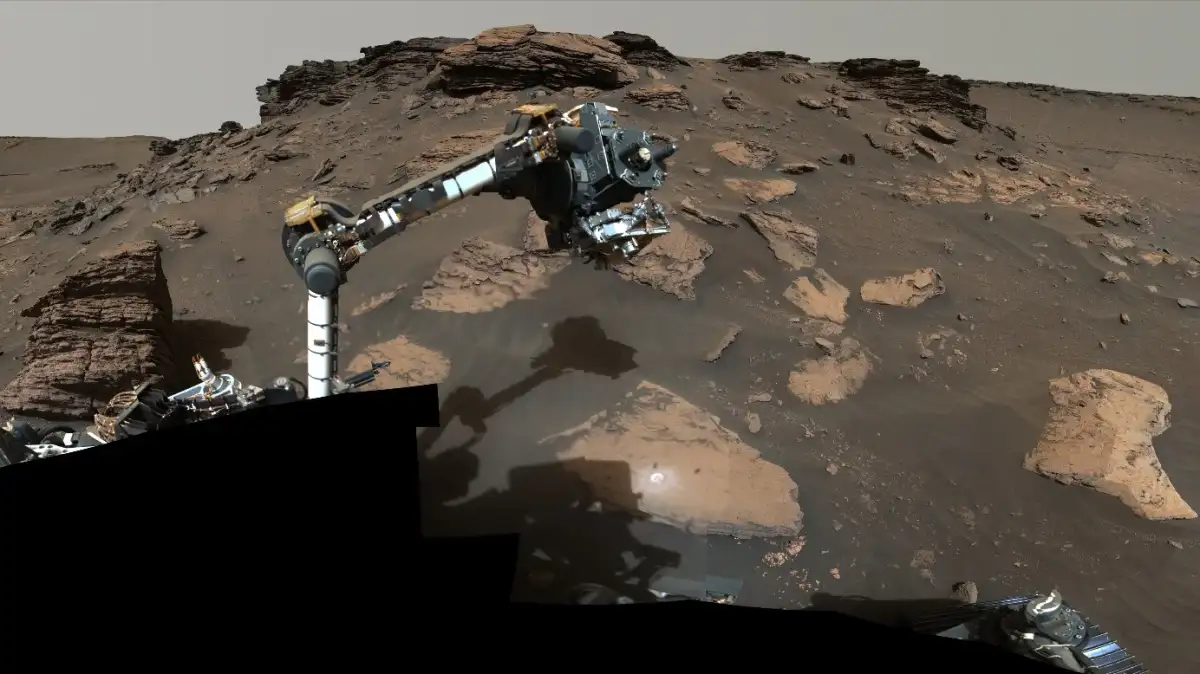
Hypothesizing Life's Role: The study in Astrobiology posits that because the considered non-biological sources could not fully explain the abundance of organic compounds, it is reasonable to hypothesize that living things may have formed them.
Fatty Acids as Markers: Fatty acids, for instance, are biological markers on Earth as they are produced by living organisms. However, they can also be created through chemical processes unrelated to life.
Fragility of Organics: Most organic compounds, especially biomolecules, are known to be extremely fragile and can decay rapidly, even in relatively benign conditions. The persistence of Martian organic compounds over billions of years is, therefore, a notable observation that warrants further study.
Need for More Research: Researchers emphasize that more study is needed to understand how quickly organic molecules degrade in Mars-like conditions. Until this is better understood, definitive conclusions about the presence or absence of life cannot be made.
While the hypothesis of biological origins is being considered due to the quantity of organics, the fragility of these molecules and the existence of non-biological formation pathways necessitate caution and further research.
Water's Role in Organic Preservation
Evidence suggests that water played a significant role in the presence and preservation of diverse organic matter on Mars.

Aqueous Processes: Study findings have detected signals consistent with molecules linked to aqueous processes. This indicates that water may have been instrumental in the variety of organic matter found.
Preservation Potential: Minerals present on Mars have the potential to preserve organic materials and possible signs of ancient life.
Past Habitability: The detection of these organic building blocks, potentially preserved for extended periods due to water's influence, bolsters the case for Mars's past habitability.
The association of organic matter with aqueous processes and minerals highlights water's crucial role in not only potentially supporting life but also in preserving the chemical evidence of its past.
Read More: Lab Recreates Dying Stars, Shows Hydrogen Makes Life's Building Blocks
Expert Insights and Future Directions
The ongoing discoveries are prompting deeper analysis and guiding future exploration efforts.
Signaling Progress: While the detected organic molecules are not definitive proof of life, they are seen as encouraging signs for future missions. They inform scientists' decisions as they work to answer fundamental questions about Mars.
Complexity of Martian History: The discoveries, including diverse organic molecules, add further evidence that Mars has a more complex past than previously understood.
Future Missions: The precision analysis required to confirm past life may ultimately necessitate samples being returned to laboratories on Earth. These findings also provide a boost for future Mars exploration plans.
The current findings are viewed as significant steps, indicating that Mars's history is more complex than anticipated and providing crucial data to refine strategies for the continued search for life.
Sources:
NASA Study: Non-biologic Processes Don't Fully Explain Mars Organics
Link: https://www.spacedaily.com/reports/NASAStudyNonbiologicProcessesDontFullyExplainMarsOrganics999.html
Context: Reports on a NASA study published in Astrobiology questioning geological explanations for Martian organics.
New analysis questions whether geology alone explains organics on Mars
Link: https://www.primetimer.com/features/new-analysis-questions-whether-geology-alone-explains-organics-on-mars
Context: Discusses a study evaluating geological versus non-biological processes for organic compound formation on Mars.
Study Reveals Evidence of Diverse Organic Material on Mars
Context: Highlights findings of diverse organic material on Mars and the potential role of water, with contributions from UF astrobiologist Amy Williams.
NASA rover hits organic pay dirt on Mars
Link: https://www.science.org/content/article/nasa-rover-hits-organic-pay-dirt-mars
Context: Reports on Curiosity rover's discovery of complex organic macromolecules resembling Earth's fossilized oil and gas building blocks.
Building blocks of Mars life? Perseverance rover digs up diverse set of organic molecules on the Red Planet
Link: https://www.space.com/perseverance-rover-organic-molecules-mars
Context: Details Perseverance rover's discovery of a diverse collection of organic molecules in Jezero Crater.
Organic molecules in Martian crater help to reconstruct planet’s history | Natural History Museum
Link: https://www.nhm.ac.uk/discover/news/2023/august/organic-molecules-martian-crater-help-reconstruct-planets-history.html
Context: Discusses Perseverance rover's potential discovery of organic molecules in Jezero Crater and their contribution to understanding Mars's past.
NASA’s Curiosity Rover Detects Largest Organic Molecules Found on Mars
Link: https://www.jpl.nasa.gov/news/nasas-curiosity-rover-detects-largest-organic-molecules-found-on-mars/
Context: Announces Curiosity rover's detection of the largest organic compounds found on Mars to date.
NASA Finds Ancient Organic Material, Mysterious Methane on Mars - NASA
Link: https://www.nasa.gov/news-release/nasa-finds-ancient-organic-material-mysterious-methane-on-mars/
Context: Reports on Curiosity rover findings of ancient organic material and atmospheric methane, suggesting potential for past life.
NASA's Perseverance rover discovers organic matter on Mars
Link: https://www.newsweek.com/nasa-perseverance-rover-discovers-organic-compounds-mars-exciting-1812504
Context: Covers Perseverance rover's first-time detection of organic compounds in a Martian crater.
Fresh evidence of organic molecules found on Mars by NASA’s rover
Link: https://www.thehindu.com/sci-tech/science/fresh-evidence-of-organic-molecules-found-on-mars-by-nasas-rover/article67079261.ece
Context: Details findings from the SHERLOC instrument on NASA's rover regarding organic molecules in Jezero Crater.
Mars’s Tough Organic Molecules and Mysterious Methane — Caltech Magazine
Link: https://magazine.caltech.edu/post/marss-tough-organic-molecules-and-mysterious-methane
Context: Discusses Curiosity rover findings related to ancient life and methane, noting previous discoveries of organic molecules.
Organic molecules of unprecedented size discovered on Mars
Link: https://www.cnrs.fr/en/press/organic-molecules-unprecedented-size-discovered-mars
Context: Reports on the discovery of Martian organic molecules described as being of unprecedented size.
NASA just found these organic molecules on Mars for the first time
Link: https://www.inverse.com/science/organic-molecules-found-on-mars-for-the-first-time
Context: Explains the significance of Curiosity rover finding organic molecules previously unseen on Mars.
Biosignatures? Why organics on Mars don't necessarily signal life
Link: https://bigthink.com/hard-science/biosignatures-why-organic-compounds-on-mars-may-not-signal-life/
Context: Explores the challenges in interpreting Martian organic compounds as biosignatures due to their fragility and non-biological formation possibilities.