Sixty years after achieving a historic first soft landing on the Moon, the Soviet Union's Luna 9 spacecraft may have finally been located. The probe, which transmitted the first images from the lunar surface, vanished shortly after its successful touchdown in 1966. For decades, its precise resting place remained a mystery, a puzzling omission given the mission's significance. Now, recent efforts employing advanced technology and widespread data analysis suggest a potential breakthrough in solving this enduring enigma of space exploration.

Background: A Pioneering Mission and a Lingering Question
The Luna 9 mission marked a pivotal moment in the early space race. Launched by the Soviet Union, it successfully achieved the first controlled, soft landing on any celestial body.
Objective: To demonstrate the capability of a soft landing on the Moon and transmit photographic data from the surface.
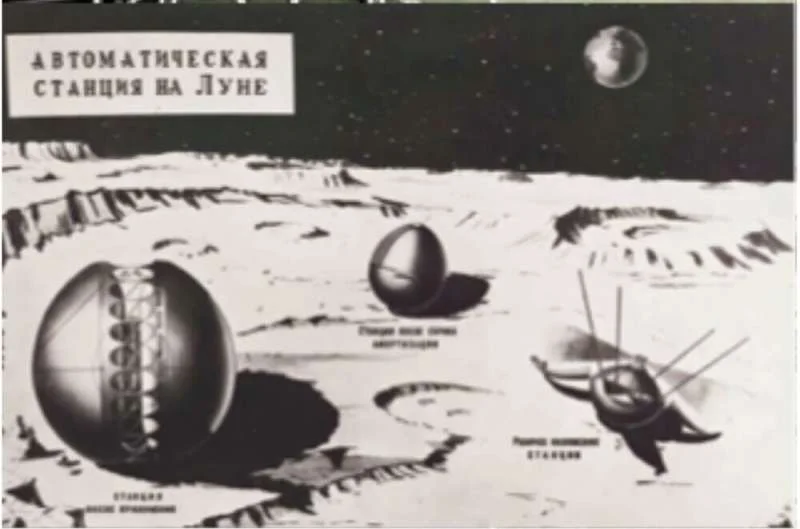
Landing: The probe touched down on the Oceanus Procellarum region of the Moon. It employed a unique spherical landing capsule with inflatable shock absorbers and a braking engine, which after landing, bounced a few times before stabilizing.
Key Achievement: Luna 9 sent back the first panoramic images taken from the lunar surface, offering humanity its first direct glimpse of another world.
Duration: The spacecraft remained operational for three days before its batteries were depleted.
Discrepancy: Despite its success and the subsequent publication of its estimated landing coordinates in the Soviet newspaper Pravda, the exact location of Luna 9 became difficult to ascertain with precision.
Search Efforts and Emerging Evidence
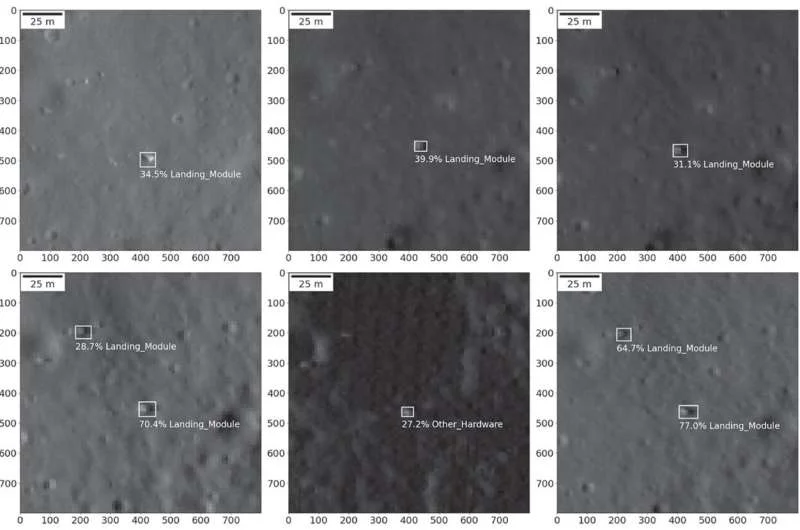
The challenge of locating Luna 9 stems from the limited tracking accuracy of the era and the small size of the spacecraft, which occupies only a few pixels in high-resolution orbital imagery. This difficulty has persisted for nearly six decades, until recent investigations using modern tools.
Read More: Asteroid Ryugu Dust Found With All 5 Life's Genetic Building Blocks
Data Sources: Researchers have extensively utilized data from NASA's Lunar Reconnaissance Orbiter (LRO), which has mapped much of the lunar surface in high detail.
Methodology: Two primary approaches have emerged:
AI-Driven Analysis: Computer vision algorithms, trained on known landing sites such as those from NASA's Apollo missions, have been developed to identify features consistent with spacecraft impacts and installations. One such algorithm is named YOLO-ETA.
Crowdsourced Investigation: Citizen scientists and enthusiasts have actively analyzed LRO imagery, comparing it with Luna 9's original surface photos. Vitaly Egorov, a science communicator, has been a notable figure in this effort, enlisting readers of his space blog to aid the search.
Disputed Locations and Methodological Differences
While multiple research teams and individuals believe they may have found Luna 9, a significant point of divergence exists regarding the precise location.
Dr. Pinault's Team: This group reportedly utilized the YOLO-ETA algorithm and identified potential sites showing disturbances consistent with lander impacts within a specific area near the published Pravda coordinates.
Vitaly Egorov's Effort: Egorov's search, aided by a crowdsourced analysis of LRO data, has focused on a different area, many miles away from the AI-detected location. His team compared terrain features in Luna 9's original panoramic images with orbital imagery.
The discrepancy between these proposed sites underscores the complexity of pinpointing small, historical artifacts on the lunar surface.
The Role of Technology in Lunar Archaeology
The ongoing search for Luna 9 highlights the growing capabilities of technology in uncovering hidden details of space history.
Lunar Reconnaissance Orbiter (LRO): Provides the high-resolution imagery essential for these investigations.
Artificial Intelligence: Algorithms like YOLO-ETA can process vast amounts of data, identifying subtle patterns that human eyes might miss.
Crowdsourcing: Leverages collective human intelligence to sift through extensive image datasets, accelerating the discovery process.
Significance and Future Implications
The confirmed discovery of Luna 9 would not only resolve a long-standing mystery but also:
Validate Soviet Achievements: Formally recognize the Soviet Union's pioneering role in lunar exploration, paving the way for subsequent missions, including NASA's Apollo program.
Enhance Lunar Mapping: Provide valuable data for understanding lunar surface changes and potentially locating other lost spacecraft.
Advance Search Techniques: Further refine the methods used for "open-source lunar archaeology," benefiting future exploration and monitoring efforts.
The continued investigation, possibly involving higher-resolution cameras on other orbiters like India's Chandrayaan-2, may be necessary to definitively confirm any proposed site.
Sources Used:
Gizmodo: Scientists May Have Spotted the Soviet Union Lander That's Been Missing for 60 Years🔗 https://gizmodo.com/scientists-may-have-spotted-the-soviet-union-lander-thats-been-missing-for-60-years-2000720560
Popular Science: Astronomers close in on long-lost Soviet lunar lander🔗 https://www.popsci.com/science/lost-soviet-lunar-lander/
Smithsonian Magazine: Scientists Say They May Have Found a Long-Lost Lunar Lander—the First to Successfully Touch Down on the Moon 60 Years Ago🔗 https://www.smithsonianmag.com/smart-news/scientists-say-they-may-have-found-a-long-lost-lunar-lander-the-first-to-succesfully-touch-down-on-the-moon-60-years-ago-180988182/
Scientific American: Have we solved the mystery of a long-lost Soviet spacecraft, Luna 9?🔗 https://www.scientificamerican.com/article/where-did-luna-9-land-on-the-moon/
Slashdot: Lost Soviet Moon Lander May Have Been Found🔗 https://science.slashdot.org/story/26/02/10/1834214/lost-soviet-moon-lander-may-have-been-found
Phys.org: A long-lost Soviet spacecraft: AI could finally solve the mystery of Luna 9's landing site🔗 https://phys.org/news/2026-02-lost-soviet-spacecraft-ai-mystery.html
ZMEScience: The First Spacecraft to Survive a Moon Landing Vanished in 1966 and AI May Have Finally Found It🔗 https://www.zmescience.com/space/the-first-spacecraft-to-survive-a-moon-landing-vanished-in-1966-and-ai-may-have-finally-found-it/
Caliber.Az: Researchers may have found long-lost Soviet Moon lander🔗 https://caliber.az/en/post/researchers-may-have-found-long-lost-soviet-moon-lander
Webpronews: A Ghost on the Moon: How Amateur Sleuths May Have Finally Located the Soviet Union’s Lost Luna 23 Lander After 50 Years (Note: This article discusses Luna 23, not Luna 9, but is included due to its thematic relevance to lost Soviet probes.)🔗 https://www.webpronews.com/a-ghost-on-the-moon-how-amateur-sleuths-may-have-finally-located-the-soviet-unions-lost-luna-23-lander-after-50-years/
India Today: Lost in space: AI discovers 1st spacecraft that landed on the Moon 60 years ago🔗 https://www.indiatoday.in/amp/science/story/lost-in-space-ai-discovers-luna-9-spacecraft-that-landed-on-the-moon-60-years-ago-2866503-2026-02-11
Universe Magazine: Artificial intelligence will find the landing site of a mysterious Soviet probe🔗 https://universemagazine.com/en/artificial-intelligence-will-find-the-landing-site-of-a-mysterious-soviet-probe/
The Daily Galaxy: AI Could Finally Uncover the Location of the Lost Soviet Spacecraft on the Moon After 60 Years!🔗 https://dailygalaxy.com/2026/02/ai-uncover-lost-soviet-spacecraft-moon/
The Debrief: Scientists Report “High-Confidence Detections of Artificial Objects” on the Moon—Could They Solve a Cold War-era Mystery?🔗 https://thedebrief.org/scientists-report-high-confidence-detections-of-artificial-objects-on-the-moon-could-they-solve-a-cold-war-era-mystery/