An animation has surfaced, illustrating the final moments of a supergiant star's existence as it collapsed directly into a black hole. This event, captured through observation and subsequently animated, provides a rare glimpse into a process that fundamentally alters the cosmic landscape. The direct collapse, bypassing a visible supernova explosion, suggests a more complex path to black hole formation than previously understood, challenging existing astronomical models and offering new avenues for research into stellar evolution.
The Unseen Demise of a Celestial Giant
The universe is a dynamic arena where stars, the building blocks of galaxies, undergo profound transformations. Their life cycles, marked by birth, brilliance, and eventual demise, culminate in diverse end states. For massive stars, this end can be a dramatic supernova or, as recent observations suggest, a more immediate collapse into the enigmatic realm of black holes. The recent animation, based on scientific observation, focuses on one such event – the direct transformation of a supergiant star into a black hole, a phenomenon that appears to be less common but no less significant than the more widely publicized supernova events.
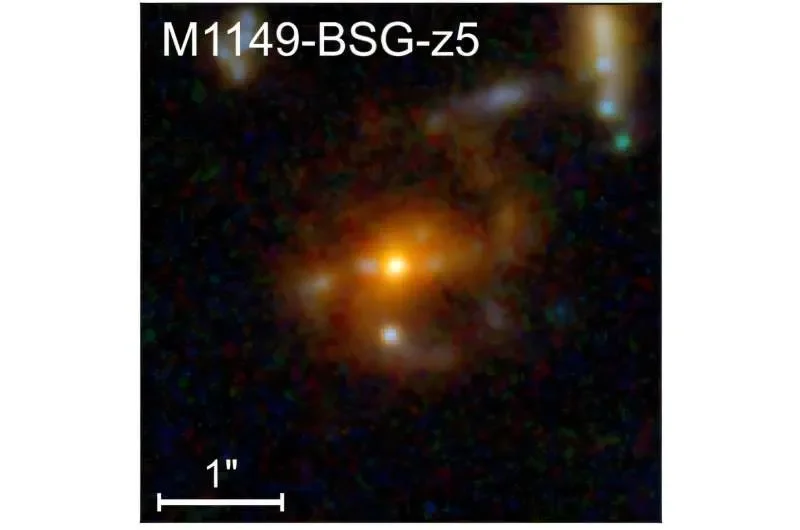
Read More: JWST Finds Oldest Barred Spiral Galaxy M1149-BSG-z5
Actors and Actions
Supergiant Star: A star significantly larger than the Sun, nearing the end of its life.
Gravitational Collapse: The inward falling of stellar matter due to the star's own gravity, triggered when nuclear fusion ceases.
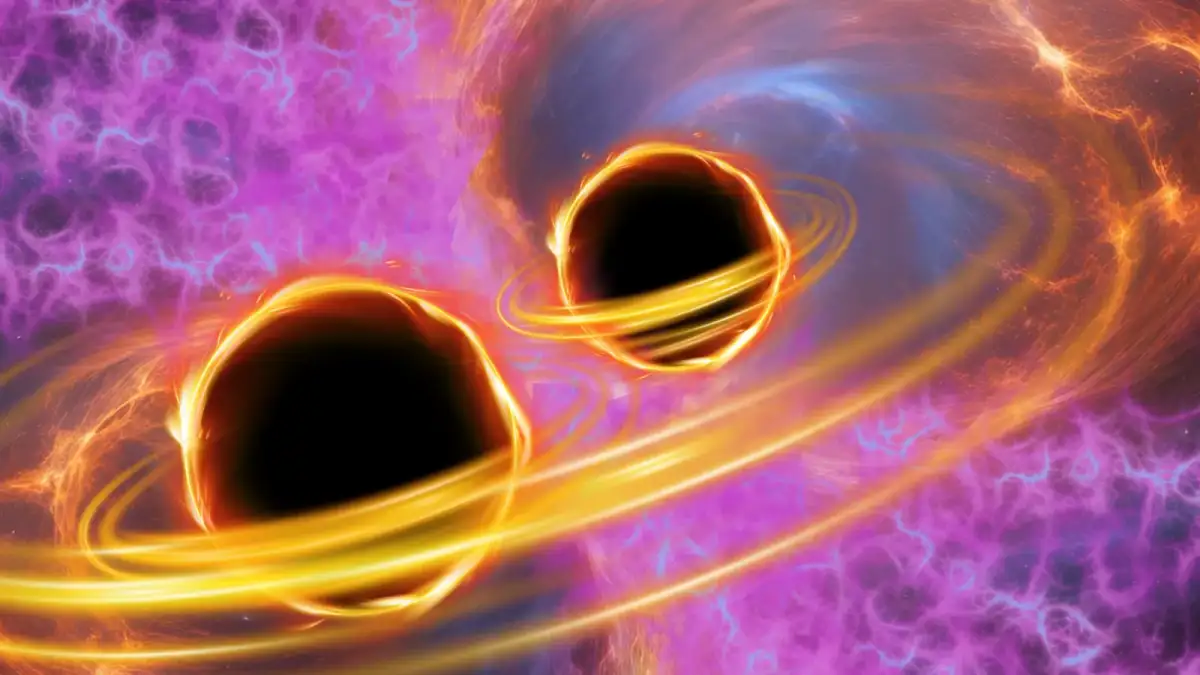
Black Hole: A region in spacetime where gravity is so strong that nothing, not even light, can escape.
Supernova: A powerful and luminous stellar explosion.
Neutron Star: An extremely dense, compact star composed mainly of neutrons, often formed after a supernova.
Charting the Stellar Lifecycle
The path a star takes towards its end is largely dictated by its mass. Low-mass stars, such as our Sun, tend to have a more gradual and less violent end, often becoming white dwarfs. More massive stars, however, face a more dramatic conclusion. When these giants exhaust their nuclear fuel, the outward pressure from fusion can no longer counteract the inward pull of gravity. This imbalance leads to a catastrophic collapse.
The process begins when a star runs out of hydrogen fuel, the primary source for its energy.
For stars like our Sun, this leads to expansion into a red giant and then shedding outer layers to form a white dwarf.
More massive stars face a different fate. The core collapses rapidly.
If the core is massive enough, the collapse can trigger a supernova, blasting the star's outer layers into space. The remnant core may then become a neutron star or, if sufficiently massive, a black hole.
However, some evidence indicates that stars can bypass the supernova stage and collapse directly into a black hole.
The Direct Collapse Hypothesis
The notion that a massive star can collapse directly into a black hole, without a preceding supernova explosion, is a concept that has gained traction in astronomical research. Observations and subsequent animations have brought this phenomenon to the forefront.
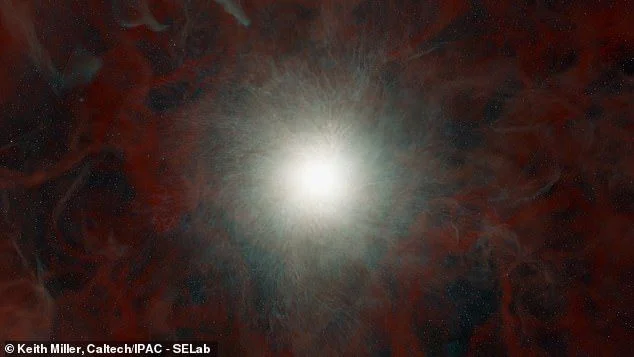
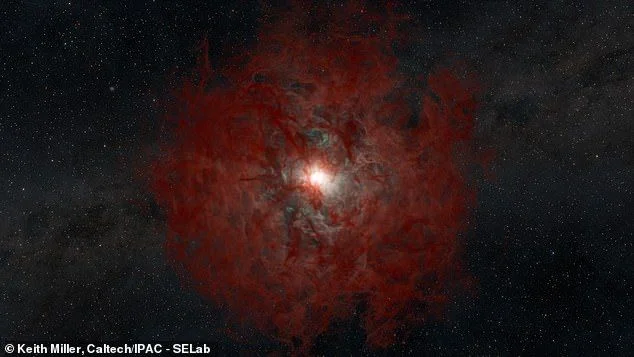
"This star used to be one of the most luminous stars in the Andromeda Galaxy, and now it was nowhere to be seen." - Dr. De, as cited in Article 1.
This statement highlights the sudden and complete disappearance of a once-bright celestial object, a key characteristic of a direct collapse into a black hole. Unlike a supernova, which is a visually spectacular event, a direct collapse means the star's matter is swallowed by gravity, leaving no outward burst of light.
Read More: US Space Force Victus Haze Mission Successfully Tests Orbital Intercepts
Observation: Scientists observed a supergiant star that was once very luminous, but it subsequently vanished from view.
Implication: This disappearance suggests an event where the star's material did not explode outward but rather collapsed inward.
Comparison to Supernovae: This contrasts with supernova events, which are characterized by an immense release of energy and light.
Complex Formation: The path to becoming a black hole appears to be more intricate than initially thought, with direct collapse being a significant factor.
Unraveling the Black Hole's Birth
The formation of black holes is a complex subject, and recent findings suggest that the direct collapse of a star might be a more prevalent mechanism than previously assumed.

Supernova as a Precursor: Historically, the formation of black holes was often linked to the aftermath of supernova explosions. The theory proposed that after a star's outer layers were ejected in a supernova, the remaining core would collapse into either a neutron star or a black hole, depending on its mass.
The Direct Path: However, some astronomers propose that certain massive stars might skip the supernova phase altogether. In this scenario, the star's core collapses so rapidly and completely that it directly forms a black hole. This would mean that no light or significant outward energy release would be observed from the star's final moments.
Evidence and Animation: The recent animation, based on actual astronomical observations, appears to support this direct collapse model. It visualizes a scenario where a supergiant star collapses into a black hole, suggesting that such events are not merely theoretical but have been witnessed.
The Role of Neutron Stars: In some models, if a neutron star formed from a supernova then accretes additional matter, it could become unstable and collapse into a black hole. However, the direct collapse scenario bypasses this intermediate step.
Expert Perspectives
The direct collapse of a star into a black hole is a concept that challenges established astronomical understanding and prompts further investigation.
"It appears the path to becoming a black hole is more complex than astronomers thought." - Attributed to a co-author on a related study (Article 3).
This statement encapsulates the evolving nature of our understanding. What was once considered a relatively straightforward process of stellar death is now understood to have more intricate pathways.

Challenging Preconceptions: The direct collapse model implies that the most dramatic stellar deaths may not always be accompanied by the most visually striking explosions.
Observational Significance: The observation and animation of such an event are crucial for validating theoretical models.
Future Research: This discovery necessitates a re-evaluation of how astronomers search for and interpret the end stages of massive stars. It may also influence our understanding of gravitational wave sources, as direct collapse events could produce different gravitational wave signatures compared to core-collapse supernovae.
Findings and Future Inquiries
The observation and subsequent animation of a supergiant star's direct collapse into a black hole represent a significant advancement in our understanding of stellar evolution and the formation of these enigmatic cosmic objects. The data suggests that stars can transition into black holes without the widely recognized supernova explosion, a process that appears to be more complex than previously modeled.
Read More: Astronomers' discoveries about comets and cosmic background radiation explained
Key Finding: A supergiant star was observed to collapse directly into a black hole, bypassing a supernova event.
Implication: This challenges the singular model of supernova remnants forming black holes and suggests alternative, perhaps more common, pathways.
Analogy: The process can be likened to water swirling down a drain, where material enters the black hole gradually over time, rather than a sudden burst.
Impact: The disappearance of the star, once a highly luminous object, indicates a profound and swift transformation.
Further research is warranted to determine the frequency of direct collapse events compared to supernova-induced black hole formations. Continued observation and advanced computational modeling will be essential to fully map the diverse and often surprising end-of-life scenarios for stars across the universe.
Sources
Daily Mail: https://www.dailymail.co.uk/sciencetech/article-15553131/animation-reveals-moment-star-collapses.html (Published 19 hours ago, focuses on an animation of a supergiant star collapsing into a black hole).
NASA Science: https://science.nasa.gov/mission/hubble/science/science-highlights/the-death-throes-of-stars/ (Published Nov 25, 2025, discusses general stellar death processes and the role of gravity).
Space.com: https://www.space.com/37001-black-hole-born-from-collapsing-star-video-images.html (Published May 26, 2017, covers a giant dying star collapsing straight into a black hole).
Science News Today: https://www.sciencenewstoday.org/how-do-stars-die (Published May 3, 2025, provides an overview of how stars die).