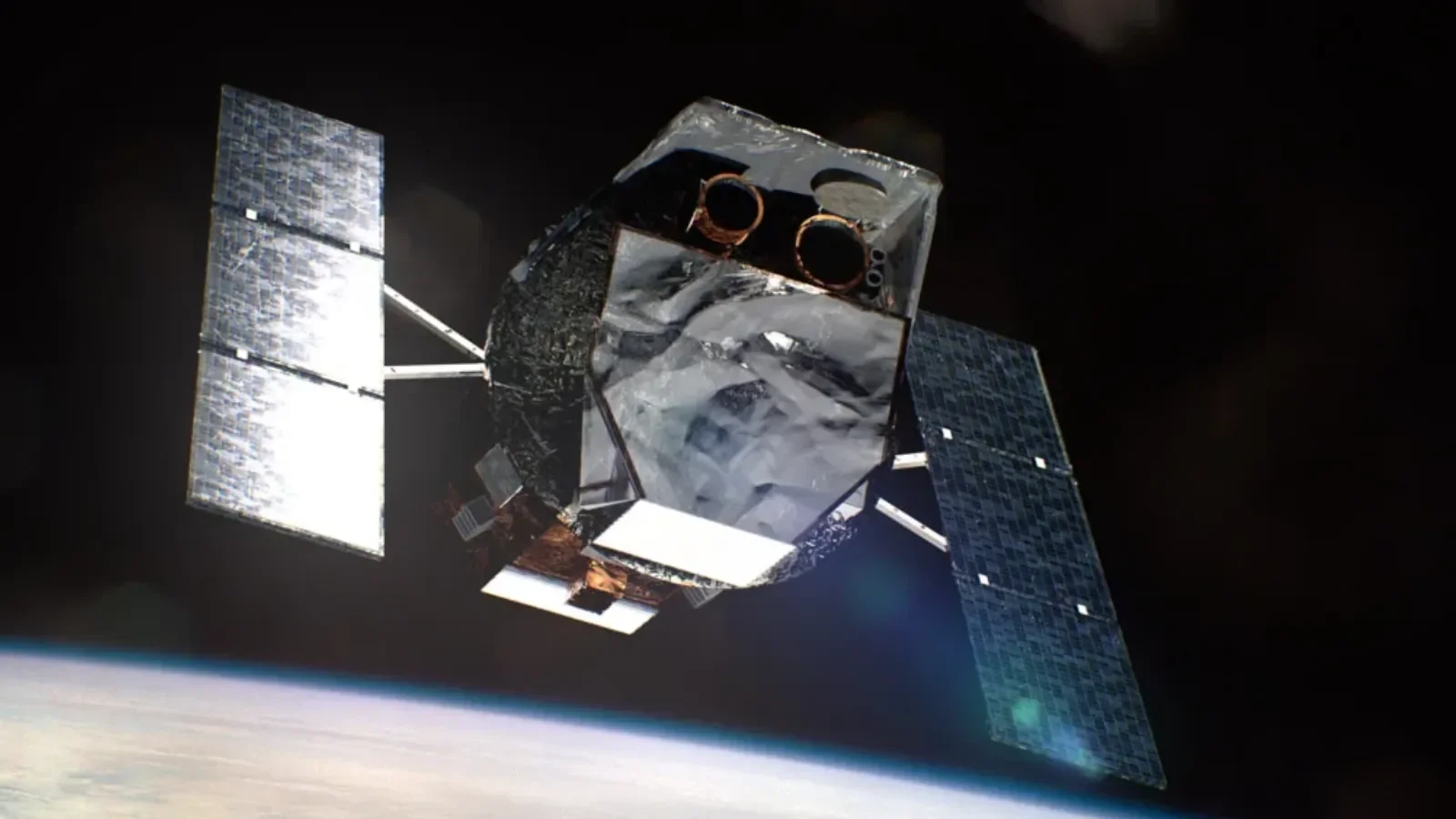
The Neil Gehrels Swift Observatory, a key tool for studying powerful cosmic events like gamma-ray bursts, has temporarily paused most of its scientific work. This measure is being taken to help the 21-year-old spacecraft slow its descent in orbit, a move intended to buy time for an upcoming mission to boost it into a higher, more stable path. This action also serves as a test for a new commercial capability to service satellites in space.

Background of the Swift Observatory
Launched in 2004, the Swift Observatory has been a workhorse in astrophysics, exceeding its initial two-year mission scope. Its primary function is to detect and study gamma-ray bursts (GRBs), the most powerful explosions in the universe. Upon detecting a GRB, Swift quickly relays the location to ground and space-based telescopes, enabling further observation of the event's afterglow. The observatory was designed to operate with its initial orbit of approximately 324 nautical miles (about 521 kilometers).
Read More: Lab Recreates Dying Stars, Shows Hydrogen Makes Life's Building Blocks
The observatory is managed by NASA's Goddard Space Flight Center and involves international collaboration.
Key partners include Penn State University, Los Alamos National Laboratory, and Northrop Grumman Space Systems.
Swift uses gyroscopes to point and maintain its orientation for observations.
Recent Operational Status and Challenges
In March 2024, Swift entered a "safe mode," suspending science operations due to a problem with one of its three gyroscopes. Although the spacecraft could function with only two gyroscopes, a software update was necessary to enable continued science observations.
A software update was successfully implemented, and Swift resumed science operations on April 3, 2024.
However, the underlying issue of orbital decay due to atmospheric drag persisted.
Transition to Orbit Preservation
As of February 11, 2026, NASA has again suspended most of Swift's science operations. This decision is a proactive measure to minimize atmospheric drag.
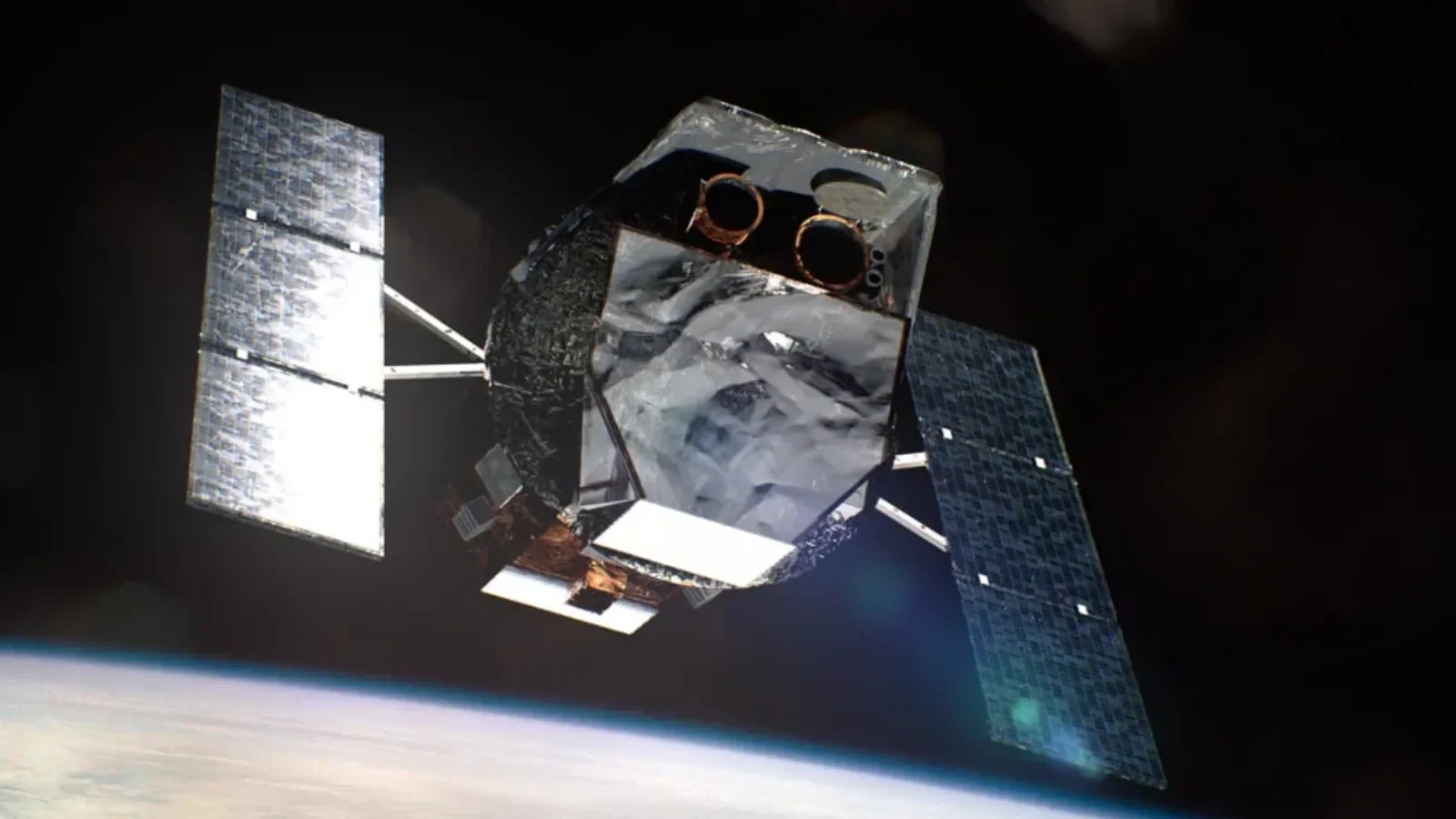
By orienting the spacecraft in a way that reduces drag, controllers aim to extend its time in orbit.
This period of reduced activity is critical to prepare for a planned "reboost" mission.
The Reboost Mission: A Commercial Endeavor
Instead of allowing Swift to naturally re-enter Earth's atmosphere, NASA has contracted Katalyst Space Technologies, an Arizona-based company, to perform an orbit-raising maneuver. This mission represents a significant step in developing commercial capabilities for in-space servicing.
The reboost mission is slated for a June 1, 2026, launch.
Katalyst's robotic spacecraft will autonomously approach, capture, and reposition Swift into a higher orbit.
This will be the first time a commercial robotic spacecraft captures an uncrewed government satellite not designed for servicing.
The total cost of this mission is approximately $30 million.
NASA is also exploring options with other companies, such as Cambrian Works and Starfish Space, for concept studies related to orbit boosts.
Significance of the Reboost Mission
The Swift reboost mission is seen as a pivotal demonstration of emerging technologies with implications beyond just extending Swift's life.
Scientific Extension and National Security
Extending Swift's scientific output allows it to continue its valuable observations of the universe.
The mission is also of interest to the Defense Department, showcasing capabilities for "tactically responsive space" and sustained maneuverability.
Satellite servicing capabilities are increasingly vital for national security, offering potential responses to space-based threats.
Technological Advancement
Successfully boosting Swift would demonstrate multiuse, commercially developed technology for the space domain.
This endeavor could establish a blueprint for future life extension of spacecraft in low Earth orbit.
It highlights the growing importance of on-orbit servicing, particularly for aging but productive satellites.
Potential Outcomes
The reboost mission carries both potential rewards and risks.
Read More: New StructureMASST tool helps find molecules in samples
Success: Swift's operational life will be significantly extended, and a vital new commercial space capability will be proven.
Failure: If the Katalyst mission encounters issues, Swift would likely re-enter Earth's atmosphere as it would have without the reboost.
Expert Perspectives
"NASA's decision to pursue the reboost effort is commendable. If successful, it not only saves a valuable science asset but also pioneers a critical new space capability for the nation."— Unnamed scientist involved with Swift (paraphrased from Article 2)
"This reboost would demonstrate an emerging multiuse, commercially developed technology for the space domain—several technologies, actually."— Aviation Week Network report (Article 4)
Conclusion
The Neil Gehrels Swift Observatory is at a critical juncture. By temporarily halting science operations, NASA is prioritizing the spacecraft's long-term survival and the development of a pioneering commercial space servicing capability. The upcoming reboost mission by Katalyst Space Technologies is a high-stakes endeavor, promising to extend Swift's scientific legacy while forging a new path for in-space infrastructure and national security. The success or failure of this mission will offer valuable insights into the future of satellite servicing and the longevity of space-based assets.
Sources Used:
NASA Science (Article 1): https://science.nasa.gov/blogs/swift/2026/02/11/nasas-swift-mission-transitions-ops-to-prep-for-orbit-boost/
Context: Official NASA blog post detailing the recent suspension of science operations for Swift to prepare for an orbit boost.
SpaceNews (Article 2): https://spacenews.com/nasa-works-to-extend-swifts-life-ahead-of-reboost-mission/
Context: News report on preparations for the Swift reboost mission, including efforts to extend its life in case of delays and the target launch date.
Astronomy.com (Article 3): https://www.astronomy.com/science/swift-observatory-rescue-mission/
Context: Article focusing on the financial aspect and the significance of the Swift reboost as a rescue mission, highlighting national security stakes.
Aviation Week Network (Article 4): https://aviationweek.com/space/space-exploration/spaceops-nasa-mulls-smallsat-reboost-mission-swift-telescope
Context: Report discussing NASA's consideration of a small satellite reboost mission for Swift and its implications for commercial technology.
NASA Science (Article 5): https://science.nasa.gov/missions/swift/nasas-swift-temporarily-suspends-science-operations/
Context: NASA announcement regarding the temporary suspension and resumption of Swift's science operations in March-April 2024 due to gyroscope issues.
Space.com (Article 6): https://www.space.com/nasa-swift-observatory-suspends-operations
Context: News coverage of the temporary suspension of Swift's operations in March 2024.
FindArticles (Article 7): https://www.findarticles.com/nasa-seeks-industry-plans-to-reboost-swift-observatory/
Context: Report on NASA seeking industry proposals for reboosting Swift, emphasizing its potential as a model for future on-orbit servicing.
Phys.org (Article 8): https://phys.org/news/2024-03-nasa-swift-temporarily-science.html
Context: News article detailing the March 2024 suspension of Swift's operations due to gyroscope degradation and the ongoing software update.
NASA (Article 9): https://www.nasa.gov/missions/swift/nasa-explores-industry-possibilities-to-raise-swift-missions-orbit/
Context: Official NASA announcement regarding their exploration of industry partners for Swift's orbit boost, naming specific companies.
Katalyst Space (Article 12): https://www.katalystspace.com/post/nasa-telescope-is-about-to-fall-out-of-the-sky
Context: Company announcement from Katalyst Space detailing their role and timeline for the Swift reboost mission.
NASA (Article 10): https://www.nasa.gov/missions/swift/nasa-explores-industry-possibilities-to-raise-swift-missions-orbit/ (Duplicated link from Article 9, content is similar but included as per instruction to list all used sources).
Context: This link, which appears to be a duplicate in the provided data, discusses NASA's awarding of contracts to companies for Swift's orbit boost and Katalyst's role.
Swift Operations Website (Article 11): https://swift.gsfc.nasa.gov/operations/
Context: Official Swift mission operations website providing details on orbit information and operational history.