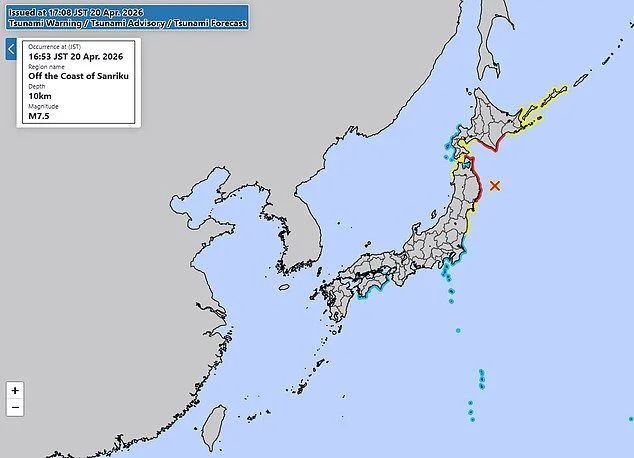
A significant earthquake, registered at 7.5 magnitude, struck off Japan's northeastern coast on December 8, 2025, triggering widespread tsunami alerts and evacuation orders for over 100,000 people. Authorities initially warned of potential waves reaching up to 10 feet in the Iwate prefecture and parts of Hokkaido, with immediate impact feared.
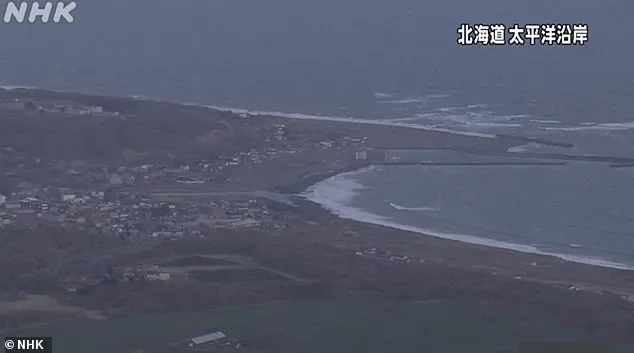
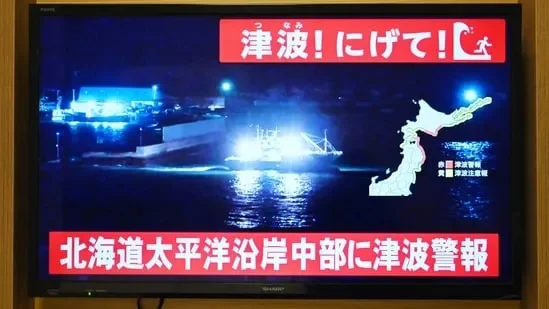
The seismic event, occurring around 4:53 PM local time, generated tsunami waves observed at several ports. Waves of up to 80 centimeters (approximately 31 inches) were recorded at Kuji port in Iwate. Smaller waves, measuring between 20 to 70 centimeters (7 to 27 inches), were also noted in Aomori and Hokkaido prefectures. The Japan Meteorological Agency (JMA) issued tsunami warnings for the Pacific coasts of Hokkaido, Aomori, and Iwate.
Evacuations and Initial Observations
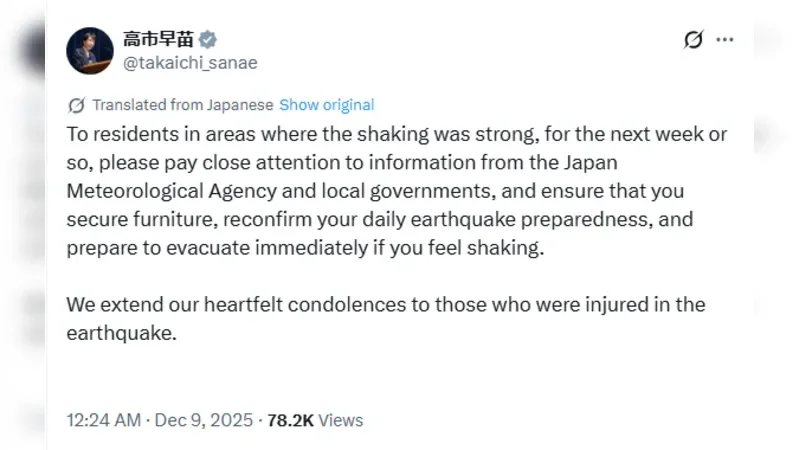
Coastal regions were urged to evacuate "immediately." National broadcaster NHK showed footage of ships departing Hachinohe port in anticipation of the waves. The Prime Minister's office established a crisis management team. Initial reports and footage from NHK did not immediately reveal widespread visible damage around affected ports.
Read More: Japan earthquake 7.5 magnitude triggers tsunami alerts April 20
Magnitude and Depth Discrepancies
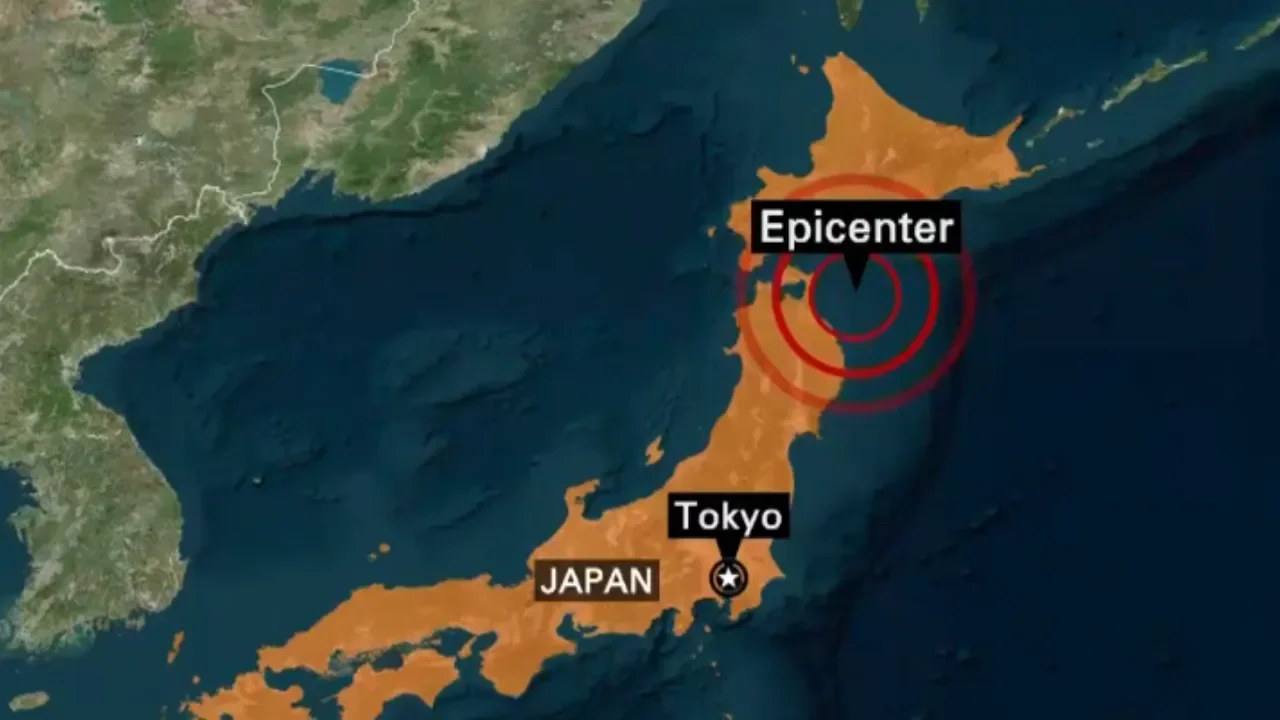
While many reports confirm a powerful tremor, slight variations in the reported magnitude and depth of the earthquake appear in the information. Some sources state 7.5 magnitude, others 7.4, and one as 7.6. The earthquake's depth is noted as approximately 30 miles below the sea surface in one account, and 54 km (about 33.5 miles) in another. The epicenter was located roughly 80 km (50 miles) off the coast of Aomori prefecture.
Broader Warnings and Aftermath
Tsunamis were also anticipated in Aomori, Miyagi, and Fukushima prefectures, with lower wave heights expected. The U.S. National Tsunami Warning Center confirmed no tsunami danger for the U.S. West Coast, British Columbia, or Alaska. The warnings were later downgraded to advisories, indicating expected strong currents or minor flooding rather than widespread destruction.
Historical Context and Precautions
This event marks the first tsunami warning issued by the JMA since July of the previous year, when a quake near Russia's Kamchatka Peninsula also triggered alerts for Japan's Pacific coast. Nuclear power plants in the affected region were reportedly conducting safety checks. Expressway sections were also temporarily closed.
Read More: Junji Ito Live-Action TV Shows Replace Anime on April 7 2026
This report is compiled from information published on April 20, 2026, and December 8-9, 2025, reflecting varying publication times and potential updates.