TAIWAN – A recent landslide event in Taiwan, previously underestimated due to surface observations, is now understood to involve significant deep-seated movement, thanks to the deployment of fiber optic sensing technology. This groundbreaking application of distributed sensing has provided an unprecedented, real-time view into the subterranean forces at play, challenging conventional landslide assessment methods.
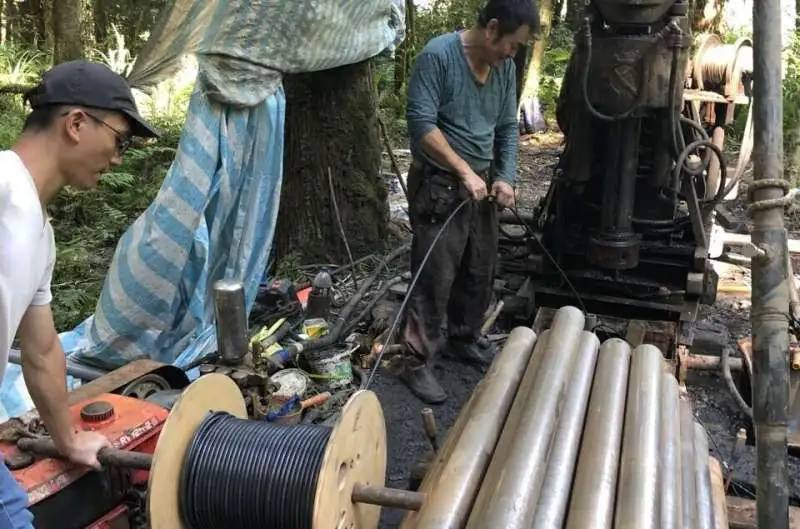
The core of the discovery lies in how fiber optic cables, laid along the path of the sliding mass, acted as an intricate network of sensors. By detecting minute distortions and temperature fluctuations along their length, researchers were able to map the exact contours and speed of the landslide's deeper strata. This "hidden motion" was not apparent from visual inspection or traditional monitoring equipment, which typically focus on surface displacement. The fiber optics essentially turned miles of cable into a continuous, high-resolution strain gauge.
Read More: Chrome mimeHandler API lets extensions handle file types
Unseen Forces Brought to Light
The technique, utilizing a method known as Distributed Acoustic Sensing (DAS) and Distributed Temperature Sensing (DTS), allowed scientists to observe the gradual creep and sudden accelerations occurring beneath the surface. These observations are critical for understanding the true scale and potential risks associated with such geological events.
Traditional methods often fail to capture the complex internal deformation of landslides.
Fiber optics provide a dense, continuous data stream, illuminating the landslide's interior.
This technology opens new avenues for predictive modeling and early warning systems.
Background on Sensing Technologies
The successful application of fiber optics in this landslide scenario builds upon years of research into distributed sensing. These systems have already seen use in various fields, from monitoring pipelines and bridges to detecting seismic activity. The specific adaptation for landslides represents a significant advancement in geological hazard monitoring, offering a more comprehensive picture than ever before.