Downing Street faces scrutiny over Peter Mandelson's ambassadorial clearance, with conflicting accounts of when the Prime Minister was apprised of vetting concerns. A briefing paper, released by the government, suggests that civil servants could have flagged security vetting recommendations to ministers, allowing for informed judgments on appointments. This development has intensified questions surrounding the appointment of Mandelson, who was later dismissed as ambassador over ties to Jeffrey Epstein**.
The core of the unfolding situation revolves around the assertion that Sir Keir Starmer and his ministers were unaware of Mandelson’s failed security vetting until "earlier this week." This claim, made by a UK government spokesperson, attempts to distinguish Starmer's earlier assurances about due process from the more damaging revelation that Mandelson's "Developed Vetting" was granted against the advice of the UK Security Vetting agency.
Read More: Andrew sublet Royal Lodge cottages for years, NAO report says
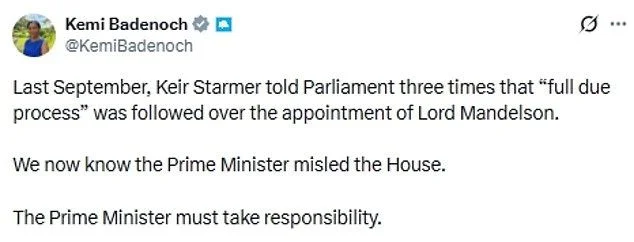
Opposition parties, notably Kemi Badenoch, the Tory leader, have seized upon the disclosures. Badenoch stated that Starmer "had already made a catastrophic error of judgement" by appointing Mandelson before vetting was finalised, and then claiming full due process was followed. This has led to "furious demands to quit" for the Prime Minister.
The Foreign Office has stated it is "urgently working to comply with Sir Keir's demand" for information on how Mandelson was cleared. This follows reports that senior government officials had considered withholding documents from Parliament that would have revealed Mandelson did not receive approval from security vetting officials.
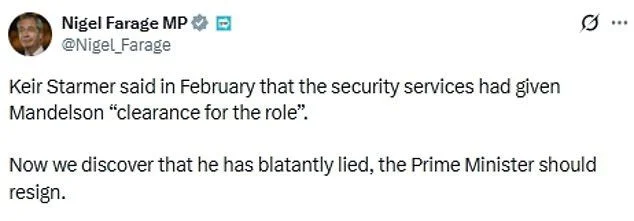
The government's current defence appears to hinge on a "narrow but politically significant distinction": that while Starmer's earlier statements may be under attack, he was not aware of the most critical fact – that the clearance was given against official recommendations.
Read More: Robbins Testimony Questions Starmer's Mandelson Choice
Mandelson's Diplomatic Tenure and Vetting
Lord Mandelson's appointment as U.K. ambassador to the U.S. became mired in controversy after it emerged he had failed security vetting. The situation was further complicated by his prior dismissal as ambassador over connections to the late convicted sex offender Jeffrey Epstein. Mandelson had been released on bail, with his bail conditions dropped last month.
Friends of Morgan McSweeney, the Prime Minister's chief adviser at the time of the appointment, who resigned in February over his role in the matter, have stated to the BBC that he was unaware of the vetting process's outcome.
Government's Position on Vetting Procedures
A briefing paper outlines that civil servants are responsible for vetting decisions. However, it also notes that no law prevents them from sensibly flagging vetting recommendations to ministers, while protecting sensitive information, thereby enabling ministers to make informed judgments on appointments or parliamentary explanations. Douglas Alexander, the Scottish secretary, expressed his expectation that Starmer would continue as Prime Minister until the next election, though he conceded "there are no certainties."
Read More: Baroness Noakes asks why Prince Andrew's property income isn't checked