A UN spokesperson has acknowledged the "hopeful developments" emerging from South Sudan, specifically highlighting the reopening of a critical supply route by Indian peacekeepers, thereby improving mobility and facilitating humanitarian aid. The Malakal-Renk main supply route, rerouted through New Paloich and other locations after being rendered impassable by floods, is now accessible. This infrastructural effort, involving reclaiming land from floodwaters, is noted as significantly enhancing the delivery of assistance to affected communities.

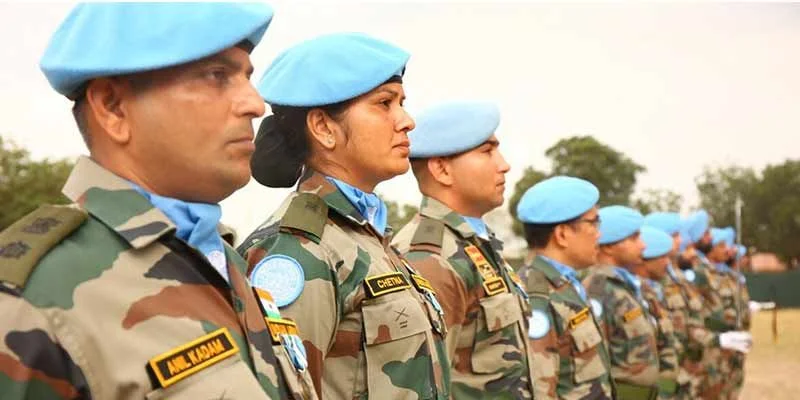
Beyond infrastructure, a substantial number of Indian peacekeepers have been formally recognized with UN medals for their service in South Sudan. Reports indicate that hundreds, often exceeding 800 or 1,000 personnel across various deployments, have received these medals. This recognition extends to their contributions in building peace, protecting civilians, and supporting local communities, sometimes involving specialized roles such as engineering and medical care.
Read More: UN Security Council Votes April 4 on Hormuz Strait Defensive Measures
CORRIDOR REOPENED AMID DIFFICULTIES
The United Nations Mission in South Sudan (UNMISS) has publicly commended the work of Indian engineering units. These peacekeepers successfully reopened a key section of the Malakal-Renk main supply route, a vital artery that had been closed since the previous year's floods. A new road alignment, traversing areas like Akoka, Kilo 20, Paloich, and Renk, has been established.

This initiative directly addresses the disruption caused by natural disasters.
The rerouting aims to provide safer passage and bolster movement within the region.
The impact on humanitarian efforts is cited as a primary benefit.
Stéphane Dujarric, spokesperson for UN Secretary-General António Guterres, pointed to this reopening as a hopeful development amidst challenging circumstances in South Sudan. He detailed that the new road alignment involved reclaiming land that had been inundated by floodwaters, a task crucial for restoring connectivity and ensuring the unimpeded flow of essential humanitarian assistance.

MEDALS MARKING SERVICE AND SACRIFICE
Multiple reports detail the conferment of the United Nations Medal upon Indian peacekeepers serving with UNMISS. These ceremonies honor not just the completion of tours of duty but also the broader dedication and sacrifice involved in their mission.
Read More: France and South Korea sign 2026 defense deal to increase arms production and trade
Numbers vary across reports, but figures frequently cited are around 850, 1,171, or over 1,000 personnel receiving these commendations.
The medals acknowledge efforts in building lasting peace, supporting peace talks between government and opposition forces, and establishing new UNMISS bases, such as one in Kodok.
Commanders have expressed a desire for their efforts to leave "positive memories" and a "better place" for the South Sudanese people, enabling self-sufficiency and national development.
The commitment of Indian peacekeepers, including those in specialized engineering and medical roles, is consistently noted.
One report mentions that over 160 Indian peacekeepers have lost their lives while serving under the UN flag. This stark statistic underscores the inherent risks associated with peacekeeping operations.
GENDER-INCLUSIVE EFFORTS RECOGNISED
Specific recognition has also been given to the integration of gender perspectives in peacekeeping.
Major Swathi Shanti Kumar received the UN Secretary-General Award for a project titled 'Equal Partners, Lasting Peace', highlighting a gender-inclusive approach. She leads India's first all-woman military engagement team within UNMISS.
Major Gawani was honored for integrating a gender perspective into planning and military activities, particularly concerning conflict-related sexual violence. Her work included advocating for gender balance in patrols under challenging field conditions.
The inclusion of women in peacekeeping roles is frequently emphasized for its contribution to effective operations.
BACKGROUND AND CONTEXT
India remains a significant contributor to UN peacekeeping missions. As of various reports, the country deploys a substantial number of military and police personnel to UNMISS, often ranking as the second-highest troop-contributing country. The presence of Indian peacekeepers in South Sudan spans several years, with various units undertaking diverse roles beyond their primary mandate, including road rehabilitation, capacity building, and providing medical aid to both humans and animals. The UN Mission in South Sudan (UNMISS) itself was established in 2011, following the country's independence.