MP Cites Executive Overreach, Weakened Scrutiny
Senior Advocate Menaka Guruswamy, recently sworn into the Rajya Sabha as a Trinamool Congress member, has issued a stark assessment: the waning influence of India's Parliament signals a broader decline in the nation's democracy. Guruswamy, now the country's first openly queer Member of Parliament, links the diminishing parliamentary role directly to an unchecked executive and a Parliament reduced to a mere formality.
Her remarks, voiced shortly after her own entry into the legislative arena, highlight a persistent concern:
The executive branch's increasing dominance in legislative affairs, often reducing Parliament's function to that of a rubber stamp.
A critical lack of parliamentary scrutiny, leading to policies, such as demonetization, being implemented without adequate debate.
The erosion of checks and balances, exacerbated by a legislative body that appears to increasingly align with the ruling agenda.
Broader Erosion of Democratic Norms
Guruswamy's commentary resonates with ongoing observations regarding the state of Indian democracy. Reports from various sources suggest a pattern of weakening democratic institutions and the rise of authoritarian traits.
The current situation points towards a landscape where India navigates a precarious space between full democracy and outright autocracy, a sentiment echoed in analyses of its democratic trajectory. Key contributing factors include:
Read More: Trump and Iran agree to 2-week truce to reopen Strait of Hormuz
The weakening of media independence, now more susceptible to corporate and political influence, thus limiting its role as a watchdog.
Intensifying political polarization, often fueled by divisive identity politics that can pit majority identities against minority rights.
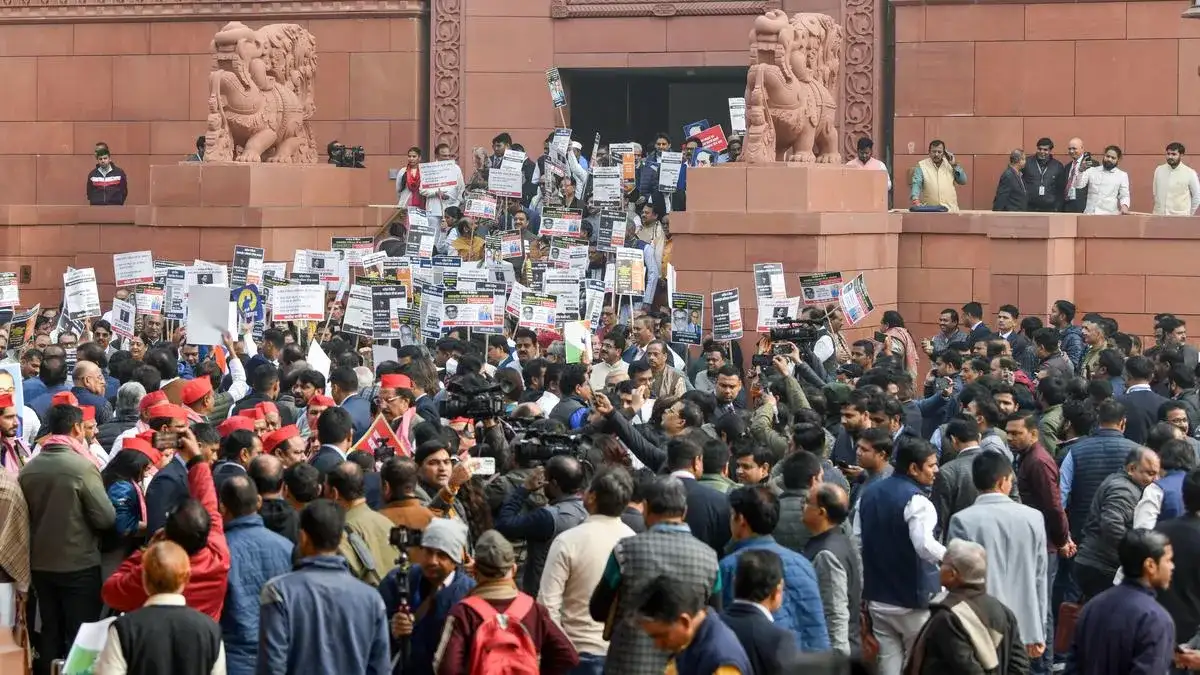
The consequences of political actions, such as the record suspension of 143 MPs in recent times, which effectively silences dissent and debate, particularly during the introduction of significant legislation.
Historical Context and Potential Paths
The "temple of democracy," as the Indian Parliament is often termed, appears to be losing its sanctity. Revitalizing this institution, observers suggest, necessitates a focus on:
Empowering Parliament to dissent freely without the threat of disqualification.
Fostering robust debate and deliberation on crucial public issues.
Strengthening the role of the opposition to balance the ruling party's power.
The current political climate has also been noted for exhibiting characteristics of a presidential system, marked by a concentration of power, though the inherent liberty of either system is not guaranteed. This shift, coupled with diminishing legislative vibrancy, fuels concerns about the fundamental health of India's democratic framework. Guruswamy’s own public profile as a lawyer, instrumental in the Section 377 verdict and now a parliamentarian, adds a layer of personal significance to her pronouncements on democratic vitality.