Scientists are changing how they look at the way intense lasers hit dense matter. For a long time, it was hard to track how electrons move when they are hit by very strong light while also being crowded by other particles. Recent studies now use a method called the Strong Field Spin-Boson model. This model helps explain how electrons react not just to the laser, but also to the heat and vibrations in the material around them. This is important because it helps us understand how to control energy in small systems without destroying the material.
The Growth of Laser Interaction Studies
The study of how light hits matter has moved through several stages. In the early 2000s, research focused on the fact that very strong lasers can strip electrons away from atoms instantly, creating plasma. As laser technology improved, scientists began looking at dense matter, like solid foils and crystals.
Read More: Indigenous Data Rights Now Key in Conservation Genomics
The timeline shows a move from simple models to complex "open" systems:
2002: Research shows lasers can be stronger than the forces holding atoms together, making electrons move at near-light speeds (relativistic energies).
2018: Experiments use superconducting circuits to test how systems handle being "driven" by outside forces.
2025: New models apply these ideas to solid materials like ZnO (Zinc Oxide) to see how heat and laser light work together.
"The coupling of laser and heat bath driven dynamics" creates a situation where the environment cannot be ignored. (Vampa et al.)
The core shift in research is moving from seeing an electron as a lone particle to seeing it as part of a system that "remembers" its past interactions with heat and vibrations.
Evidence: Comparing Old and New Models
The following data compares the traditional way of looking at these events with the new Spin-Boson approach.
| Feature | Traditional Laser Physics | Strong Field Spin-Boson Model |
|---|---|---|
| Electron Environment | Often viewed as isolated or in a simple vacuum. | Viewed as an "open system" connected to a heat bath. |
| Energy Levels | Focus on ionization and plasma. | Focus on coupling strength between particles. |
| Material State | Material is often destroyed or turned to plasma. | Stays below the damage threshold of the material. |
| Timing | Instant reactions. | Non-Markovian (the system's history affects the present). |
Deep Dive: The Role of the Heat Bath
In dense matter, an electron is never truly alone. It is surrounded by a "heat bath" of phonons (vibrations).
Strong Coupling: Franchini et al. noted that polar materials have very strong links between electrons and these vibrations.
Energy Balance: When a laser hits the material, the energy does not just stay with the electron. It flows into the surrounding heat.
Measurement: The strength of this connection is measured as a "dimensionless parameter" that can range from very low to very high.
Is it possible to control the electron without losing all the energy to heat? The evidence suggests that the laser field strength must stay below the single pulse damage threshold to keep the material solid.
Read More: Nations Championship rugby starts 7 April 2026 with new point system
Deep Dive: Relativistic Movement in Dense Space
When lasers are extremely powerful, electrons reach relativistic energies. This means they move so fast that their mass effectively changes.
Kinetic Effects: Research from IOPscience shows that at these speeds, the physics becomes "highly non-linear."
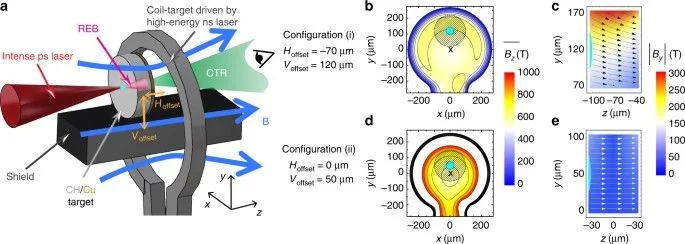
Magnetic Fields: Powerful lasers can create magnetostatic fields inside dense matter. These fields can actually help guide electron beams, keeping them from spreading out too much.
W-Boson Decay: Intense fields are now being studied to see if they change how fundamental particles, like the W-boson, break apart.
Deep Dive: Non-Markovian Dynamics
A major part of the new model is the idea of non-Markovian dynamics. In simple terms, this means the system has a "memory."
Article 2 and Article 3 focus on how these systems do not reset instantly.
Superconducting Circuits: Scientists use these circuits to simulate how electrons behave. They act like "artificial atoms" that allow researchers to watch the "spin" of a particle interact with a "boson" (an energy carrier).
Efficiency: New methods allow for the "efficient simulation" of these complex systems even when they are at finite temperatures.
Expert Analysis
Experts in the field suggest that the Spin-Boson model provides a bridge between different types of physics.
Goano et al. and Lambert et al. have focused on deriving material settings from basic calculations to ensure the models match real-world substances. They point out that the coupling strength is a key factor. If the coupling is too strong, the electron cannot be easily controlled by the laser because the environment "pulls" on it too hard.
Dufft et al. emphasizes the physical limits of the material. For materials like ZnO, the laser must be carefully tuned. If the electric field is too strong, the crystal structure fails. Therefore, the new model is essential for finding the "sweet spot" where the laser is strong enough to drive the electron but weak enough to keep the material intact.
Read More: New Room Temperature Photon Source for Quantum Tech in Korea
Conclusion
The investigation into the Strong Field Spin-Boson model reveals several key findings:
Environment Matters: We can no longer look at laser-driven electrons as isolated events. The interaction with the "heat bath" (phonons) determines how much energy is lost.
Model Flexibility: The Spin-Boson model, originally used for quantum circuits, is now being successfully applied to dense solids like Zinc Oxide.
Threshold Limits: There is a specific limit to how much power a material can take. The new models help calculate this by looking at coupling strength and electric field strength.
Relativistic Changes: At high intensities, electrons behave differently, and the new models are beginning to account for these relativistic kinetic effects in dense environments.
Next Steps: Researchers are likely to continue refining these simulations to predict how new, even more powerful lasers will interact with different types of polar materials. The goal is to reach a level where we can use lasers to move electrons with perfect timing and minimal heat loss.
Primary Sources
Strong field physics in open quantum systems (2025): https://arxiv.org/html/2502.10240 (Context on ZnO and heat baths).
Modelling the ultra-strongly coupled spin-boson model (2019): https://www.nature.com/articles/s41467-019-11656-1 (Data on non-Markovian dynamics).
Probing the strongly driven spin-boson model (2018): https://www.nature.com/articles/s41467-018-03626-w (Evidence from superconducting circuits).
Strong field interaction of laser radiation (2002): https://iopscience.iop.org/article/10.1088/0034-4885/66/1/202 (Foundation for relativistic electron movement).
Guiding of relativistic electron beams in dense matter (2018): https://www.nature.com/articles/s41467-017-02641-7 (Analysis of electron transport in foil).
Influence of intense laser fields on W−-boson decay (2021): https://www.sciencedirect.com/science/article/abs/pii/S0577907321002409 (Data on fundamental particle interaction).
Strong laser fields interacting with matter I (Early research): https://link.springer.com/article/10.1007/BF01425577 (Non-perturbative aspects and Floquet picture).