The Promise and Peril of AI in Emerging Economies
Sundar Pichai, the Chief Executive Officer of Google, recently addressed the India AI Impact Summit 2026. He described Artificial Intelligence (AI) as a force driving an era of "hyper progress," capable of accelerating scientific discovery and allowing developing nations to skip traditional stages of growth. Pichai emphasized that AI has inspired him to "dream bigger" than any previous technology. However, he also issued a clear caution: the benefits of AI must be shared equitably, and the existing digital divide must not be allowed to evolve into an "AI divide." This perspective suggests a significant opportunity for technological advancement, coupled with a critical need for careful planning and inclusive development.

Context: The India AI Impact Summit 2026
The summit, held on Thursday, February 19, 2026, in New Delhi, brought together key figures in technology and government to discuss the future of AI, particularly its role in India's development. Sundar Pichai was a prominent speaker, sharing his views on AI's transformative power and the strategic importance of India in the global AI landscape.
Read More: Linux users struggle to get older AMD GPUs working with new drivers
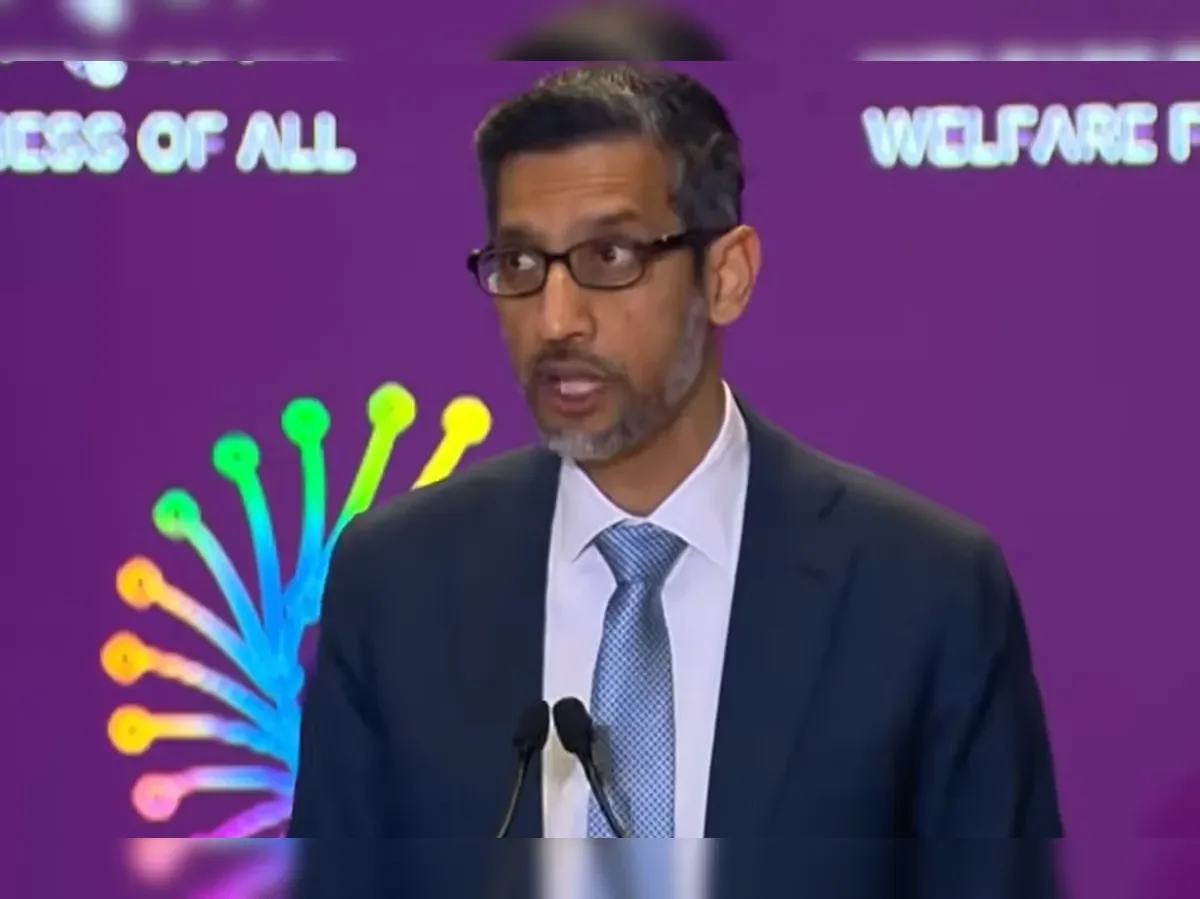
Pichai's remarks touched upon several key themes:
AI as a Catalyst for Progress: He stated that AI is the "biggest platform shift of our lifetimes," with the potential to unlock new scientific breakthroughs and aid emerging economies.
Workforce Transformation: AI is expected to reshape the job market by automating some tasks, changing others, and creating entirely new career paths.
Bridging the Digital Divide: Pichai stressed the necessity of investing in computing infrastructure and connectivity to ensure that the benefits of AI are accessible to all, preventing a new form of inequality.
Google's Investment in India: He highlighted Google's significant investment in Visakhapatnam, transforming the city into a major AI hub. This includes plans for substantial computing power and a new international subsea cable gateway, aimed at bringing AI advancements to people and businesses across India.
Evidence: Key Statements from Sundar Pichai
"AI ushers in an era of hyper progress." (Article 1, 2)
"No technology has made him 'dream bigger' than artificial intelligence." (Article 1, 2, 5)
"The digital divide cannot be allowed to become an AI divide." (Article 1, 2, 4, 6)
"This means investing in computing infra and connectivity." (Article 1, 2, 4)
"AI will undeniably reshape workforce, automating some roles, evolving others and creating entirely new careers." (Article 1, 2, 3)
"The outcome of AI is neither guaranteed, nor automatic." (Article 3, 5)
"We are on the cusp of hyper progress and new discoveries that can help emerging economies leapfrog legacy gaps." (Article 3)
"AI must not widen inequality gaps." (Article 4)
"Collaboration among governments, regulators, and industry will be critical to realising AI’s full potential." (Article 4)
"Visakhapatnam, where Google has made a major investment, transform into a major centre for artificial intelligence." (Article 3, 5, 7, 8)
Google announced a $15 billion investment in India. (Article 5, 8)
AI as a Tool for Development
Pichai presented AI as a tool that can help emerging economies bypass developmental hurdles. He suggested that AI could accelerate progress across various sectors and solve complex scientific challenges. This vision is supported by examples like the use of AI-powered forecasts to assist farmers, a project involving Google's Neural GCM model in India.
Leapfrogging Development: AI has the potential to help emerging economies "leapfrog stages of development" and "leapfrog legacy gaps." (Article 1, 2, 3)
Scientific Advancement: AI can unlock new scientific discoveries and be used in areas like cataloging DNA disease markers and developing AI agents for research. (Article 1, 5, 8)
Public Services: Innovators should bring AI into public services to improve lives and speed up the adoption of these technologies for both individuals and businesses. (Article 2, 6)
The Imperative of Trust and Equitable Access
A recurring theme in Pichai's address was the importance of trust and equitable access to AI. He warned that unequal access could exacerbate global inequalities, emphasizing the need for deliberate action to prevent an "AI divide." This necessitates collaboration between governments, companies, and innovators.
Trust as Bedrock: Pichai described trust as "the bedrock of tech adoption." (Article 1, 2)
Preventing an AI Divide: The summit consistently warned that "the digital divide must not become an AI divide." (Article 4, 6)
Stakeholder Collaboration: Pichai called on "all stakeholders - government, companies and innovators - to work together to harness the full benefits of AI." (Article 1, 2, 4)
Investment in Infrastructure: Preventing the AI divide requires investing in "computing infrastructure and connectivity." (Article 2, 4)
Google's Strategic Investment in India
Pichai highlighted Google's substantial investment in Visakhapatnam as a testament to the company's long-term commitment to India and its role in the global AI ecosystem. The development of Visakhapatnam into a global AI hub, with plans for significant computing capacity and advanced connectivity, aims to distribute AI benefits across the nation.
Read More: India Creators Fight Back Against Book Censorship and Event Disruptions
Visakhapatnam as an AI Hub: It is "remarkable to see Visakhapatnam… transform into a major centre for artificial intelligence." (Article 3, 5, 7, 8)
Investment Details: Google has made a "major investment" in Visakhapatnam, with $15 billion cited in relation to this development. (Article 5, 8)
Infrastructure Development: The hub will house "gigawatt-scale compute and a new international subsea cable gateway." (Article 3)
Expert Analysis and Attributed Insights
Sundar Pichai (Google CEO): "AI ushers in an era of hyper progress, with the potential to unlock new scientific discoveries and help emerging economies leapfrog stages of development." He also stated, "No technology has made him 'dream bigger' than artificial intelligence." (Article 1, 2, 5)
Sundar Pichai (Google CEO): On the digital divide, he asserted, "the digital divide cannot be allowed to become an AI divide. That means investing in computing infra and connectivity." (Article 1, 2, 4)
Sundar Pichai (Google CEO): He cautioned that "the outcome of AI is neither guaranteed, nor automatic." (Article 3, 5)
Sundar Pichai (Google CEO): He emphasized the need for collaboration, stating, "Trust as the bedrock of tech adoption… called on all stakeholders - government, companies and innovators - to work together to harness the full benefits of AI." (Article 1, 2)
Conclusion: A Balanced Outlook on AI's Future
Google CEO Sundar Pichai's statements at the India AI Impact Summit 2026 present a compelling vision of AI as a powerful engine for progress, particularly for emerging economies like India. The concept of "hyper progress" and the potential for countries to "leapfrog" developmental stages represent significant opportunities. Furthermore, the strategic investment in Visakhapatnam signals a tangible commitment to building AI capabilities within India.
However, Pichai's remarks were not solely optimistic. A critical undercurrent throughout his address was the urgent need to ensure that AI's advancements do not widen existing inequalities. The warning against allowing the "digital divide" to become an "AI divide" underscores the ethical and societal challenges that accompany rapid technological change. This requires proactive investment in infrastructure, a focus on inclusive access, and robust collaboration among governments, industry, and innovators. The message is clear: while the potential of AI is immense, its ultimate impact hinges on responsible development and equitable distribution.
Read More: Acer Laptops: Nvidia GPU Not Detected on Nitro and Predator Models Since January 2024
Key Sources
The Hindu: AI ushers in 'hyper progress', can help emerging economies leapfrog: Google CEO Sundar Pichai - https://www.thehindu.com/sci-tech/technology/google-ceo-sundar-pichai-ai-progress-india-summit-2026/article70650504.ece
The New Indian Express: AI will 'undeniably reshape' workforce, can help emerging economies: Google CEO Pichai at AI summit - https://www.newindianexpress.com/business/2026/Feb/19/ai-will-undeniably-reshape-workforce-can-help-emerging-economies-google-ceo-pichai-at-ai-summit
The Economic Times: Outcome of AI neither guarenteed, nor automatic: Google CEO Sundar Pichai - https://economictimes.indiatimes.com/tech/technology/outcome-of-ai-neither-guarenteed-nor-automatic-google-ceo-sundar-pichai/articleshow/128539557.cms
Business Standard: AI must not widen inequality gaps, says Google CEO Pichai at India Summit - https://www.business-standard.com/technology/tech-news/india-ai-impact-summit-2026-google-ceo-sundar-pichai-stack-investment-1260219003201.html
The Statesman: AI-India Impact Summit: Sundar Pichai says, ‘Vizag emerging as global AI hub with Google's $15B investment’ - https://www.thestatesman.com/india/ai-india-impact-summit-sundar-pichai-says-vizag-emerging-as-global-ai-hub-with-googles-15b-investment-1503559253.html
PCQuest: AI Impact Summit 2026: India at the Cusp of Hyper Progress - https://www.pcquest.com/news/ai-impact-summit-2026-india-at-the-cusp-of-hyper-progress-11132236
Free Press Journal: AI Biggest Platform Shift Of Our Lifetimes; India's Vizag Emerging As Global AI Hub: Google CEO Sundar Pichai - https://www.freepressjournal.in/tech/ai-biggest-platform-shift-of-our-lifetimes-indias-vizag-emerging-as-global-ai-hub-google-ceo-sundar-pichai
Republic World: ‘Biggest Platform Shift Of Our Life’: Google CEO Sundar Pichai Hails Vizag As Global AI Hub, Announces $15 Billion Investment - https://www.republicworld.com/tech/biggest-platform-shift-of-our-life-google-ceo-sundar-pichai-hails-vizag-as-global-ai-hub-announces-15-billion-investment