Domestic stoves are staying cold as a lag between state assurance and physical fuel delivery widens across India. While the Petroleum Ministry insists supply remains "uninterrupted," reality on the ground shows a different shape: Hindustan Organic Chemicals shut its Kochi plant after gas was cut, and restaurants in Delhi and Bengaluru are stripping menus of items that require high heat. The state’s fix for this modern fuel gap is a retreat to the past, releasing 40,000 kilolitres of kerosene as a stopgap substitute.

The Geometry of the Shortage
The friction is most visible at the booking interface. Consumers in Kerala and Maharashtra report that digital apps are glitching or refusing orders, while distributors deny any actual lack of stock.

In Navi Mumbai and Prayagraj, queues form before sunrise as people carry empty metal shells to depots, hoping for a direct swap.
Retailers in Delhi claim a 75–80% jump in induction cooktop sales as households lose faith in the supply chain.
Maharashtra officials have ordered oil firms to fix "wonky" booking apps that keep residents from securing a spot in line.
Displacement of Priority
| Affected Sector | Impact Severity | Action Taken |
|---|---|---|
| Industrial (Kochi) | High | HOCL plant closure due to diverted stocks. |
| Hospitality | Moderate | Menus shrunk; some Delhi eateries shut down. |
| Domestic | High | Waiting periods of 6+ days despite "adequate" claims. |
| Retail/Weddings | Increasing | Catering costs projected to climb 10-20%. |
"Domestic households are top priority for LPG cylinder supply," says BPCL, even as Hindustan Organic Chemicals stops production because their supply was snatched away for the public pot.
The Conflict Logic
The "thirst" for gas is tethered to the Strait of Hormuz. India’s production cannot keep up with how much it burns, leaving the kitchen stove vulnerable to the Israel-Iran conflict.
Read More: Andhra Pradesh APGENCO makes record 6,160 MW power output on March 11
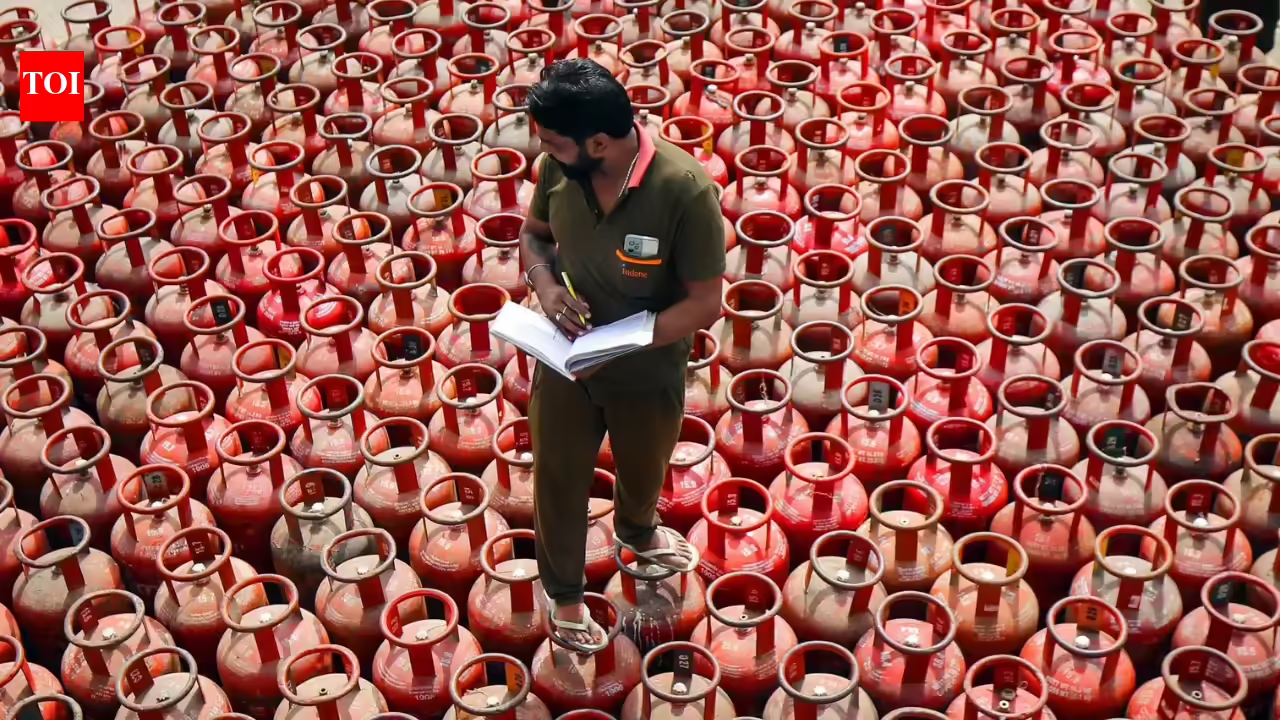
Two shipments totaling 80,000 tonnes are reportedly on the water, meant to soothe the market.
In the meantime, the state tells people to switch to Piped Natural Gas (PNG), a rigid system that doesn't exist for most of the people currently standing in line.
Background: The Import Trap
India relies on West Asia for the bulk of its Liquefied Petroleum Gas. The Petroleum Planning and Analysis Cell (PPAC) data confirms domestic production is a small fraction of what is needed. When shipping lanes in the Gulf tighten due to war, the ripples reach small kitchens in Ernakulam and Sambalpur within days. The current "non-shortage" is a contest between official data—which says the gas exists—and the physical logistics of moving it, which is currently failing under the weight of panic and war-time friction.