Specimen offers glimpse into ancient insect lineage
French find clarifies butterfly evolution
An exceptionally preserved fossil butterfly, identified as the first clear specimen of an "emperor" butterfly, has been discovered in southern France. This finding, dating to the early Oligocene period, introduces a new genus and species, Apaturoides monikae, and provides crucial, albeit rare, physical evidence to bolster assumptions about butterfly evolutionary timelines. The fossil originates from Oligocene deposits near Céreste in the Alpes-de-Haute-Provence region, an area known for yielding various ancient organisms, though butterfly remains are seldom among them.
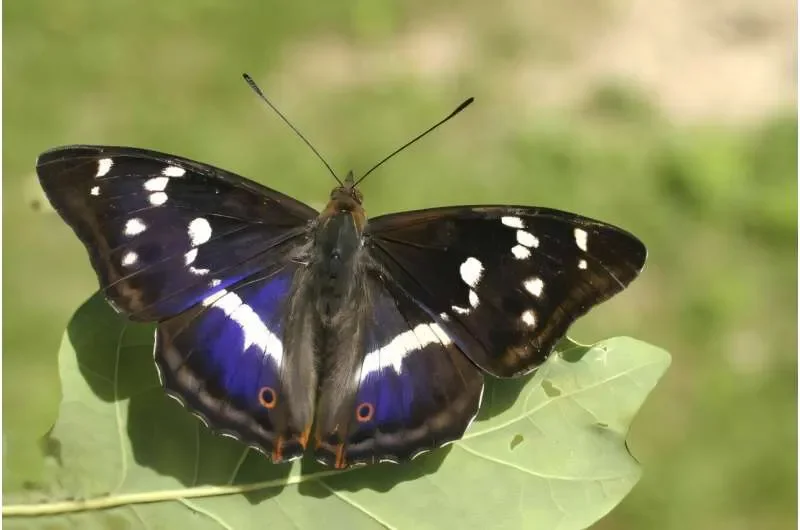
The significance of Apaturoides monikae lies in its potential to anchor scientific understanding of the Apaturinae subfamily. Researchers note that existing molecular genetic studies suggest the primary lineages of emperor butterflies diverged around the same geological epoch as this fossil's origin. The fossil now serves as a concrete calibration point, allowing scientists to test and potentially refine these hypotheses regarding butterfly development.
Read More: Dublin Study Explains Why Cars Seem to Reappear After You Overtake Them
While butterflies are widely studied today, their fossil record remains fragmented, making each new discovery particularly valuable. This emperor butterfly fossil, described as unambiguous evidence, offers a unique window into a period of significant insect evolution. The joint announcement came from the Hessian State Museum Darmstadt and the State Museum of Natural History Stuttgart.
The discovery site, located in the Luberon region of southern France, is a protected fossil locality. This find contributes directly to ongoing questions surrounding biodiversity and evolutionary pathways. The presence of such a well-preserved specimen is considered a key contribution to the field of insect evolutionary research.