THE INEVITABLE REAPPEARANCE
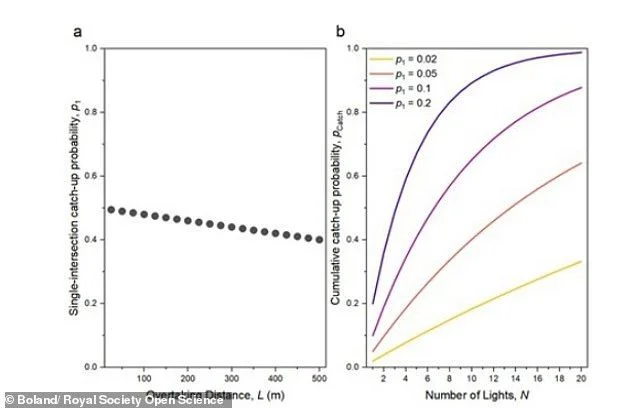
A new study from Dublin City University pinpoints red-light synchronization as the primary culprit behind the frustrating illusion that the car you just overtook has magically reappeared beside you. Scientists reveal that the careful orchestration of traffic signals, a system designed to manage flow, effectively erases fleeting speed advantages, allowing slower vehicles to persistently regain parity. This phenomenon, where a previously overtaken car consistently rejoins your side at intersections, is not merely a trick of the eye but a quantifiable outcome of traffic management logic.
The research, spearheaded by Dr. Conor Boland, suggests a simple, albeit psychologically jarring, truth: "whether you pass someone or they pass you, there is a good chance you will end up next to each other again." This means the brief satisfaction of a successful overtake can be swiftly dismantled by the very infrastructure intended to regulate the road. The feeling of surprise when this occurs is, according to the study, partly a psychological echo – our brains are wired to note these recurring encounters as they defy immediate expectations.
Read More: Elizabeth Line Helps Londoners During Tube Strike on July 6
BEHIND THE SIGNAL'S SCENARIO
The mechanics are stark. A momentary gain in speed, sufficient to pass another vehicle, is often rendered moot by the timed sequence of traffic lights. Before the speed differential can significantly alter the distance between vehicles over time, the next red light intervenes. This temporal interruption effectively resets the relative positions of cars, ensuring that those separated by minor speed variations frequently converge again. It’s a calculated outcome of signal timing, not an anomaly of driving.
THE PSYCHOLOGY OF THE REPEATED ENCOUNTER
Beyond the physics of light timing and speed, the persistence of this phenomenon is amplified by our cognitive biases. We tend to overemphasize instances where the same car reappears, imbuing these moments with a sense of inexplicable coincidence. The more ordinary encounters, where a car is passed and remains behind, fade into the background, unregistered by our selective memory. This creates a perception of the "reappearing car" as a distinct, almost supernatural event, when in reality, it is a predictable consequence of designed urban flow.
Read More: Indigenous Data Rights Now Key in Conservation Genomics