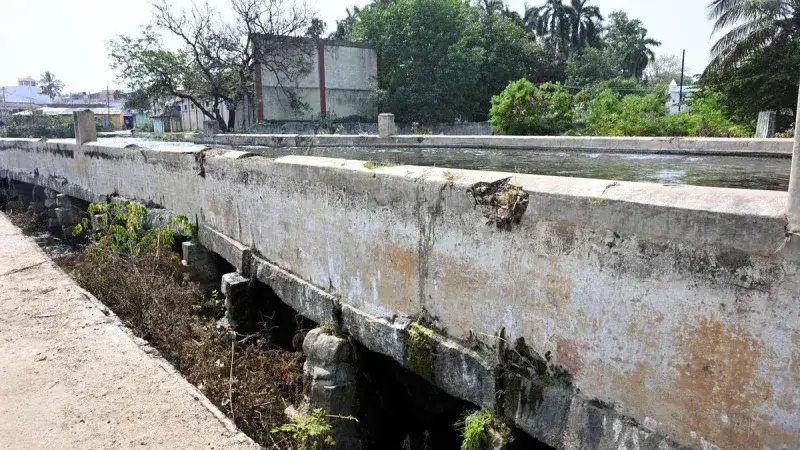
Erode, Tamil Nadu - Recent assessments by the Archaeological Survey of India (ASI) have concluded that the historic Kalingarayan Canal aqueduct in Erode remains structurally stable. The 41-metre-long structure, noted as Tamil Nadu's earliest surviving canal aqueduct, exhibits only minor issues related to water seepage through its masonry joints. The ASI recommends specific conservation measures, including grouting the joints and sealing open ones on the inner channel face, to arrest this seepage and ensure the monument's enduring integrity.
The aqueduct, featuring 14 vents and spanning the Perumpallam Odai at Karai Vaikal, is celebrated as a significant relic of medieval Tamil hydraulic engineering. The ASI's investigation identified minor dislodgement of stones on the upstream abutment as the source of the seepage.

Historical Context and Preservation Debate
This assessment arrives amidst ongoing discussions regarding the aqueduct's future. Previously, proposals had been considered for the demolition of the existing structure, cited as structurally unsafe with increasing leakages, and the construction of a new aqueduct. However, a divergence of opinion emerged, with various groups, including farmers' associations, historians, and the public, advocating for the preservation of the centuries-old edifice. These advocates have called for the current aqueduct to be declared a protected monument, with a new structure built alongside it.
Read More: 5,900-Year-Old Child Skull Found in Norway Cave
In March of this year, the ASI had already intervened, issuing directives to the Tamil Nadu Water Resources Department to halt any plans for demolition. This action underscored the monument's heritage value and the need for its conservation. The aqueduct's historical significance has been a focal point, with its origins potentially dating back over 743 years.