The world’s climate system is exhibiting an unprecedented energy imbalance, a phenomenon marked by the Earth absorbing significantly more heat than it radiates back into space. This state of affairs, as detailed in the World Meteorological Organization's (WMO) latest "State of the Global Climate" report, is pushing the planet beyond established limits. This imbalance is directly linked to record-breaking ocean warming, escalating extreme weather events, and escalating threats to global health and food supplies.
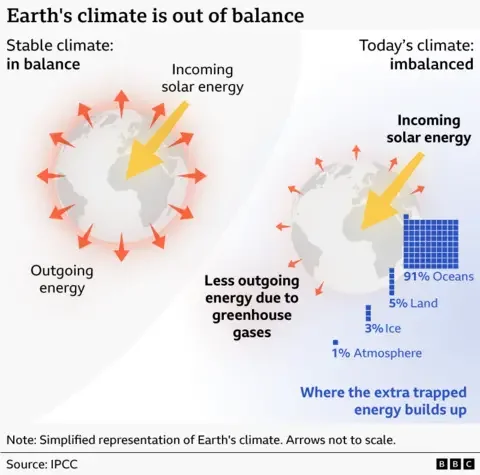
The fundamental measure, Earth's energy imbalance, indicates that more solar energy is entering the planet's system than is escaping. This excess energy is accumulating, primarily within the oceans, which absorb over 90% of it. This ongoing heat retention has led to oceans reaching unprecedented temperatures, with the past nine years each setting a new record for ocean heat content. The situation is compounded by rising sea levels at an accelerating pace and sea ice levels dwindling to critical lows, including the third-lowest Antarctic sea ice extent on record.
Read More: Amazon Land Use Changes Cause Disease Clusters in Brazil
CLIMATE INDICATORS SIGNAL ALARM
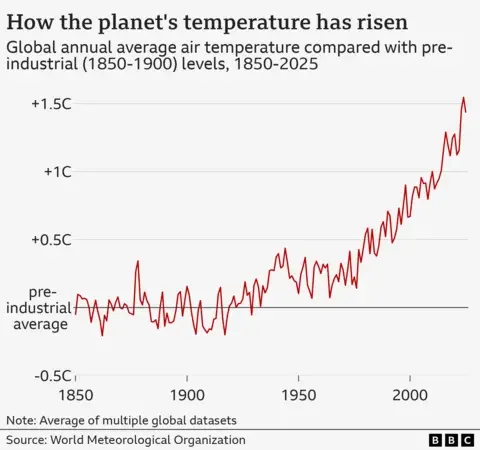
Multiple critical climate indicators are now converging, painting a picture of a system under immense strain. Greenhouse gas concentrations, including carbon dioxide, methane, and nitrous oxide, have reached their highest levels in at least 800,000 years, with CO2 alone at a 2-million-year peak in 2024. These elevated concentrations are the primary drivers behind the escalating energy imbalance and subsequent global warming. The period between 2015 and 2025 has been identified as the hottest eleven-year span on record, with 2025 ranking as the second or third warmest year overall.

The rate of ocean warming has doubled over the last two decades.
Sea levels are rising at an accelerating rate.
Sea ice extent, particularly in the Arctic, is at or near record lows.
Antarctic sea ice has seen its third-lowest levels on record.
Glaciers continue to melt without abatement.
CONSEQUENCES AND LONG-TERM IMPLICATIONS
The intensification of extreme weather events, directly linked to the heat accumulating in the climate system, poses significant risks to agricultural productivity and human health. Climate-driven food insecurity is becoming a recognized threat, with potential knock-on effects on social stability, migration patterns, and biosecurity through the spread of pests and diseases. Health impacts are also escalating, with the WMO report highlighting the amplification of disease risks, such as dengue fever, now the fastest-growing mosquito-borne illness.
Read More: Nations Championship rugby starts 7 April 2026 with new point system

Scientists warn that even with substantial emissions reductions, the effects of the current energy imbalance will persist for centuries, if not millennia, due to the vast amount of heat already stored within the Earth's system. This points to a future where disruptions to the climate system are not easily reversed, demanding significant adaptation alongside mitigation efforts. The report’s inclusion of Earth's energy imbalance as a key indicator signifies a heightened scientific understanding of the scale and persistence of the climate crisis.
BACKGROUND AND CONTEXT
The Earth's energy balance is a fundamental concept in climate science, describing the equilibrium between the incoming solar radiation and the outgoing infrared radiation from the planet. For millennia, this balance has been maintained, keeping global temperatures relatively stable. However, human activities, primarily the burning of fossil fuels, have released vast quantities of greenhouse gases into the atmosphere. These gases trap heat, disrupting the natural energy balance and causing the planet to warm.
Read More: Kanyakumari Atomic Mining Permit Extended for 1144 Hectares in 2026
The WMO report, released on World Meteorological Day, aims to consolidate the latest scientific findings on the state of the global climate. This year's report notably elevates the Earth's energy imbalance as a critical indicator, underscoring the profound and long-lasting nature of the disruptions underway. The warnings issued by the organization and figures like UN Secretary-General António Guterres emphasize a climate system that is not only warming but also swinging increasingly out of its historical state of balance, presenting a profound challenge to planetary stability.