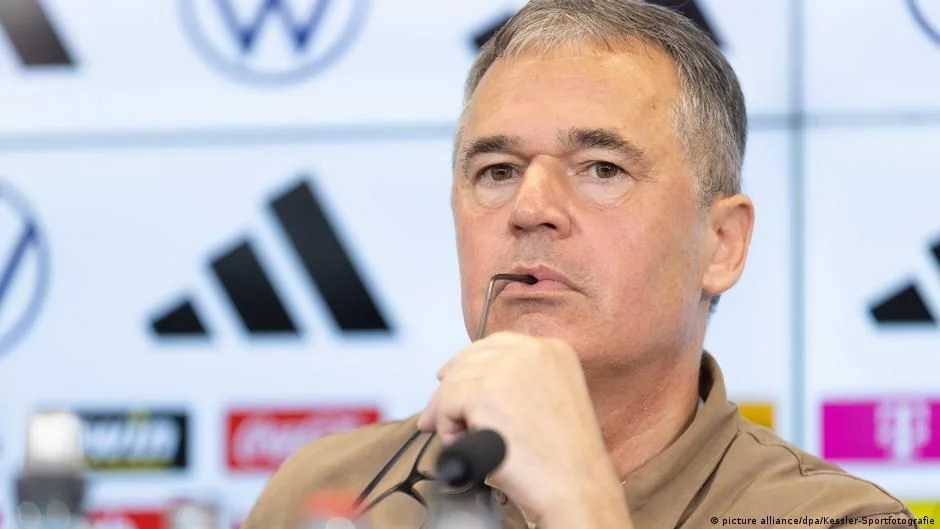
Andreas Rettig, the managing director of the German Football Association (DFB), has rejected the long-standing dogma that sports exist in a vacuum, asserting that politics and international football are inextricably linked. With the 2026 World Cup scheduled to commence in Canada, Mexico, and the United States, the DFB faces mounting scrutiny regarding the tournament's geopolitical implications and host-nation stability.
The core of the conflict rests on the inability to disentangle global governance from the sporting stage, as Rettig acknowledges that external pressures will inevitably infiltrate the upcoming tournament.
Current Operational Status
The DFB has moved into the final stages of its tactical and logistical preparation. As of 18/05/2026, the association remains focused on the sporting performance of the national team while managing the reputational risks associated with the FIFA-sanctioned event.
Logistics: The DFB has secured a facility in the United States for the tournament duration, a site that has already drawn scrutiny regarding its image and authenticity.
Political Atmosphere: Rettig maintains that despite his insistence on the presence of political realities, the primary objective for the organization remains the "power and energy" directed toward footballing results.
Preparatory Timeline: Strategic maneuvers in Mexico are slated to intensify this coming June.
Strategic Context and Industry Tension
| Stakeholder | Stance | Primary Motivation |
|---|---|---|
| DFB (Rettig) | Integrationist | Balancing commercial viability with moral framing. |
| FIFA | Expansionist | Hosting a multi-nation event to maximize reach. |
| Critics | Isolationist | Fear of "sportswashing" and political instrumentalization. |
The tension surrounding Andreas Rettig—a figure labeled alternatively as a "romantic" of the sport or a "tough guy" of administration—reflects a broader shift within German football governance. Having recently facilitated a path for external capital investment into the professional leagues, his current stance on the 2026 World Cup suggests a pragmatic pivot toward accepting, rather than ignoring, the politicization of international sport.
Read More: FIFA World Cup 2026 Revenue Reaches $15 Billion With New Ticket Prices
"You can't separate sports and politics." — Andreas Rettig (18/05/2026).
This acknowledgment marks a departure from the traditional rhetoric often employed by sports federations to maintain a facade of neutrality. By admitting that the World Cup cannot be shielded from external policy shifts or societal critique, Rettig is preparing the DFB for a tournament that is likely to be defined more by its external environment than by the events on the pitch.