Orion spacecraft embarks on a circumlunar journey, carrying a crew of four, marking the first human passage beyond Earth orbit since the Apollo era.
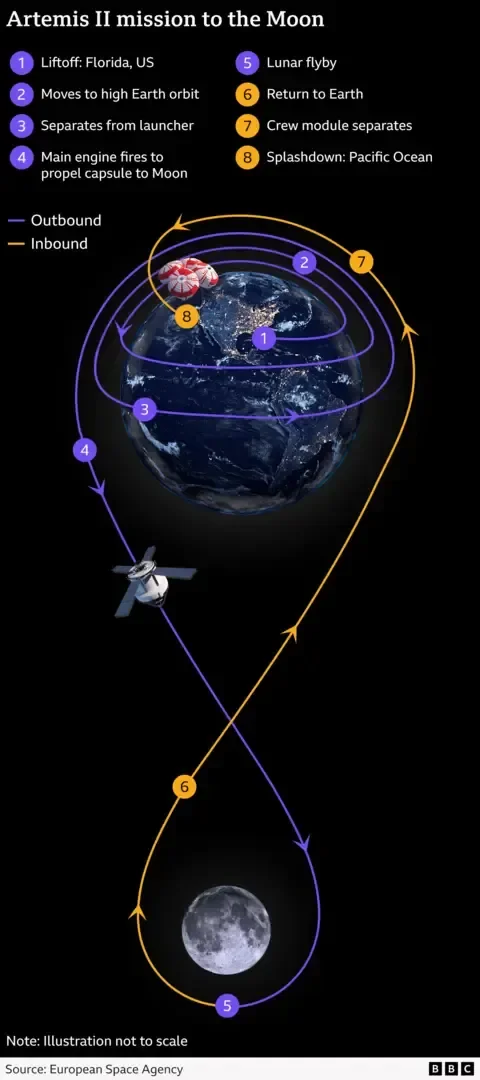
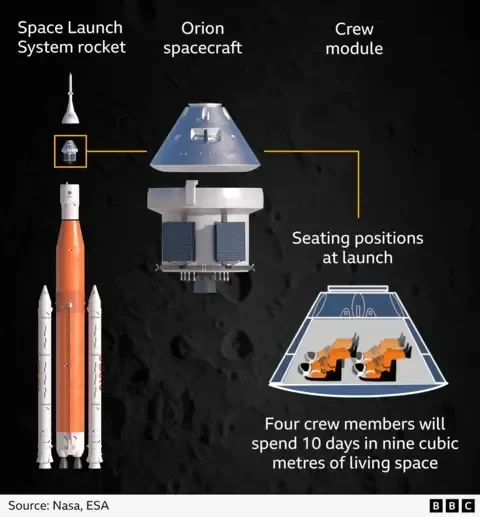
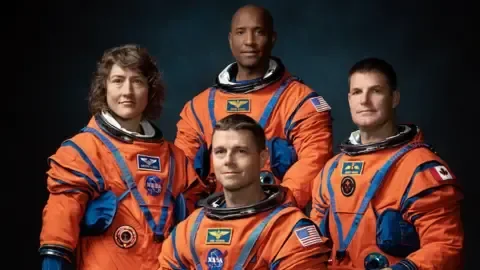
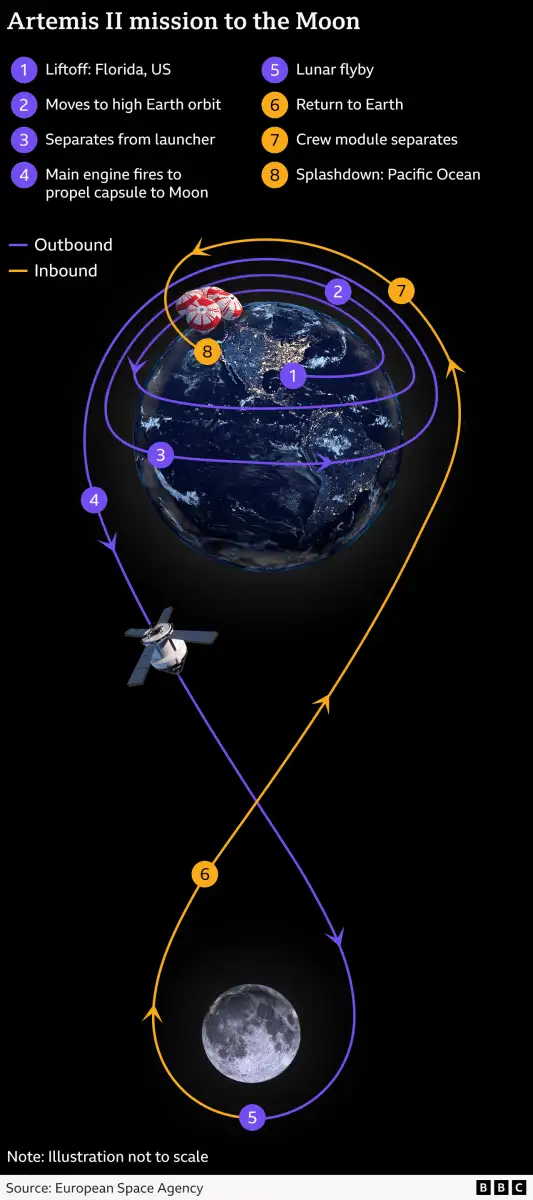
The mission, designated Artemis II, lifted off on a Wednesday from Launch Pad 39B at NASA’s Kennedy Space Center in Florida. The Space Launch System (SLS) rocket, the agency's most powerful, propelled the Orion spacecraft carrying astronauts Reid Wiseman, Victor Glover, Christina Koch, and Jeremy Hansen (of the Canadian Space Agency). This approximately 10-day flight will test the spacecraft's life support systems with a crew aboard, a critical step toward future lunar operations and potential Mars missions. Mission control teams at NASA's Johnson Space Center in Houston are monitoring the flight as the astronauts evaluate the onboard systems.
The crew is expected to perform a translunar injection burn, propelling them further into their lunar trajectory, on Thursday, April 2. This voyage represents a significant undertaking, aiming to validate critical technologies and operational procedures. The Artemis program's overarching goal, as outlined by NASA, is to establish a sustained presence on the Moon, serving as a stepping stone for subsequent human exploration endeavors. The success of Artemis II directly influences the timeline for Artemis III, the mission intended to return humans to the lunar surface.
Read More: NASA Robot Mission Launched to Raise Swift Telescope Orbit, Add 10 Years
A Test of Endurance and Technology
The Artemis II mission is explicitly a test flight, a precursor to landing missions. It is not intended to touch down on the Moon. The astronauts' primary objective is to thoroughly assess the performance of the Orion crew capsule during this extended deep space journey. This includes scrutinizing the life support systems, a crucial element for any long-duration human spaceflight. The flight path will take the crew around the Moon and back to Earth.

Jeremy Hansen, as the first Canadian to venture beyond Earth orbit, makes his inaugural space flight as part of this crew. The mission configuration involves a crew of four, housed within the Orion spacecraft, a vehicle making its piloted debut in deep space. Engineers have also integrated a new payload, ARCHAR (Artemis Research for Crew Health And Readiness), which will contribute to understanding the effects of space travel on human physiology.
Read More: New York Mets vs Atlanta Braves 7 April 2026 NL East game preview
Context and Precedents
The launch of Artemis II marks a return to human lunar voyages after a fifty-year hiatus. The last crewed mission to the Moon was Apollo 17, which concluded in December 1972. This program is NASA's initiative to re-establish a human presence on the Moon. The Artemis roadmap includes previous phases, such as Artemis I in 2022, an uncrewed test flight of the Orion spacecraft around the Moon. Subsequent missions, like Artemis III, are planned for crewed landings, with the earliest potential date in mid-2027.
The journey of Artemis II is viewed as a pivotal step toward realizing the broader ambitions of the Artemis program, which envisions not just landings but also the development of lunar infrastructure, including orbital habitats and expanded surface operations. The program's progression is dependent on the successful execution and validation of each preceding mission's objectives.
Read More: ISS Crew Moves to Dragon Spacecraft Due to Air Leaks