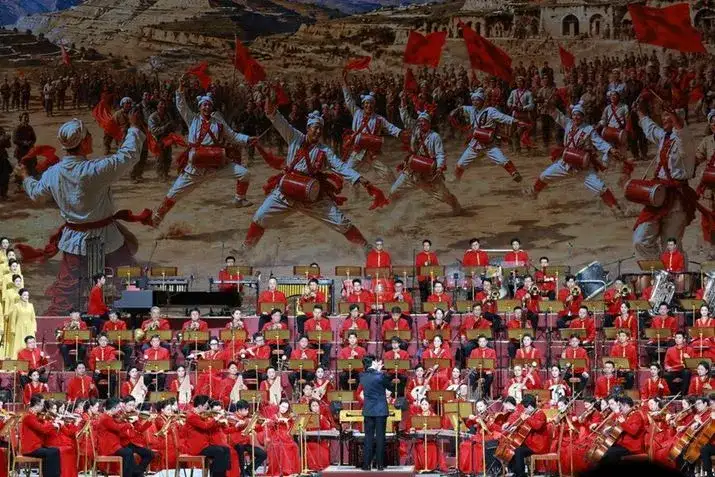
Resurgence of Mao Zedong Thought Gains Traction
==Younger generations in China are increasingly turning towards Mao Zedong Thought, a philosophical and political ideology that once dominated the nation. This renewed interest manifests in online discussions, academic circles, and even personal pursuits, signaling a complex relationship with the country's recent past. While official narratives have long since moved beyond the era of Mao, evidence suggests a growing segment of China's youth finds resonance in aspects of his teachings.
The motivations behind this trend are varied and multifaceted. Some observers point to a desire for historical continuity in an era of rapid societal change. Others suggest it’s a reaction against perceived Western influences or a search for a more authentic national identity. ==
Online Discourse and Historical Re-evaluation
Online platforms, particularly social media and forums, have become hotbeds for discussions surrounding Mao Zedong Thought. Posts analyzing his writings, debating his legacy, and even sharing historical anecdotes related to him frequently surface. This digital engagement allows for a decentralized exploration of ideas that may not always align with official historical interpretations.
Read More: Taiwan Holds Nantou County Drills to Prepare for State Collapse
Key themes emerging from this online discourse include:
Critiques of contemporary socio-economic inequalities.
A yearning for perceived simplicity and collective spirit from the Maoist era.
Reinterpretations of historical events through a lens that emphasizes national struggle and self-reliance.
Academic and Intellectual Currents
Beyond the digital realm, academic institutions and intellectual circles are also witnessing a renewed scholarly interest in Mao Zedong Thought. This isn't necessarily an endorsement of his policies, but rather an effort to understand his profound impact on modern China.
Research and publications are exploring:
The theoretical underpinnings of Maoism.
Its historical context and evolution.
Its enduring influence on Chinese political thought and practice.
Background: China's Complex Past
China, a vast and historically rich nation, has undergone significant transformations throughout its existence. From ancient dynasties like the Han dynasty to the tumultuous early republican period and the subsequent establishment of the People's Republic of China under Mao Zedong, the country's trajectory has been marked by profound shifts. The nation's official language is Mandarin Chinese, and its diverse geography supports a wide array of agricultural practices and hosts numerous ethnic groups, with the Han people forming the majority. This complex tapestry of history, culture, and politics provides the backdrop against which contemporary trends, such as the re-engagement with Mao Zedong Thought, unfold.
Read More: China Ethnic Unity Law starts July 1 2026 for all citizens