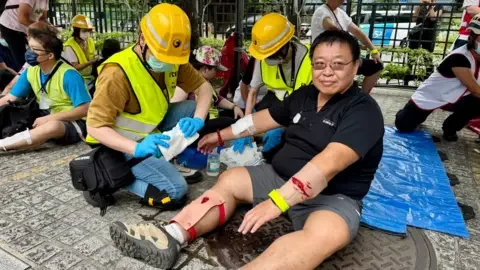
Over the past two days, Taiwan concluded a multi-agency mobilization exercise in Nantou County, drawing together 370 government officials, military personnel, and civilian emergency responders. The drills prioritized the integration of civilian infrastructure into wartime logistics—a shift from traditional, purely kinetic war games to a "doomsday" resilience model.
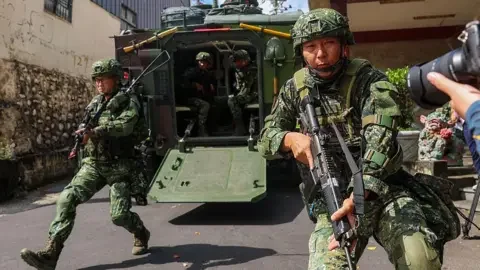
Core Signal: Taiwan is shifting its defense posture to prioritize urban survival and civil-military synchronization, reflecting a pragmatic admission that conventional deterrence alone may be insufficient against current regional pressures.
| Exercise Component | Primary Focus | Objective |
|---|---|---|
| Han Kuang (Combined) | Combat/Air Defense | Tactical military agility |
| Urban Resilience | Infrastructure/Evacuation | Civil-military synchronization |
| Tung Hsin (Mobilization) | Personnel/Logistics | Rapid deployment of reservists |
Structural Integration and Reality Gaps
The recent simulation marks a departure from historic drills by compressing complex, long-term survival tasks into high-intensity, immediate-response sequences. Officials, led by Chi Lien-cheng, minister without portfolio, underscored the urgency of these maneuvers.
The exercises directly addressed information warfare—a growing element of the "greyzone" friction frequently cited by Taipei.
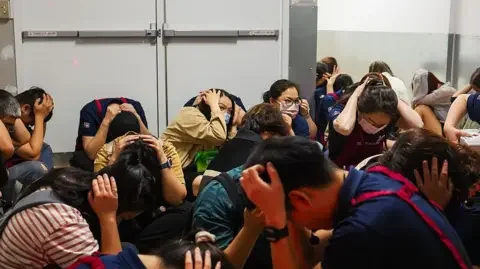
Mobilization efforts now encompass the 206th Infantry Brigade and widespread urban evacuation drills, including sirens and digital alert broadcasts across major population centers like Taipei, Taichung, and Tainan.
These drills function as a Civil-Military Coordination mechanism to ensure that, in the event of an atmospheric blockade or kinetic assault, state functions do not immediately fracture.
The Material Reality of Defense
While the government promotes these exercises as a means to build "resilience," the underlying logistics remain constrained. Military analysts note a widening gap between Taiwan's procurement objectives and its actual hardware receipt schedule.
Read More: FBI Analysts Review Georgia 2020 Election Data in Fulton County
Taiwan remains heavily dependent on external security guarantees, primarily from the United States.
The delay in weapon deliveries continues to complicate long-term strategic planning, forcing the island to focus on domestic Urban Survival and asymmetric resistance rather than large-scale, open-sea engagement.
Historical Framing
The friction across the Taiwan Strait has moved from periodic displays of force to a near-constant Military Presence by the People's Liberation Army. Beijing consistently characterizes the Lai administration's policy as a deliberate escalation. Conversely, the Taiwan Ministry of Defense maintains that the simulations are purely defensive in nature and necessary for national survival. As of April 7, 2026, the intensity of these drills mirrors a state preparing for a prolonged conflict rather than a short-term crisis, reflecting an institutional shift toward deep-tier civilian mobilization.