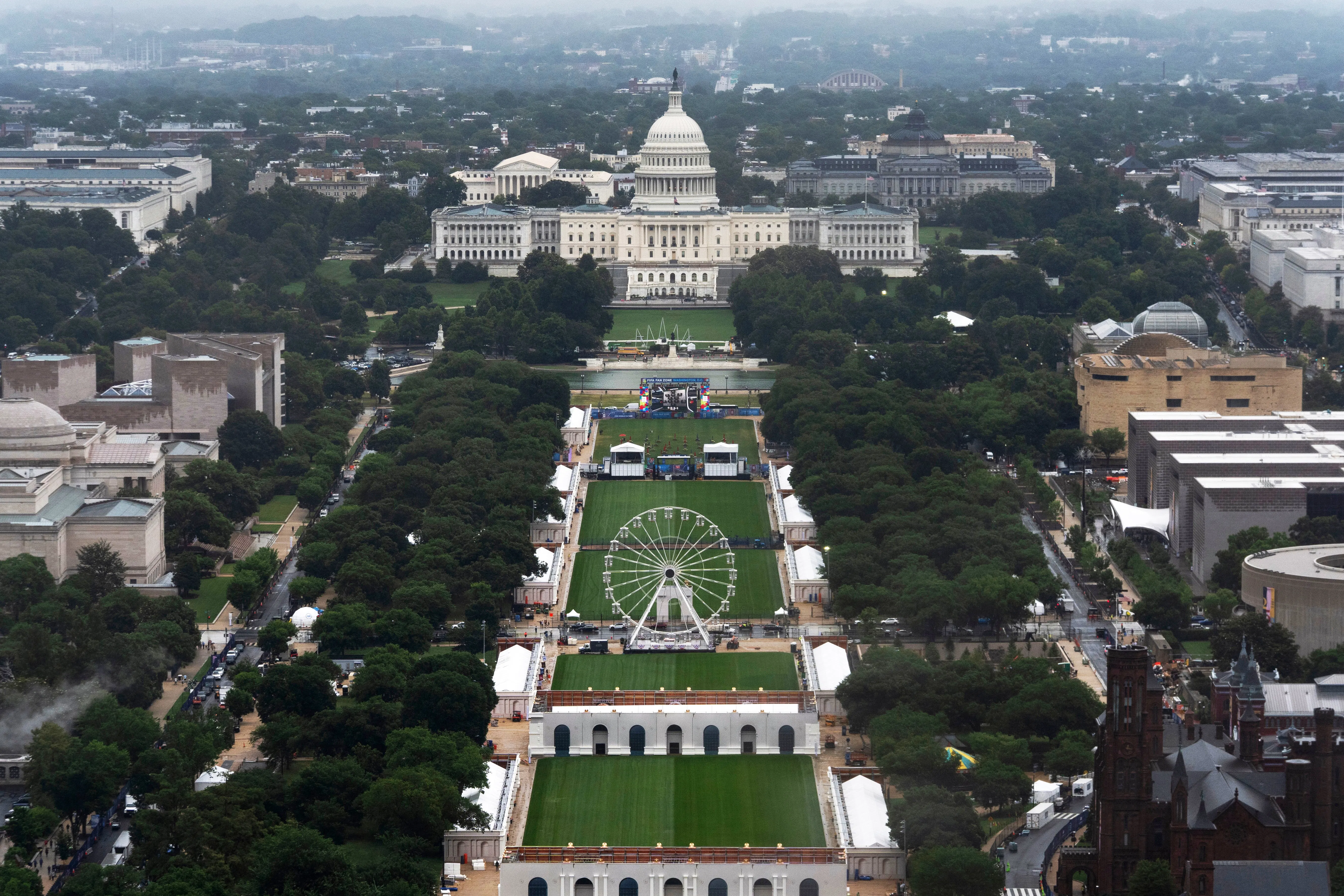
As of April 7, 2026, the United States approaches its semiquincentennial with a marked dissonance between ceremonial spectacle and public sentiment. While municipal preparations for the America 250 milestone involve high-profile events—including a Times Square ball drop on July 3 and a National Mall salute—polling data reveals a fractured national psyche.
Data indicates a stark correlation between political affiliation and pride regarding the anniversary, alongside a broad consensus that the nation's founders would likely view the contemporary United States with disappointment.
Measured Sentiment and Demographic Cleavages
Public response to the upcoming anniversary is stratified, suggesting that the concept of 'nationhood' is interpreted through opposing lenses:
Partisan Disparity: Roughly 7 in 10 Republicans report feelings of pride, a metric that drops to 3 in 10 independents and 2 in 10 Democrats.
Generational Divide: Pride is concentrated among the demographic age 60 and older, with 6 in 10 expressing positive attachment. Conversely, younger adults (under 30) exhibit higher rates of indifference.
Foundational Critique: Only 2 in 10 Americans believe the signers of the Declaration of Independence would be satisfied with the current state of the republic, a statistic reflecting pervasive skepticism regarding the trajectory of American governance.
| Demographic | Reporting 'Pride' | Sentiment toward Founders' Outlook |
|---|---|---|
| Republicans | ~70% | High Skepticism |
| Independents | ~30% | High Skepticism |
| Democrats | ~20% | High Skepticism |
| Age 60+ | ~60% | Variable |
Institutional Planning vs. Grassroots Engagement
The gap between organized commemoration and individual participation remains significant. Despite a robust calendar of America 250 programming—ranging from the Great American State Fair to the Freedom 250 Grand Prix—official data indicates that only 1 in 10 U.S. adults intends to attend an official commemorative event. Engagement at the community level, including neighborhood gatherings, remains at approximately 2 in 10.
Read More: Taiwan Holds Nantou County Drills to Prepare for State Collapse

Contextual Background
The approaching anniversary, serving as both a historical anchor and a modern mirror, occurs within a climate of profound political and social turbulence. Current events—including scheduled appearances by figures such as Donald Trump at locations like Mount Rushmore—often amplify existing divisions rather than unifying the public around a shared narrative of the founding.
This environment of "anxious celebration" characterizes a populace struggling to reconcile the historical mythology of the Revolutionary War with contemporary concerns about democratic stability and social cohesion. As the time capsule burial in Philadelphia nears, the contrast between the static nature of history and the kinetic, often abrasive, nature of present-day American life remains the defining feature of the upcoming 250th observation.
Read More: Senate Passes Immigration Bill: What Happens Next for Border Security?