In a world increasingly dominated by mass production, one craftsman in England continues a centuries-old tradition, shaping wood and leather with his hands. Jeremy Atkinson, widely recognized as the last remaining maker of traditional, bespoke clogs in England, faces the challenge of preserving a craft that spans Roman times. His work, while providing functional and supportive footwear, also embodies a tangible connection to history, a stark contrast to the "2D and fake" modern environment.
The Enduring Craft of Clog Making
The practice of clog making in England has a long history, with regional variations in wood and style. Historically, English clog makers often used alder sourced from Wales and the West Country, birch from Scotland, and willow from Lincolnshire. Welsh clog makers, for instance, favored alder, birch, and sycamore. These wooden shoes, carved by hand, offered practical footwear for various communities.
Read More: England Cricket Captaincy: Harry Brook Leads Race After Stokes Quits
Material Selection: The choice of wood was crucial. Trees typically aged 20-30 years were felled green. This allowed the wood to be worked following its natural grain.
Technique: Traditional methods involved carving the wooden soles using swivel knives. This process required considerable skill, as exemplified by a scar on Atkinson's hand, a reminder of a slip with a knife.
Leather Uppers: Alongside carving the soles, the craft also involves skilled cutting, dyeing, and stitching of leather uppers. The varying oil content within different hides presented a further complexity to the work.
Jeremy Atkinson: A Sole Practitioner
Jeremy Atkinson stands as a singular figure in the modern landscape of English craft. He openly states, "I'm the last of the traditional cloggers making bespoke clogs in England. I hand cut the leather uppers and hand carve the soles." This declaration underscores the precarious state of his unique profession.
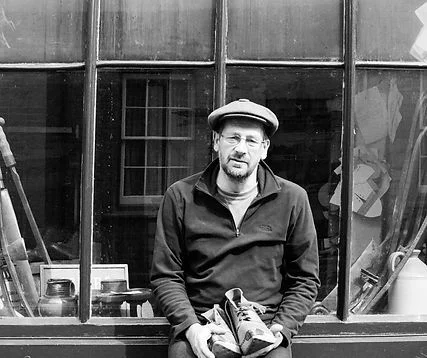
Bespoke Creation: Atkinson produces clogs on request, a practice that highlights the individualized nature of his work. He has made clogs for individuals, including specific pairs for a film and theatre company, indicating the broader appeal and historical interest in his creations.
Legacy and Transmission: While Atkinson is matter-of-fact about his position, he acknowledges the importance of his craft beyond the physical product. He has begun teaching, notably instructing Geraint Parfitt, who is described as the only hand carver in Wales. This act of teaching represents a conscious effort to prevent the complete disappearance of the skill.
Personal Philosophy: Atkinson has developed a finishing style he calls 'unplugged,' suggesting a move towards a more fundamental and authentic presentation of his work, which he views as more than just footwear in a superficial world.
Research and Wider Connections
Atkinson's dedication to his craft extends beyond his workshop. He has undertaken research trips to Spain and France to study and understand European clog-making traditions. This broader engagement indicates a deep commitment to the historical context and evolution of his art.
Advisory Role: His expertise has led him to advise film and theatre companies on the history and making of clogs, further cementing his status as a knowledgeable authority.
Shared Tradition: He notes that he has taught Geraint Parfitt, and it is observed that both Atkinson and Parfitt are among the few remaining hand carvers. This pairing suggests a shared understanding and perhaps a limited network of practitioners.
The Practical and Symbolic Value of Clogs
Beyond their historical significance, the clogs crafted by Atkinson serve a practical purpose, offering therapeutic benefits for some wearers.
Foot Support: Numerous satisfied customers have found Atkinson's clogs to be effective in providing support for foot conditions and managing pain.
Tangible Creation: The process of transforming a block of wood into a tangible item is described as "reputing," suggesting a deeply satisfying and grounding aspect to the work. This contrasts sharply with the often ephemeral nature of digital or mass-produced goods.
Conclusion: Preserving a Skill in a Modern World
Jeremy Atkinson’s position as England's last traditional clog maker highlights the ongoing tension between historical craft and contemporary society. His commitment to hand carving, attention to material detail, and efforts to pass on his knowledge to Geraint Parfitt are critical in safeguarding this ancient skill. The scarcity of practitioners, with Atkinson and Parfitt being the only known hand carvers, underscores the urgent need for continued recognition and support for such traditional trades. The question of whether Atkinson sees himself as a "flame keeper" for this fading art form is a probing one, hinting at the weight of responsibility he carries in maintaining a connection to a past era through his meticulously crafted footwear.
Read More: John Terry criticizes Thomas Tuchel for treating Djed Spence unfairly
Sources Used:
The Guardian: "Experience: I’m the last traditional clog maker in England" (Published 11 minutes ago) - https://www.theguardian.com/lifeandstyle/2026/feb/20/experience-last-traditional-clog-maker-england
Hergest & Lee: "Jeremy Atkinson is The Last Clog Maker, hand carving clogs in England" (Published Jun 21, 2024) - https://www.hergest-lee.com/post/the-last-clog-maker
Marches Makers: "Jeremy Atkinson Clogs" (Seen on Bing) - https://www.marchesmakers.co.uk/jeremy-atkinson-clogs.html
Clogmaker.co.uk: "About traditionally hand crafted clogs; nineteenth century british han" (Seen on Bing) - https://www.clogmaker.co.uk/about
Hole & Corner: "Sole Survivor" (Seen on Bing) - https://www.holeandcorner.com/long-reads/sole-survivor
Aestheticons: "The Last Clogmaker" (Seen on Bing) - https://aestheticons.wordpress.com/category/the-last-clogmaker/
Natural Homes: "The Last Clog Maker in England" (Seen on Bing) - http://naturalhomes.org/naturalliving/alder-clogs.htm