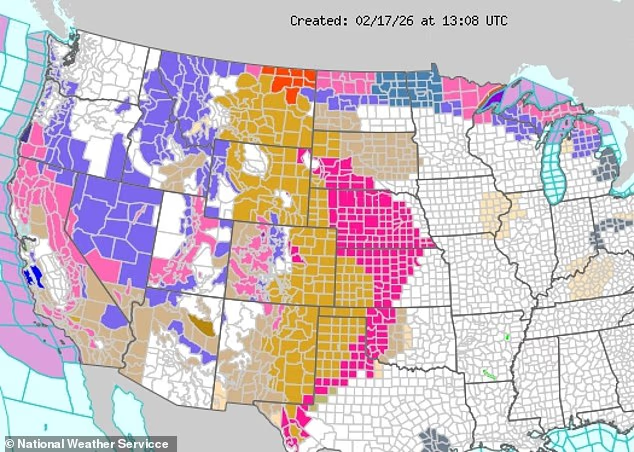
Travelers across the United States are currently facing significant delays and safety risks due to extreme weather conditions. The National Weather Service (NWS) has issued warnings for more than 10 states, particularly in the Rocky Mountains and the Great Plains. Wind speeds have reached levels usually seen in hurricanes, with gusts over 75 miles per hour. These conditions have made it dangerous for large vehicles to stay on the road and have forced airlines to stop hundreds of flights. While weather is the main cause, questions have been raised about whether airline computer systems are strong enough to handle these sudden changes. This report examines the data behind the current travel stops and the safety risks reported by officials.
The Timeline and Main Players
The current wave of disruptions follows a series of severe weather events occurring between late 2024 and mid-2025.
Read More: Americans cut travel short due to money worries and safety fears in 2026
The National Weather Service (NWS): Issued high wind warnings for Colorado, Montana, Texas, New Mexico, and Wyoming.
Major Airlines: United Airlines, American Airlines, and Delta are reporting the highest number of cancellations.
Affected Hubs: Major airports in Charlotte (CLT), Atlanta (ATL), Dallas (DFW), and New York (JFK) are seeing the most stopped flights.
Timeline of Events:
March 2025: High wind warnings and 699+ flight disruptions.
August – September 2025: Tropical storms Erin and Imelda caused coastal closures and power outages.
Late 2024: Hurricane Helene caused significant infrastructure damage in the Southeast.
Evidence of Disruption
Data from flight tracking and weather stations show a wide-scale impact on both ground and air travel.
| Airport | Primary Airlines Affected | Type of Impact |
|---|---|---|
| Charlotte (CLT) | American, PSA, Spirit | Over 600 cancellations/delays |
| Atlanta (ATL) | Delta, Southwest, Spirit | Heavy delays; wind advisories |
| Dallas-Fort Worth (DFW) | American, Spirit | High wind grounding |
| Houston (IAH) | United, Spirit | Severe weather stops |
| New York (JFK) | JetBlue, Delta | Mass scheduling shifts |
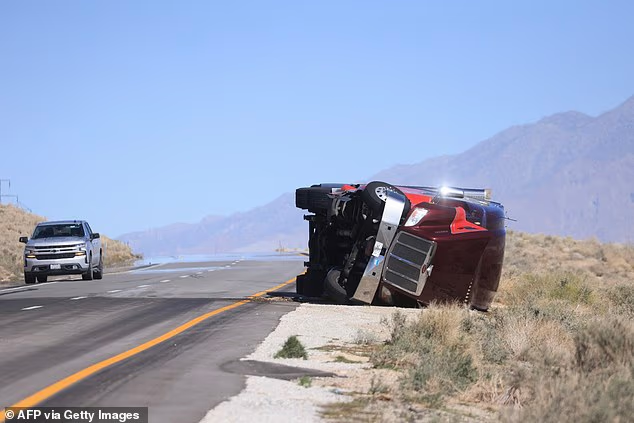
"The wind gusts could be so extreme that NWS officials fear large trucks and tractor-trailers could be blown over on their sides while driving." — National Weather Service Report
High wind gusts exceeding 75mph are the primary driver of current ground and air travel halts in the central and western U.S.
Regional Wind Strength and Ground Safety
In the Rocky Mountains and Great Plains, the NWS warns that the wind is strong enough to cause physical damage to buildings and vehicles. In states like Colorado and Wyoming, the "hurricane-force" gusts are not coming from a coastal storm but from intense pressure changes in the atmosphere.
Trucking Risks: Officials have warned drivers of high-profile vehicles, such as semi-trucks, to stay off the roads.
Visibility: In some areas, such as California, these winds are combined with snow, creating "blizzard conditions" where drivers cannot see the road.
Could these inland winds become a more frequent threat to interstate shipping? The current data shows that these gusts are now matching the power of coastal hurricanes.
Airline Reliability and System Failures
While the wind is a clear physical danger, data suggests that some travel chaos is caused by how airlines respond to the weather. During a sample period in July, United Airlines saw a cluster of cancellations in cities like San Diego, Las Vegas, and Miami.
Read More: Venezuelan Man Charged with Assaulting US Officers in Nebraska on June 18

Technical Stress: Experts suggest that when weather stops flights, the "rebooking systems" used by airlines sometimes fail.
The Debate:
Airlines argue that safety is the only reason for cancellations and that extreme wind makes flying impossible.
Industry critics argue that airlines need to "reinforce IT resilience" so that their software does not collapse when the weather gets bad.
Is the travel chaos a result of the wind alone, or are outdated computer systems making a bad situation worse?
Coastal Storms and Infrastructure Damage
While the West deals with wind, the East and Southeast have faced a different set of challenges from named storms like Helene, Erin, and Imelda.
Power Outages: Hurricane Helene left millions without power across Florida, Georgia, and the Carolinas.
Water Safety: Hurricane Erin caused dangerous "rip currents" on beaches in North Carolina and Virginia. Even without a direct hit, the storm was strong enough to cause multiple drownings.
Flooding: Tropical Storm Imelda brought heavy rain to the Bahamas and moved toward the U.S. coast with 40mph sustained winds.
Expert Analysis
Weather and aviation experts emphasize that the current situation is a mix of natural power and human system limits.

National Weather Service (NWS) Analysts state that wind speeds of 75mph are the "threshold for hurricane strength." When these speeds are reached over land, the risk of "blown-over" vehicles increases significantly.
Aviation Systems Experts (via Bolt Flight) note that the "chain reaction" of travel turmoil often lasts days after the wind stops. They point out that "systemic operational issues" often magnify the crisis, meaning the way airlines manage their crews and planes can turn a short storm into a week-long problem.
Investigation Findings
The evidence shows that the U.S. is currently dealing with a dual-threat travel crisis. First, the physical danger of 75mph winds in the central U.S. makes driving and flying unsafe. Second, the heavy reliance on centralized airline hubs means that a storm in one state, like Colorado or Texas, quickly causes cancellations in New York and Florida.
Read More: Hyderabad Airport Offers Short City Tours for Layover Passengers from 1st August
Next Steps:
Travelers should check wind advisories for inland states, not just coastal hurricane paths.
Airlines are expected to face more pressure to update their rebooking software to prevent mass passenger stranding.
Local governments in wind-prone states may need to issue more specific "no-drive" orders for high-profile vehicles during these gusts.
Primary Sources
Daily Mail: Nationwide travel chaos as hurricane-force winds rip through US
Bolt Flight: Nationwide Air Travel Chaos: Major U.S. Cities Crippled by Mass Flight Cancellations
AP News: At least 64 dead and millions without power after Helene's deadly march
USA Today: Hurricane forecasters expect Imelda impacts in US
Fox News: Hurricane Erin prompts beach closures and emergency declarations
Travel And Tour World: US Faces New Travel Chaos as Hurricane Helene Grounds Over 500 Flights