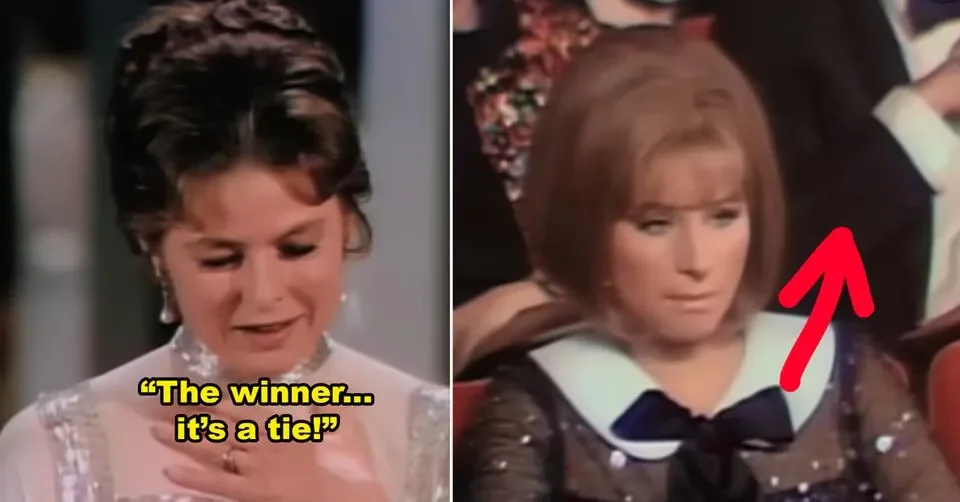
Six instances of shared Academy Awards in nearly a century reveal the fragility of singular acclaim.
The Oscars have witnessed a mere six instances of ties throughout its almost 100-year history, with the most recent occurrence in the Best Live Action Short Film category joining a sparse roster of shared victories. These moments, described as "astonishingly uncommon," disrupt the awards' inherent structure, which typically celebrates individual achievement. The Academy's voting system, rather than its rules, has resulted in these joint wins, underscoring how unexpected outcomes can punctuate the otherwise predictable rhythm of the ceremony.
Shared Victories Emerge from the Archives
The rarity of these shared wins is underscored by historical accounts. While the Academy's official stance is that it doesn't leverage external influence on voting, the instances of ties reveal moments where the system produced unexpected dual winners. These occasions have been documented with archival images and remarks that capture the ensuing surprise, highlighting how deeply ingrained the expectation of a single victor is within the awards' narrative.
Read More: The Traitors Wins 5 Awards at 2026 Critics Choice Real TV Awards
1949: A Chance to Live and So Much For So Little split the Documentary Short award.
1969: Katharine Hepburn (The Lion in Winter) and Barbra Streisand (Funny Girl) famously shared the Best Actress award. Streisand, then 26, was awarded alongside the 61-year-old Hepburn, a veteran with multiple nominations and a previous win.
1986: Artie Shaw: Time Is All You’ve Got and Down and Out in America tied for Documentary Feature.
1994: Franz Kafka’s It’s a Wonderful Life and Trevor split the Live Action Short award.
2012: Skyfall and Zero Dark Thirty both received the Sound Editing award.
Recent: A tie was announced in the Best Live Action Short Film category, adding a contemporary example to this select group.
The Mechanics of a Tied Vote
The voting system itself, not explicit rules dictating tie-breaking procedures, has led to these shared honors. The Academy confirms that in the event of an exact tie, both nominees are declared winners and receive their own statuettes. This lack of a run-off mechanism means the outcome stands, regardless of the initial vote distribution. One notable instance involved Wallace Beery and Fredric March for Best Actor at the 5th Academy Awards. While March received more votes, the rules at the time stipulated that any achievement within three votes of the winner would also be recognized, resulting in a tie. This highlights how the precise rules of engagement for voting have evolved or been interpreted throughout the Academy's history.