Vast, a company previously centered on the development of private space stations, has officially broadened its scope. On May 19, 2026, the company unveiled Vast Satellite, a new product line encompassing high-power satellite buses. This diversification leverages technologies initially developed for their commercial space station projects, notably drawing from the Haven Demo test flight.

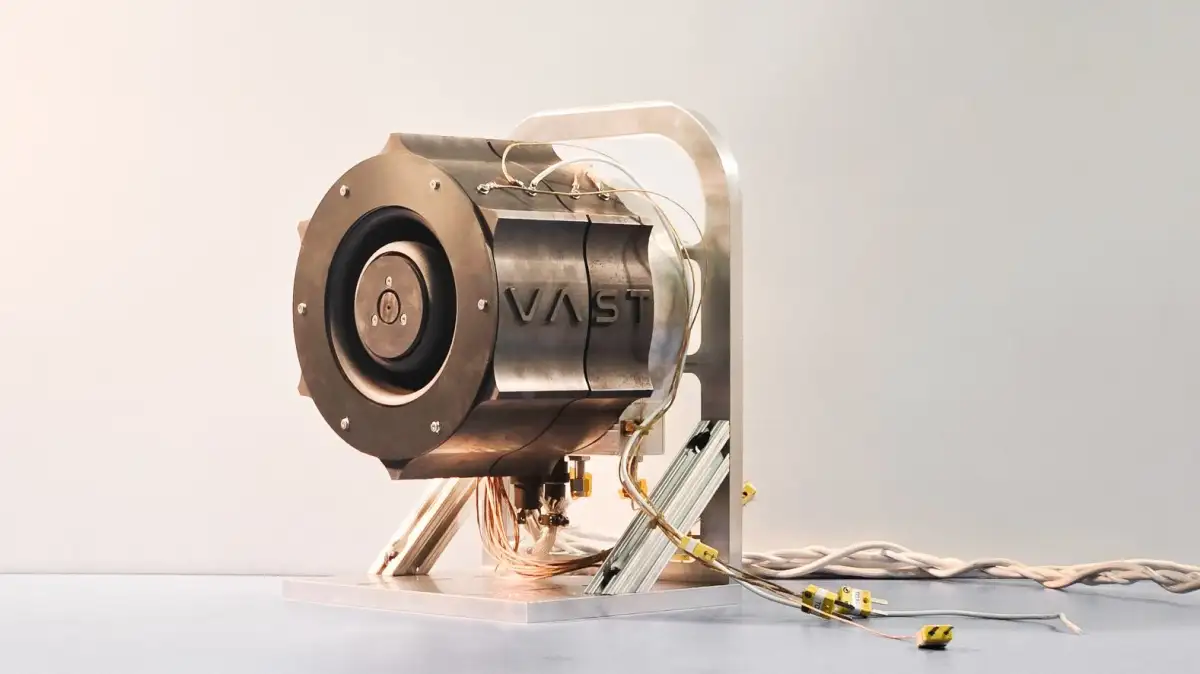
The core of this expansion hinges on Vast's in-house manufacturing capabilities for critical satellite components, including avionics, power systems, communications, propulsion, and flight software. These systems, proven during the Haven Demo's controlled deorbit in February, now form the backbone of the new satellite offerings. The initial satellite bus is designed for 15 kW-class power, suitable for a wide array of power-intensive missions.

Vast has already secured a preliminary deal with a confidential customer for an initial order of four satellites, with provisions for up to 200 more. The company plans for the first ten of these satellites to launch by late 2027. These platforms are initially slated for operation in Low-Earth Orbit (LEO), though Vast indicates future adaptability to other orbital regimes.
Read More: Robot Mower Subscriptions Lower Cost and Offer Maintenance

Expanding Capabilities and Orbital Infrastructure
The move into satellite buses marks a strategic pivot for Vast, moving beyond a singular focus on the Haven-1 commercial space station, which remains in development. This new venture positions the company to cater to diverse needs within the commercial space sector, including communications, Earth observation, national security, and the burgeoning field of orbital data centers.

One notable offering within this expansion includes the potential integration of an Nvidia Space-1 Vera Rubin Module. This module is designed to provide advanced computing power for orbital data processing and artificial intelligence applications. The dry mass of the satellite bus is approximately 700 kg, with a payload capacity exceeding 350 kg, and an intended operational lifespan of 5 years in LEO.
Read More: Nine Indian Space Startups Sign Italy Deals on May 20 2026
Background and Future Vision
Vast's foundation was built around the ambitious concept of creating commercial space stations to facilitate a sustained human presence in orbit and enable deeper space exploration. The Haven Demo mission served as a crucial testbed for many of the technologies now being repurposed for the satellite line. This diversification into satellite manufacturing appears to be a natural extension of Vast's long-term vision for comprehensive orbital infrastructure. The company aims to build interconnected systems that support both current space endeavors and future missions to destinations like the Moon and Mars.