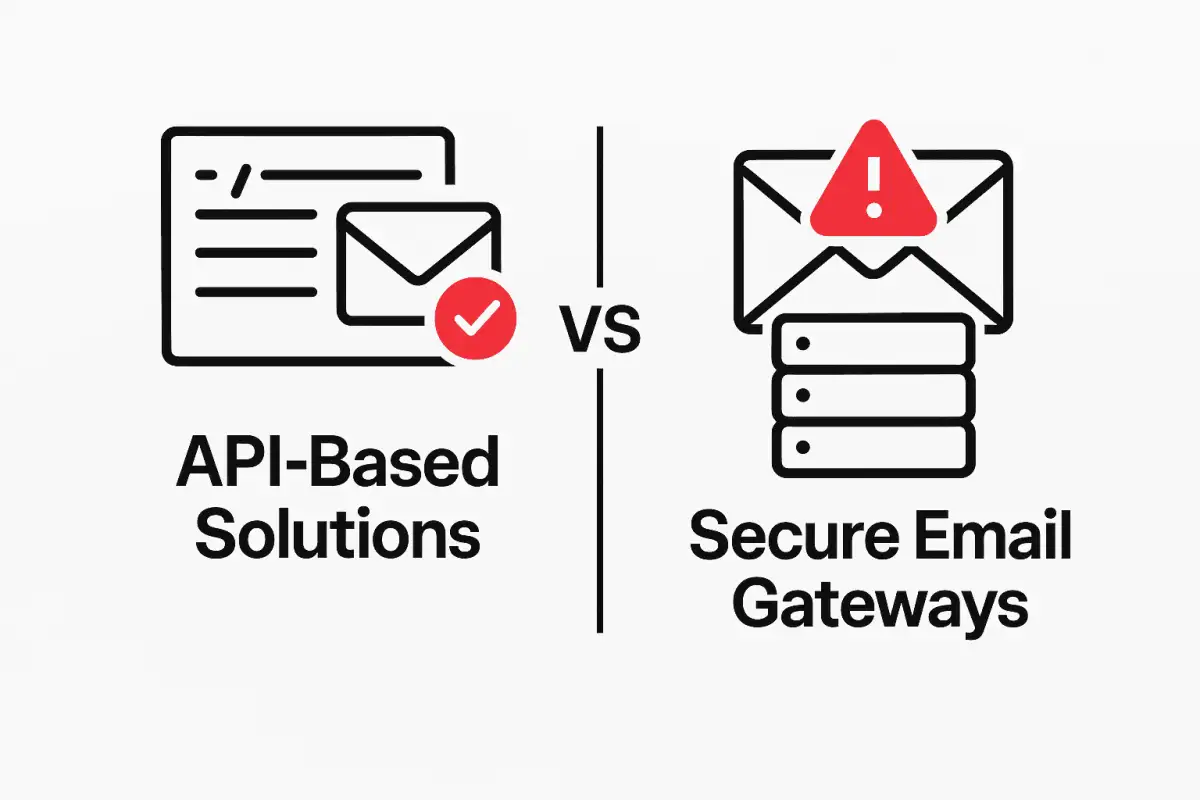
As of May 20, 2026, the strategy for securing corporate email has shifted from a reliance on single-point enforcement to a hybrid, dual-layer model. Organizations are increasingly deploying Secure Email Gateways (SEG) alongside API-based security tools to mitigate threats that evade perimeter filtering. While SEGs act as a gatekeeper before delivery, API-integrated solutions function post-delivery within the mailbox, offering a mechanism to remediate threats that bypass the initial scan.

Comparative Operational Models
| Feature | Secure Email Gateway (SEG) | API-Based Protection |
|---|---|---|
| Placement | Perimeter (MTA-based) | In-tenant (Cloud Integration) |
| Timing | Pre-delivery filtering | Post-delivery / Real-time |
| Strengths | Commodity spam/malware blocking | Internal mail and context analysis |
| Infrastructure | Requires traffic rerouting | No traffic interception |
SEGs remain the primary defense against bulk-delivered, known malicious payloads and unwanted traffic.
API-based tools gain visibility into the cloud platform's environment, such as Microsoft 365 or Google Workspace, allowing for the detection of Business Email Compromise (BEC) and internal lateral movement.
Modern threats, which frequently utilize legitimate infrastructure ("living-off-the-land"), often appear authentic to standard gateways, necessitating the deeper behavioral analysis provided by APIs.
Tactical Convergence
The integration of these two methods—often referred to as Email Security orchestration—has become a priority for managed service providers (MSPs). By consolidating these disparate layers into a unified console, security teams aim to reduce the operational friction caused by managing separate environments. Vendors are currently pushing to bundle these functionalities into single architectures, treating the email inbox as the most critical surface area for investigation and forensic reporting.
Read More: Lawyeree Gets $8 Million for AI Legal Help in Dubai
Historical Context
Historically, email security relied almost exclusively on the SEG model to filter incoming traffic before it reached the internal mail server. As enterprises transitioned to cloud-based productivity suites, the reliance on MX record-based rerouting became less effective against sophisticated, low-volume, or internal-only attacks. This change has led to a pivot toward API-First design, where security tools sit natively within the platform rather than acting as a mandatory pass-through filter.