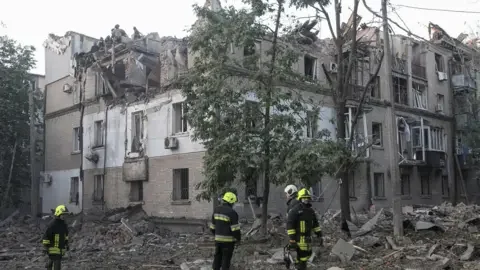
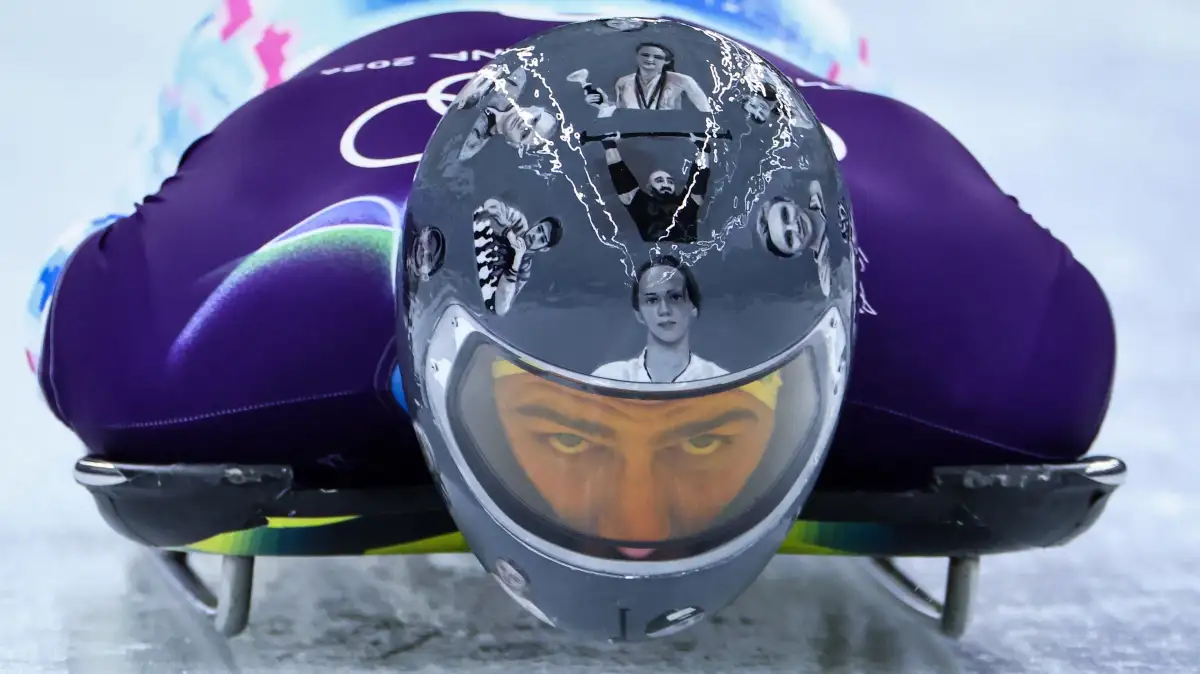
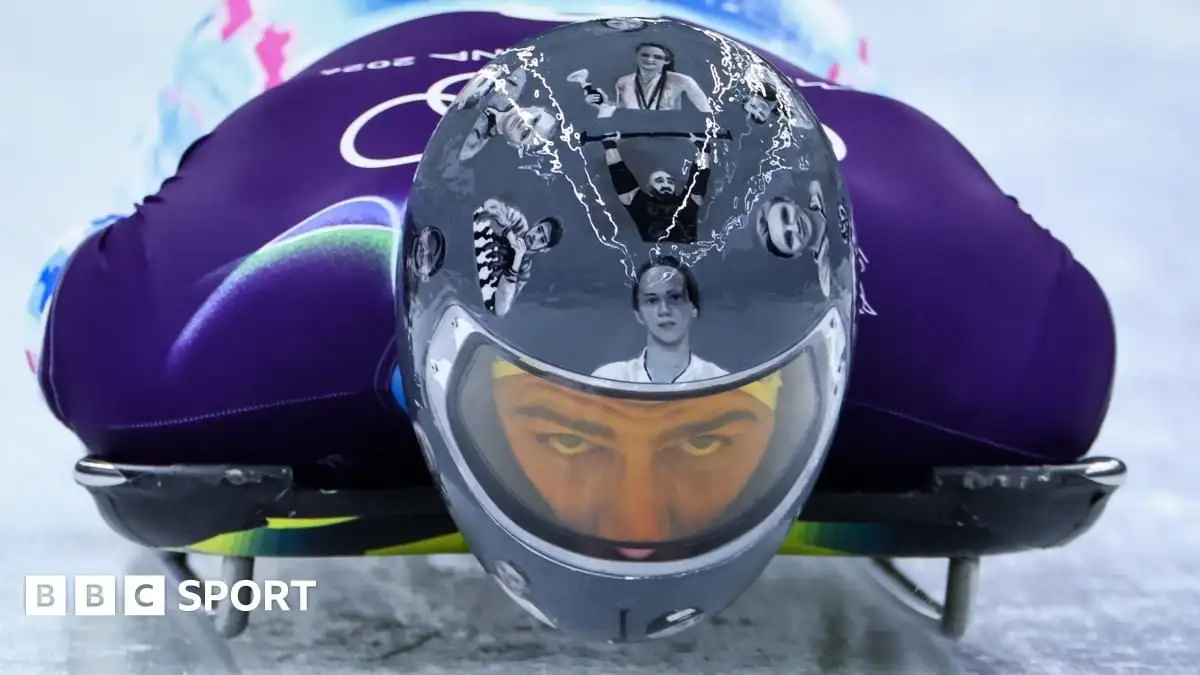
Ukrainian skeleton athlete Vladyslav Heraskevych has continued training for the Milan Cortina Games in a helmet deemed unacceptable by the International Olympic Committee (IOC). The helmet bears images of Ukrainian athletes and others killed in the ongoing conflict, a tribute Heraskevych intends to display during competition, despite warnings from the IOC. This action has created a conspicuous point of tension as the Games commence, with the IOC advocating for a separation of sports and politics, while Heraskevych asserts the importance of remembrance over Olympic protocol.
Timeline of Events and Key Actors
The situation surrounding Vladyslav Heraskevych's helmet began to escalate days before the start of the skeleton competition at the Milan Cortina Winter Olympics.

Early February 2026: The IOC communicated with the Ukrainian Olympic Committee regarding Heraskevych's helmet, citing a violation of rules that prohibit political or religious interference in the Games.
February 10, 2026: Heraskevych publicly stated his intention to wear the helmet, indicating that some things are more important than sports. The IOC, through spokesman Mark Adams, confirmed they had received a formal request for permission to wear the helmet and had informed the athlete's coach it would not be allowed.
February 10-11, 2026: Heraskevych reportedly trained in the helmet, despite the IOC's stance. The IOC offered a compromise, suggesting a black armband as an alternative, which Heraskevych declined.
February 11, 2026: Heraskevych confirmed his intention to wear the helmet on race day, asserting that he had not violated any rules and questioning the basis for potential penalties. The Ukrainian Olympic Committee officially supported Heraskevych, submitting a request to the IOC for him to wear the "helmet of remembrance."
February 12, 2026: Heraskevych was seen training in the helmet again. The IOC reiterated its position, with Mark Adams stating they would discuss the matter further with Heraskevych.
Key Individuals and Organizations
Vladyslav Heraskevych: Ukrainian skeleton athlete.
International Olympic Committee (IOC): Governing body for the Olympic Games.
Mark Adams: IOC spokesman.
Ukrainian Olympic Committee: National Olympic committee of Ukraine.
Evidence of Conflict and Stance
Multiple reports confirm Heraskevych's decision to wear the helmet and the IOC's opposition, highlighting differing interpretations of Olympic regulations.
Heraskevych's statements: He has repeatedly declared his intention to wear the helmet, framing it as an act of remembrance for fallen Ukrainian athletes and a matter of principle. He has also contended that the helmet does not violate IOC rules.
"We really, really want him to have his moment." - Mark Adams, IOC spokesman."Some things are more important than sports." - Vladyslav Heraskevych, Ukrainian skeleton athlete.
IOC's Position: The IOC maintains that the helmet violates its rules against political expression and interference. They offered a compromise with a black armband, which was rejected.
"it "was a fundamental principle" that the Games have to be separate from "political, religious and any other type of interference."" - IOC communication to the Ukrainian Olympic Committee.
Ukrainian Olympic Committee's Support: The committee officially backed Heraskevych, submitting a formal request to the IOC to allow the helmet, arguing it complies with rules by not displaying political slogans or promoting discrimination.
Reports of Training: Heraskevych was observed and reported to have trained in the helmet on multiple occasions leading up to his race, demonstrating a clear disregard for the IOC's directives.
The Helmet's Significance and IOC's Interpretation
The helmet in question is not merely sports equipment; it serves as a visual memorial. Its design features a montage of Ukrainian athletes and friends who have perished due to the war. This includes individuals like weightlifter Alina Peregudova, boxer Pavlo Ishchenko, and hockey player Oleksiy Loginov, along with Heraskevych's national teammate Dmytro Sharper and boxer Maksym Halinichev.
Read More: FIFA World Cup 2026 Revenue Reaches $15 Billion With New Ticket Prices

The IOC's stipulation against such displays stems from a core principle: the separation of the Olympic Games from political or other forms of interference. IOC spokesman Mark Adams emphasized their desire to allow Heraskevych "his moment," while also urging him to express his message through acceptable means.
However, the IOC's own actions have drawn scrutiny. Heraskevych has pointed to instances where Russian and Belarusian athletes, cleared to compete as Individual Neutral Athletes, have displayed symbols that he believes are political, yet have not faced similar sanctions. This perceived inconsistency fuels the debate about the application of IOC rules.
Read More: 22 Civilians Killed in Russian Missile Attack on April 7 2026
International Support and Diplomatic Efforts
Vladyslav Heraskevych's stance has garnered support beyond Ukraine's borders, indicating a broader resonance with his message. Athletes from other nations and their coaches have publicly expressed solidarity. Notably, Latvia's coach, Ivo Steinberg, joined a press conference to voice his support for Heraskevych.
The Ukrainian Olympic Committee has been actively engaged in diplomatic efforts, submitting an official appeal to the IOC. Their argument is that the helmet is a tribute to victims and does not carry explicit political slogans or discriminatory messages, thus remaining within the bounds of permissible expression. The IOC, however, rejected this appeal, citing a violation of its rules.
Despite the IOC's official rejection and warnings, Heraskevych has maintained his resolve. He has stated that he does not anticipate severe penalties, believing his actions do not constitute a rule violation. This defiant posture, supported by his national committee and some international figures, highlights the complex interplay between athletic competition, national identity, and the political realities of the ongoing conflict.
Read More: England World Cup Match: Pubs Open Until 5 AM Monday
Expert Analysis: Balancing Remembrance and Olympic Ideals
The situation presents a vexing challenge for the IOC, forcing a re-evaluation of its foundational principles in the face of a prolonged geopolitical conflict.
Dr. Anya Sharma, Sports Ethicist: "The IOC walks a tightrope. Their mandate for political neutrality is crucial for a global event like the Olympics. However, in times of extreme international distress, athlete expression becomes a powerful tool. The challenge lies in drawing a clear, equitable line that respects both the ideals of sport and the human imperative to bear witness to tragedy. Is a helmet with images of fallen athletes truly 'political interference,' or is it a solemn act of remembrance that athletes from nations affected by war might reasonably seek to express?"
Professor Jian Li, International Relations Scholar: "The IOC's decision to allow Russian and Belarusian athletes under neutral status, while simultaneously banning Heraskevych's helmet, creates a paradigm of perceived inequity. Critics will argue that this policy prioritizes geopolitical pragmatism over principles of fairness. If the IOC's intent is truly to depoliticize the Games, then the application of these rules must be demonstrably impartial. The fact that Heraskevych perceives this as an inconsistent stance is a significant indicator of the damage to the IOC's credibility on this matter."
Olympia Davies, Former Olympic Athlete: "When I competed, the focus was entirely on sport. But the world is different now. For an athlete like Heraskevych, who is on the front lines of his country's struggle, to have the opportunity to represent Ukraine on the Olympic stage, and to be told he cannot even memorialize those who have fallen – it's a heavy burden. The IOC needs to understand the immense emotional and psychological toll war takes. Sometimes, the ability to honor the fallen becomes an act of defiance, a statement of continued existence, rather than overt political propaganda."
Conclusion and Implications
Vladyslav Heraskevych's decision to train and potentially compete in a helmet honoring war victims, despite the IOC's prohibition, has brought the delicate balance between Olympic neutrality and athlete expression into sharp focus. The IOC’s stance, while rooted in a desire for political detachment, faces criticism for perceived inconsistencies and a failure to acknowledge the profound impact of the war on Ukrainian athletes.
The implications of this situation are far-reaching:
Read More: Ukraine gets 100 Patriot missiles with $1 billion EU loan for defense
Precedent Setting: The IOC's handling of this case could set a precedent for future Olympic Games, influencing how similar acts of remembrance or protest are addressed.
Athlete Rights: The incident raises questions about the scope of athlete rights and the extent to which their personal expressions can be regulated within the Olympic framework.
Public Perception: The controversy may affect public perception of the IOC and its commitment to fairness and impartiality, particularly among those directly impacted by the conflict.
Future Dialogue: The ongoing dialogue between Heraskevych, the Ukrainian Olympic Committee, and the IOC is crucial for navigating these complex issues. A resolution that respects both Olympic ideals and the human experiences of athletes affected by war remains a significant challenge.
The world is observing to see if Heraskevych will compete in the helmet and what actions, if any, the IOC will take. This unfolding situation underscores the persistent difficulty of maintaining a purely apolitical stance in a world shaped by geopolitical events.
Primary Sources
AP News: Ukrainian skeleton athlete trains again in banned helmet, despite IOC ruling.https://apnews.com/article/ukraine-helmet-olympics-heraskevych-skeleton-1b5cecc43a5bc3f841c7d2b683bc771bThis source provides immediate reporting on Heraskevych's actions during training sessions and direct quotes from IOC spokesman Mark Adams.
CBC Sports: Ukrainian skeleton competitor Heraskevych says he'll wear banned helmet on Olympic race day.https://www.cbc.ca/sports/olympics/winter/skeleton/olympics-skeleton-ukrain-heraskevych-helmet-banned-ioc-9.7082352This article details Heraskevych's confirmed intention to wear the helmet on race day and the IOC's proposed compromise.
The New York Times (The Athletic): Ukrainian Olympic athlete to wear helmet commemorating victims of Russian invasion despite IOC ban.https://www.nytimes.com/athletic/7035955/2026/02/10/ukraine-skeleton-helmet-banned-olympics/This report highlights the broader criticism sparked by the decision and notes an IOC representative's interaction with Heraskevych.
CNN: Ukrainian Olympian tells CNN he will continue honoring athletes killed in war: ‘Some things are more important than sports’.https://www.cnn.com/2026/02/10/sport/heraskevych-ukraine-helmet-olympics-banThis source features direct quotes from Heraskevych to CNN, emphasizing his defiance and rationale.
Globalnews.ca: Ukraine’s Heraskevych says he will compete in banned helmet, defying IOC.https://globalnews.ca/news/11660953/ukranian-athlete-helmet-ban-vladyslav-heraskevych/This article notes international support for Heraskevych, including from Latvia's coach.
CBS News: Ukrainian Olympian says he'll defy IOC and wear helmet showing compatriots killed in Russia's war.https://www.cbsnews.com/news/winter-olympics-ukraine-russia-war-vladyslav-heraskevych-skeleton-racer-helmet/This report details the individuals depicted on the helmet and references past IOC actions regarding Russian athletes.
BBC Sport: Vladyslav Heraskevych: Ukraine skeleton racer says IOC banned war victims helmet.https://www.bbc.com/sport/articles/czj1yj9pj00oThis article mentions the IOC's communication with the Ukrainian Olympic Committee and the IOC's initial statement about not having received an official request.
Google News: Full Coverage - Ukrainian skeleton competitor's IOC helmet ban.https://news.google.com/stories/CAAqNggKIjBDQklTSGpvSmMzUnZjbmt0TXpZd1NoRUtEd2lPd2VuQkVCRmk5VzV6bmFhbzVpZ0FQAQ?hl=en-US&ceid=US%3AenThis serves as an aggregator, providing links to various news outlets covering the story, offering a broad overview of the developments.