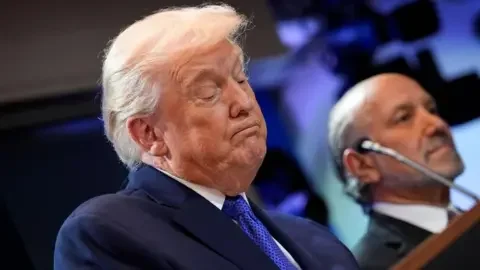
New tariff decisions by President Donald Trump have caused unease for both businesses and the public. While a recent Supreme Court ruling offered some relief by striking down certain global tariffs, concerns persist about future trade actions and their economic impact. Businesses are grappling with the possibility of ongoing cost increases and complexities in international trade, even as they hope for a more predictable market.

Background of Tariff Actions and Trade Policy
The Trump administration has implemented a series of tariff changes impacting various goods and industries. These actions have led to a fluctuating trade landscape, with businesses and consumers adjusting to new costs and policies.

Previous Tariffs: The administration previously enacted tariffs on a range of products.
Supreme Court Ruling: A recent Supreme Court decision overturned some of these global tariffs, aiming to bring more predictability to the market.
New Tariff Announcements: Despite the ruling, President Trump has signaled an intention to maintain many of his tariff policies through other means, including a new 10 percent global tariff.
Business and Consumer Impact: Mixed Reactions and Ongoing Concerns
The effects of these tariff changes have been felt across different sectors, eliciting a mix of responses from businesses and consumers.

Reduced Costs and Predictability: The retail industry has welcomed the Supreme Court's decision, anticipating it will lead to more predictable costs and lessen the burden of higher import expenses.
The trade group has cautioned members against expecting quick refunds, suggesting that any refunded tariffs could be reinvested in business operations, hiring, or price reductions.
Price Hikes and Inflation: Some large companies, including Walmart, have reported that tariffs are forcing them to increase prices on various goods, such as electronics, computers, and furniture.
Adobe data indicates that higher prices for these imported items are contributing to increased average prices.
Persistent Uncertainty: Despite the Supreme Court's ruling, many business owners remain on edge due to the potential for the administration to employ other tariff authorities.
Jenelle Peterson, owner of a toy business, expressed continued anxiety about the government's next steps, noting the difficulty of operating under such uncertain conditions.
Economic Interpretations and Government Stance
Economists and government officials hold differing views on the economic consequences of these tariff policies.
Read More: Goldman Sachs predicts 15 million US jobs lost to AI by 2036

Concerns Over Economic Health: Economists like Bob Schwartz of Oxford Economics suggest that the administration may utilize other tariff mechanisms, such as Section 122, to avoid large-scale refunds for past tariffs.
The White House has not directly addressed the possibility of refunds, and the legalities surrounding them are described as complex.
Government Rebuttals: The White House has disputed claims that tariffs are the primary driver of inflation or are harming the economy.
While inflation has shown signs of cooling, it remains a persistent issue.
Legal and Trade Policy Considerations
The legal basis and future application of tariffs are subjects of ongoing discussion and potential challenge.
Trade Act Provisions: Businesses are concerned that President Trump might use other sections of the Trade Act to impose further tariffs.
Specifically, the Section 122 global tariff is cited as a potential tool to circumvent previously negotiated trade terms and avoid refunds.
Impact on International Trade: The implementation of tariffs adds complexity to managing costs and ensuring compliance within international trade frameworks.
This has prompted businesses to consider adjustments to their investment strategies to navigate market volatility caused by tariffs.
Shift in Tariff Rates: Following the Supreme Court's decision, effective tariff rates reportedly decreased from approximately 16 percent to around 9 percent.
However, the introduction of a new 10 percent across-the-board tariff by the president has largely maintained existing tariff policies.
Expert Insights
Industry experts and economists have offered their perspectives on the evolving trade situation.
"The Supreme Court's ruling has brought some relief, but the administration's ability to leverage other tariff authorities keeps businesses in a state of apprehension." - Unnamed industry expert quoted in BBC News.
"Refunds are not anticipated to be immediate, and companies are being advised to manage their expectations regarding this possibility." - Statement from a trade group representative to CNBC.
Conclusions and Future Outlook
The recent tariff actions and the Supreme Court's ruling have created a dynamic and uncertain environment for businesses and consumers. While the ruling offered a degree of reprieve by nullifying some global tariffs, the administration's stated intent to maintain tariff policies through other means, coupled with the complexity of potential refunds and the use of different trade provisions, continues to fuel uncertainty. The impact on prices, inflation, and business investment remains a subject of close observation, with ongoing adjustments likely as both businesses and policymakers navigate this evolving trade landscape.
Sources Used:
CNBC: https://www.cnbc.com/2026/02/20/supreme-court-trump-tariff-decision-retail-industry-reacts.html
CLACONNECT: https://www.claconnect.com/en/resources/articles/25/the-impact-of-trumps-tariffs-a-comprehensive-analysis
CBS News: https://www.cbsnews.com/news/walmart-trump-tariffs-general-merchandise-inflation/
PBS NewsHour: https://www.pbs.org/newshour/show/whats-next-for-consumers-and-the-economy-after-the-supreme-courts-tariff-ruling