Recent trade discussions between the United States and India have become a point of contention for India's Congress party. The party argues that an interim trade pact has primarily benefited the U.S., with India making concessions that negatively impact its industries and farmers. This criticism is framed by the Congress as evidence of a failed foreign policy, particularly in light of U.S. tariffs imposed on Indian goods. The party's leaders have used slogans associated with past U.S.-India engagements to underscore their points.

Trade Deal Under Scrutiny
An interim trade agreement between India and the United States has drawn sharp criticism from the Congress party. The party asserts that the agreement involves India making significant concessions without receiving comparable benefits.

Concessions Made by India: According to Congress leader Mr. Ramesh, India has committed to removing or lowering import taxes on a wide array of U.S. industrial goods, as well as various American food and agricultural products.
Alleged Lack of Reciprocity: Mr. Ramesh stated that any trade agreement is based on a mutual exchange, but in this instance, India has "only given."
U.S. Tariff Actions: This criticism is juxtaposed with U.S. tariffs, such as a 25 percent tariff announced by President Trump on Indian imports, with some reports suggesting additional penalties. This move by the U.S. has been seen by the Congress as undermining any progress in trade relations.
Opposition's Narrative: 'Abki Baar Trump Se Haar'
The Congress party has adopted the slogan ‘Abki baar Trump se haar’ (this time, defeat by Trump) to frame their critique of the government's handling of U.S. trade relations. This phrase appears to be a play on the ‘Abki baar Trump sarkar’ (this time, a Trump government) slogan used during past U.S. elections, suggesting a perceived betrayal or negative outcome from the government's engagement with the U.S.
Read More: Taiwan Holds Nantou County Drills to Prepare for State Collapse
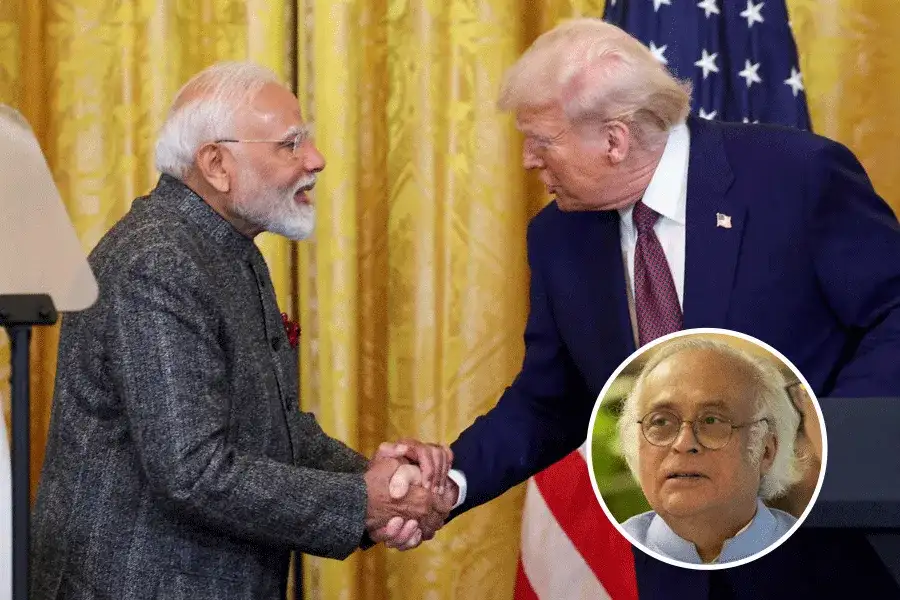
The party argues that despite outward displays of friendship between leaders, such as during events like 'Howdy Modi' and 'Namaste Trump,' U.S. actions like imposing tariffs indicate a lack of genuine partnership.
Economic Impact Cited: Congress president Mallikarjun Kharge has warned of significant economic consequences, estimating that at least 10 sectors could suffer losses amounting to Rs 2.17 lakh crore due to U.S. tariffs.
Job Losses Feared: Specific concerns have been raised about potential massive job losses in export-oriented sectors, including MSMEs, and negative impacts on farmers, particularly cotton farmers. The gems and jewellery sector is also cited, with warnings of 1,50,000 to 2,00,000 jobs at risk.
Stalemate in Negotiations and Diplomatic Engagement
The current trade situation is characterized by reports of a stalemate in ongoing negotiations between India and the U.S.
"Tariff Armageddon": One report refers to the U.S. actions as "Tariff Armageddon," suggesting a severe economic blow to India.
"Superficial Foreign Policy": Critics like Mr. Kharge describe the government's engagements with the U.S. as "superficial foreign policy engagements—smiles, hugs and selfies," arguing that these have compromised national interests.
Impact on India-Pakistan Relations: There are also references to Mr. Trump's claims of brokering peace between India and Pakistan, with the implication that these diplomatic pronouncements did not translate into favorable trade terms for India.
Conflicting Views on Trade Policy
While the Congress party views the U.S. trade actions as a direct consequence of the government's policy, other analyses suggest evolving U.S. strategies and India's need for diversification.
| Perspective | Details |
|---|---|
| Congress Party's Stance | - U.S. tariffs are a direct result of perceived missteps and misplaced trust in U.S. leadership. - Past diplomatic overtures by India have not yielded reciprocal trade benefits. |
| Analyst Viewpoint (implied) | - Trump's policies are subject to interpretation, with a need for India to anticipate reciprocal tariffs. - India's future economic stability might depend on diversifying alliances and domestic reforms. |
| U.S. Trade Actions (as reported) | - Imposition of 25 percent tariffs and penalties on Indian imports. - Stated willingness by India to adjust commitments if U.S. tariffs change. |
| Potential Impact on India (as cited) | - Significant financial losses across multiple sectors. - Risk of widespread job losses, affecting MSMEs, farmers, and specific industries like gems and jewellery. |
Expert Analysis and Commentary
Analysts have commented on the strategic implications of U.S. trade actions and India's diplomatic positioning.
Complexity of Trade Relations: It is noted that getting trade relations "back on track has now gotten a lot harder" following U.S. tariff impositions.
Naivety in Diplomatic Bet: The U.S. president's actions are seen by some as exposing "the naivety of betting India’s future on one man’s whims."
Need for Diversification: Had India diversified its alliances more aggressively, perhaps by deepening ties with Europe or accelerating domestic energy reforms, the impact of current tariffs might be less severe.
Conclusion and Implications
The Congress party's criticism highlights a significant divergence in the perception of India's trade relationship with the United States. The party posits that the interim trade deal, coupled with U.S. tariffs, represents a "defeat" for India, directly linking it to the government's diplomatic engagements.
Read More: US May Add Tariffs on Australian Goods Due to Forced Labour
Allegations of Compromised Interests: The core of the Congress's argument is that national interests have been compromised in favor of public relations and "superficial" diplomatic gestures.
Economic Fallout: The potential for substantial economic losses and job displacement, particularly in key sectors, forms a critical part of the opposition's case.
Future Trade Dynamics: The situation underscores the volatile nature of international trade agreements and the importance of strategic alliances and economic resilience in the face of shifting global policies.
Sources Used
The Hindu: U.S. trade deal proof of ‘Abki baar Trump se haar’: Congress’ swipe at government
Summary: Details Congress leader Ramesh's criticism of the interim trade deal, stating India made concessions without reciprocity and highlighting U.S. tariffs.
The Telegraph India (July 31, 2025): Abki baar, price of Modi 'friendship': Congress slams govt amid setback in India-US relations
Summary: Reports on Congress slamming the government over India-U.S. relations, mentioning Trump's tariffs and his claims regarding India-Pakistan peace.
Timesnownews.com: All That 'Taarif'…: Opposition Goes All-out on 'Howdy Modi' Over Trump's '25 Percent Plus Penalty' Tariff on India
Summary: Covers opposition parties criticizing the government after Trump imposed a 25% tariff on Indian imports, questioning the value of leader friendships.
The New Indian Express: ‘Government failed to strike a trade deal, protect nation’: Congress Chief Kharge
Summary: Details Congress president Mallikarjun Kharge's warnings about economic losses and job risks due to U.S. tariffs, criticizing foreign policy engagements.
The Telegraph India (August 5, 2025): Congress uses 'Howdy Modi', 'Namaste Trump', 'Abki baar Trump sarkar' in attack over US tariff threats
Summary: Reports how Congress is using past slogans and events like 'Howdy Modi' and 'Namaste Trump' to criticize the government over U.S. tariff threats.
The Economic Times: Ab ki baar, no pyaar, only maar, maar? Trump’s trade war with India and the world
Summary: An opinion piece discussing Trump's trade policies concerning India and the world, and the anticipation of reciprocal tariffs.
APN News: From ‘Abki Baar Trump Sarkar’ to Tariff Armageddon: Trump’s Sanctions Betray Modi’s Blind Faith in a Fic
Summary: Critiques Trump's actions, calling them a "Tariff Bomb" and suggesting Modi's reliance on the U.S. president was misplaced, impacting India's economic lifeline.