President Trump has announced a significant increase in global tariffs, raising them to 15% shortly after the Supreme Court struck down earlier tariffs imposed under emergency powers. This move signals a continued focus on tariffs as a central economic policy, despite legal challenges and opposition.
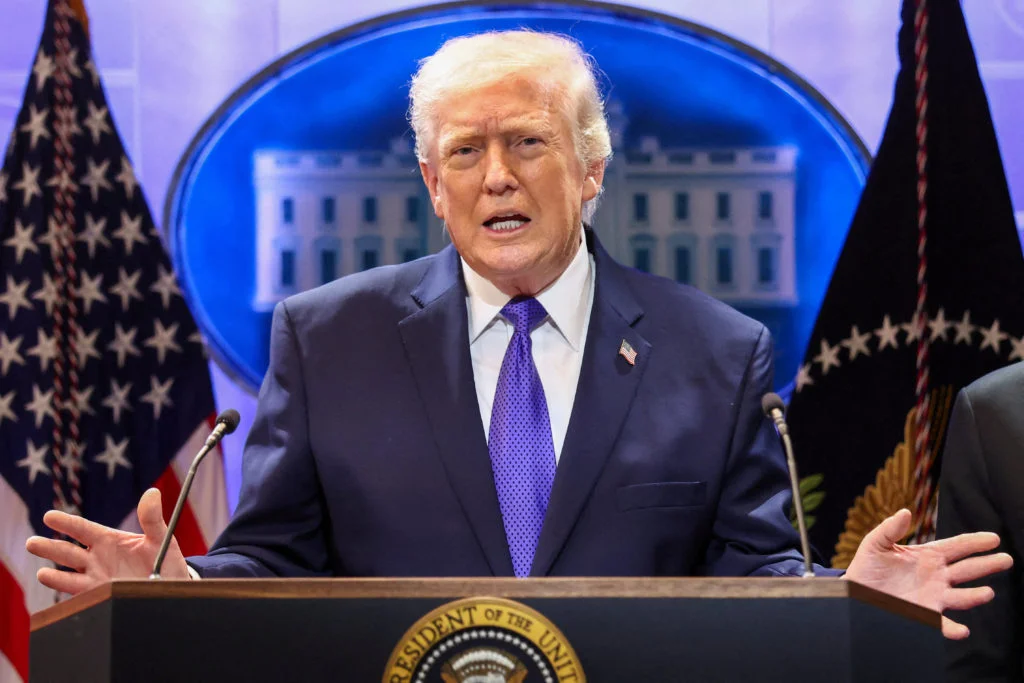
The recent actions by the Trump administration represent a deliberate escalation of trade policy, centering on the imposition of tariffs on a wide range of goods. This follows a period of legal contention where the Supreme Court ruled against the executive branch's authority to implement broad tariffs under specific emergency provisions. Despite this judicial check, President Trump has signaled an intent to continue utilizing trade measures, now under different legal frameworks, to achieve his economic objectives.

Background of Tariff Actions
The current situation is a result of a sequence of events:
Read More: Australia May Budget: Economic Reforms Discussed in Canberra

Previous Tariff Implementation: The Trump administration had previously enacted a 10% tariff on imports from most countries, enacted by executive order.
Supreme Court Decision: On February 20, 2026, the Supreme Court, in a 6-3 decision, invalidated a significant portion of these tariffs. The ruling determined that the President had overstepped his authority by using an emergency powers law, specifically the International Emergency Economic Powers Act (IEEPA), to impose these broad duties.
Presidential Response: President Trump publicly expressed strong disapproval of the Supreme Court's decision, calling it "deeply disappointing" and criticizing the justices, including some of his own appointees.
New Tariff Announcement: Following the Supreme Court's ruling, President Trump announced, via social media and executive action, an increase in the global tariff rate from 10% to 15%. This new levy is described as being "effective immediately" or set to take effect shortly.
New Tariff Framework and Scope
The revised tariff structure appears to be based on different legal grounds than those previously struck down by the Supreme Court.

Legal Authority: The administration is now reportedly utilizing Section 122 of the Trade Act of 1974, a provision that allows for levies of up to 15% for a duration of 150 days. This section has reportedly not been used previously.
Affected Nations: While the initial 10% tariff applied broadly, the 15% tariff's specific impact varies. Some major trading partners like Mexico, Canada, and China may see reduced overall rates compared to previous actions. However, countries such as Argentina, Australia, Saudi Arabia, and the United Kingdom are expected to face higher tariffs.
Sector-Specific Tariffs: Tariffs imposed under different U.S. laws, such as those on autos, car parts, semiconductor chips, steel, aluminum, and lumber, are not affected by the Supreme Court's ruling and remain in place.
Future Investigations: The U.S. Trade Representative's office, led by Jamieson Greer, has indicated plans to open Section 301 investigations on "most major trading partners" under an accelerated timeframe. These investigations can lead to further tariffs if U.S. trade rights are deemed to be denied or if trade agreements are found to be "unjustifiable and burdens or restricts United States commerce."
Uncertainty: The legality and sustainability of these new tariffs are subject to potential legal challenges, and the exact duration and application are still being determined. The administration stated that the new tariffs would be determined and issued "during the next short number of months."
Reactions and Implications
The President's decision has elicited varied responses and points to potential future economic friction.
Political Opposition: Democrats have voiced strong opposition to the new tariff announcement, viewing it as an unpredictable escalation that disregards the Supreme Court's authority.
Business Concerns: There are indications that businesses on both sides of the Atlantic are seeking "a period of clarity and certainty" regarding trade policies, suggesting that the ongoing tariff fluctuations create economic instability.
Judicial Clash: The move is seen as a direct challenge to the Supreme Court's decision, marking a significant point of tension between the executive and judicial branches regarding presidential powers in trade matters.
Expert Analysis
"The administration is seeking to assert its authority through different legal avenues after the Supreme Court limited its emergency powers. The use of Section 122 of the Trade Act of 1974 is a less expansive authority than IEEPA, but it still carries the potential for significant economic impact and legal scrutiny." — Analysis attributed to legal and trade experts observing the situation.
"President Trump's continued emphasis on tariffs, despite legal setbacks, indicates a deeply held belief in their efficacy for his economic agenda. The current actions appear to be a strategic adaptation to navigate the boundaries set by the Supreme Court, rather than an abandonment of his tariff-centric approach." — Observation from trade policy analysts.
Conclusion and Next Steps
President Trump's decision to raise global tariffs to 15% following the Supreme Court's invalidation of earlier measures signifies a persistent commitment to using tariffs as a primary economic tool. This strategy is being implemented through alternative legal channels, notably Section 122 of the Trade Act of 1974, and is accompanied by the initiation of Section 301 investigations against major trading partners.
Key Findings:
A 15% global tariff is now being imposed, replacing the previously invalidated 10% tariff.
This action is taken under a different legal authority (Section 122 of the Trade Act of 1974), distinct from the emergency powers previously used.
Sector-specific tariffs remain unaffected.
Further investigations under Section 301 are planned, suggesting potential for additional trade actions.
Implications:
The move heightens tensions between the executive and judicial branches.
Businesses may face continued uncertainty and economic adjustments.
International trade relations could be further strained.
Next Steps:
Close monitoring of legal challenges to the new tariff structure is essential.
The outcomes of the impending Section 301 investigations will be critical in shaping future trade policy.
The duration and specific application of the 150-day limit under Section 122 will require careful observation.
Sources Used:
NBC News: https://www.nbcnews.com/politics/white-house/trump-raises-global-tariff-15-percent-trade-supreme-court-decision-rcna260049 - Reports on the increase to 15% tariffs and the use of Section 301 investigations.
CNN Business: https://www.cnn.com/2026/02/21/business/trump-global-tariffs-increase-supreme-court - Details the immediate implementation of the 15% tariff and Trump's statements.
PBS NewsHour: https://www.pbs.org/newshour/economy/president-trump-increases-global-tariffs-to-15-after-supreme-court-decision - Covers the announcement, legal authority, and political reactions.
USA Today: https://www.usatoday.com/story/news/politics/2026/02/21/trump-tariffs-worldwide-supreme-court/88796259007/ - Focuses on the escalation of tariffs and the clash with the Supreme Court.
NPR: https://www.npr.org/2026/02/21/nx-s1-5722111/trump-global-tariffs-15-percent - Highlights the continued reliance on tariffs and the basis for the 15% increase.
AP News: https://apnews.com/live/supreme-court-tariff-ruling-updates - Provides updates on the Supreme Court's decision and reactions, including Trump's attacks on the justices.
The Guardian: https://www.theguardian.com/us-news/2026/02/21/trump-tariffs-15-percent - Details the 15% tariff increase, its legal basis (Section 122 of the Trade Act of 1974), and mentions unaffected industry-specific tariffs.