New research reveals Tibetan permafrost is thawing at an alarming rate, releasing vast quantities of ancient carbon and potentially pushing the global climate toward a critical tipping point.
The findings, detailed in a recent scientific study, indicate that as global temperatures climb, the permanently frozen ground in the Tibetan Plateau is destabilizing. This thaw is liberating carbon that has been locked away for millennia, adding a significant and previously underestimated feedback loop to the planet's warming trend. The scale of this released carbon is substantial, threatening to accelerate the pace of climate change beyond current projections.
Perilous Release of Carbon
The Tibetan permafrost acts as a colossal freezer, preserving organic matter from ancient ecosystems. As this frozen layer thaws, the microbes within begin to decompose this material. This decomposition process releases greenhouse gases, primarily carbon dioxide and methane, into the atmosphere. Methane, in particular, is a potent greenhouse gas, trapping significantly more heat than carbon dioxide over shorter time scales.
The exact volume of carbon stored within the Tibetan permafrost is difficult to quantify but is believed to be immense.
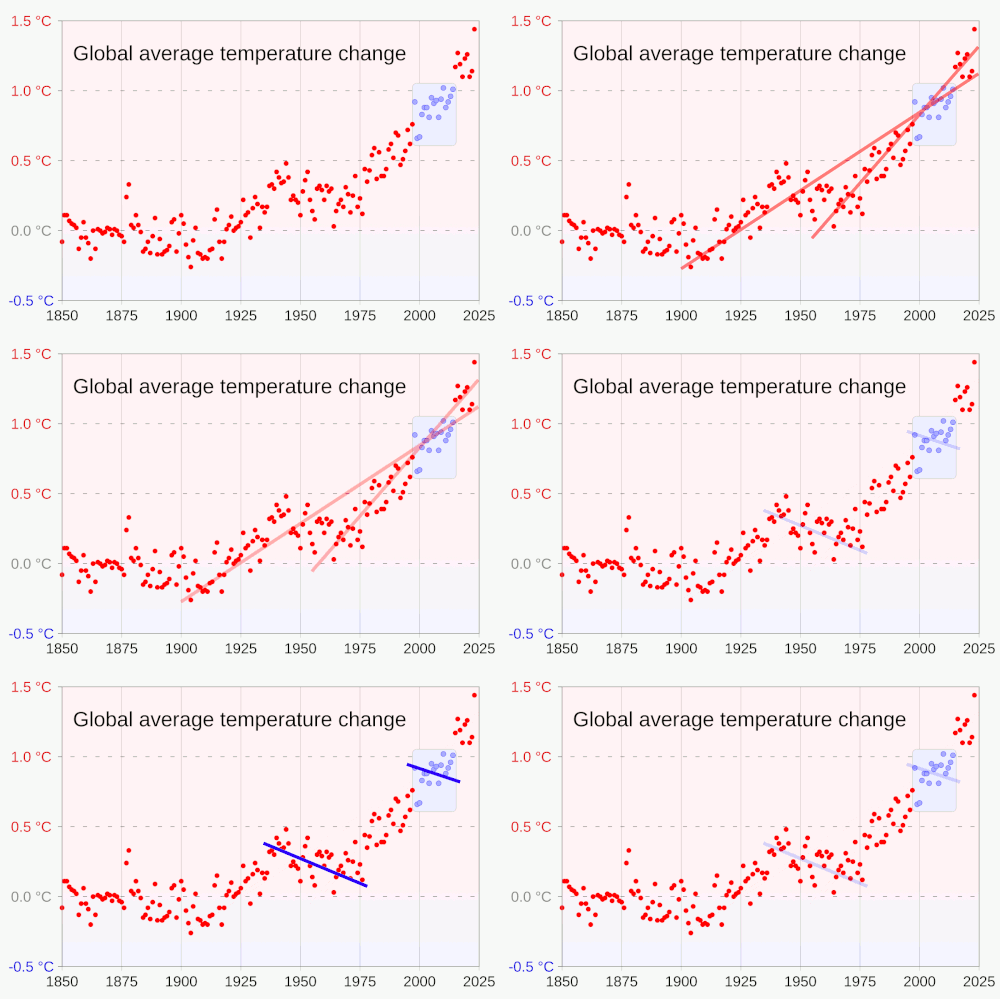
Studies suggest that the rate of thaw is accelerating, correlating with rising global average temperatures.
This newly released carbon adds to the anthropogenic (human-caused) emissions, creating a compounding effect on global warming.
Climate Tipping Point Concerns
Scientists are increasingly concerned that the release of this ancient carbon could trigger a climate 'tipping point'. Such a point signifies a threshold beyond which a system shifts into a new state, often with irreversible consequences.
Read More: Amazon Land Use Changes Cause Disease Clusters in Brazil
"The destabilization of permafrost, especially in vast regions like the Tibetan Plateau, represents a significant 'wake-up call' for the global community. It introduces a powerful natural amplifier to an already human-driven crisis."
If the Tibetan permafrost thaw reaches a critical mass, it could initiate a self-perpetuating cycle of warming. This means that even if human emissions were drastically reduced, the permafrost thaw would continue to release greenhouse gases, driving further warming.
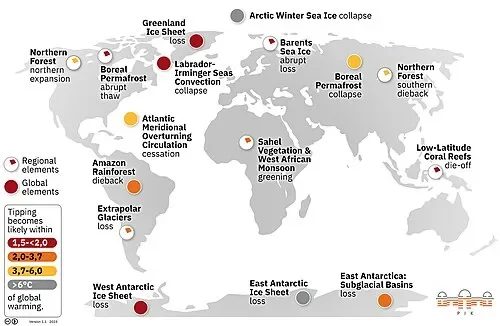
Background: Permafrost and Climate Change
Permafrost is ground that remains frozen for two or more consecutive years. It covers large areas of the Northern Hemisphere and high-altitude regions. These frozen soils contain vast amounts of organic carbon, accumulated over thousands of years from dead plants and animals.
Climate change is a long-term shift in global or regional climate patterns, attributed largely to the increased levels of atmospheric carbon dioxide produced by the use of fossil fuels. Global warming refers specifically to the rise in Earth's average surface temperature. The IPCC and various scientific bodies have long warned about the potential for permafrost thaw to exacerbate climate change, but the findings from the Tibetan Plateau highlight the urgency and scale of this particular threat.
Read More: India to Spend $2 Billion on New Drones for Defense