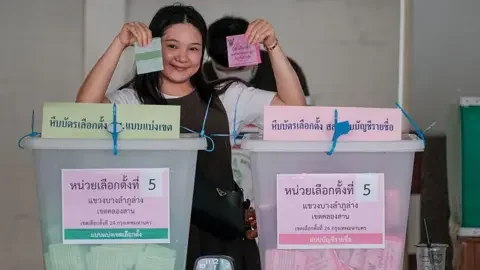
Polls have closed in Thailand following a general election that saw reformist parties, particularly the People's Party, challenge established conservative forces. The vote took place against a backdrop of significant political instability, with the country having experienced three prime ministers in as many years and facing ongoing economic challenges. Analysts suggest that the outcome may not definitively resolve the nation's political deadlock, given the historical tendency for unelected bodies to influence government formation.
Political Landscape and Campaign Promises
The election presented a clear dichotomy between progressive reformists and conservative factions. The People's Party, consistently leading in opinion polls, campaigned on a platform of significant structural change, including ending military conscription and reducing the number of generals. In contrast, parties like Bhumjaithai, led by incumbent Prime Minister Anutin Charnvirakul, emphasized national security and economic stimulus, referencing recent border clashes with Cambodia.
Read More: Taiwan Holds Nantou County Drills to Prepare for State Collapse

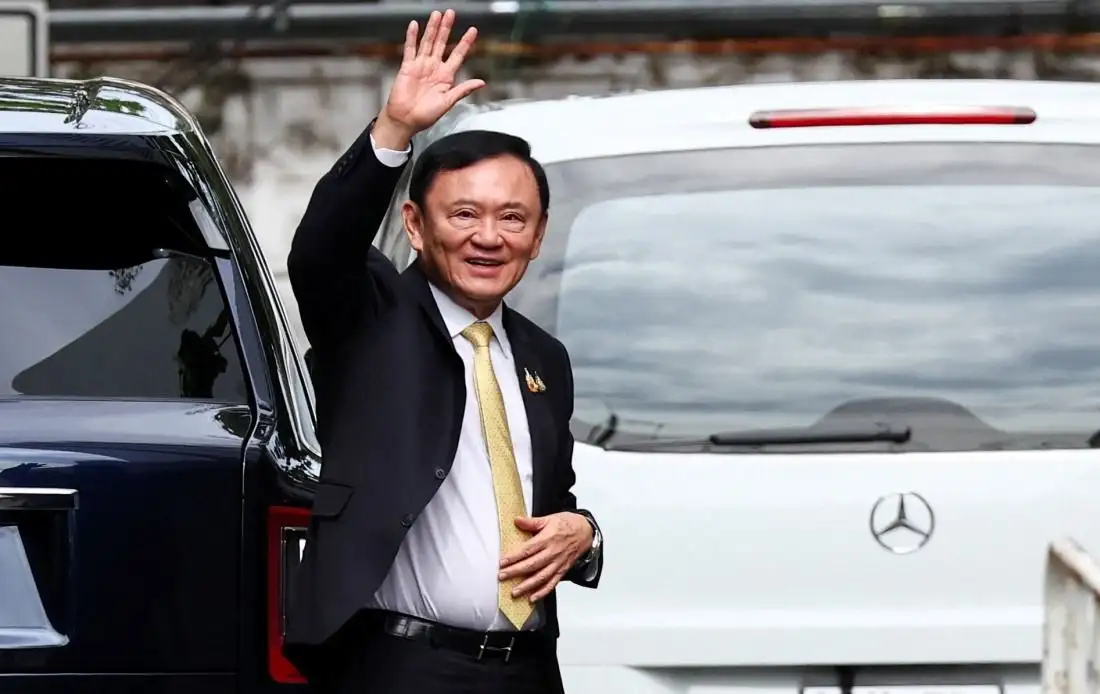
The Pheu Thai party, associated with former Prime Minister Thaksin Shinawatra, focused on populist economic pledges. Their flagship proposal, to create "nine millionaires a day" through daily 1 million baht ($31,700) prize draws, has drawn scrutiny. While supporters view it as an innovative economic vision, opponents have dismissed it as unrealistic, and the Election Commission has raised legal concerns. Pheu Thai's candidate for prime minister is Yodchanan Wongsawat, Thaksin's nephew.

People's Party: Advocated for ending conscription and reducing military influence. Led in opinion polls.
Bhumjaithai: Focused on national security and economic stimulus.
Pheu Thai: Promoted populist policies, including a controversial millionaire-creation scheme.
Election Dynamics and Potential Outcomes
Initial expectations indicate that no single party is likely to secure an outright majority in the 500-seat lower house. This scenario suggests that days of coalition negotiations, or "horse-trading," will follow. The formation of a government will likely require alliances with smaller factions to reach the 251-seat threshold.

Could the election result in a repeat of past interventions where parties favored by the public were prevented from forming a government?
Read More: Boy, 11, Crashes Truck Into Monks, Killing Nine in Thailand
Historically, unelected bodies, including the military-appointed senate and the constitutional court, have played a decisive role in shaping Thailand's political landscape. The People's Party faced such obstacles in the past, with their previous electoral success being stymied by senate opposition and the dissolution of their party by the constitutional court. Concerns linger that similar forces may seek to block a reformist government, even if the election results favor them.
Public Sentiment and Referendum
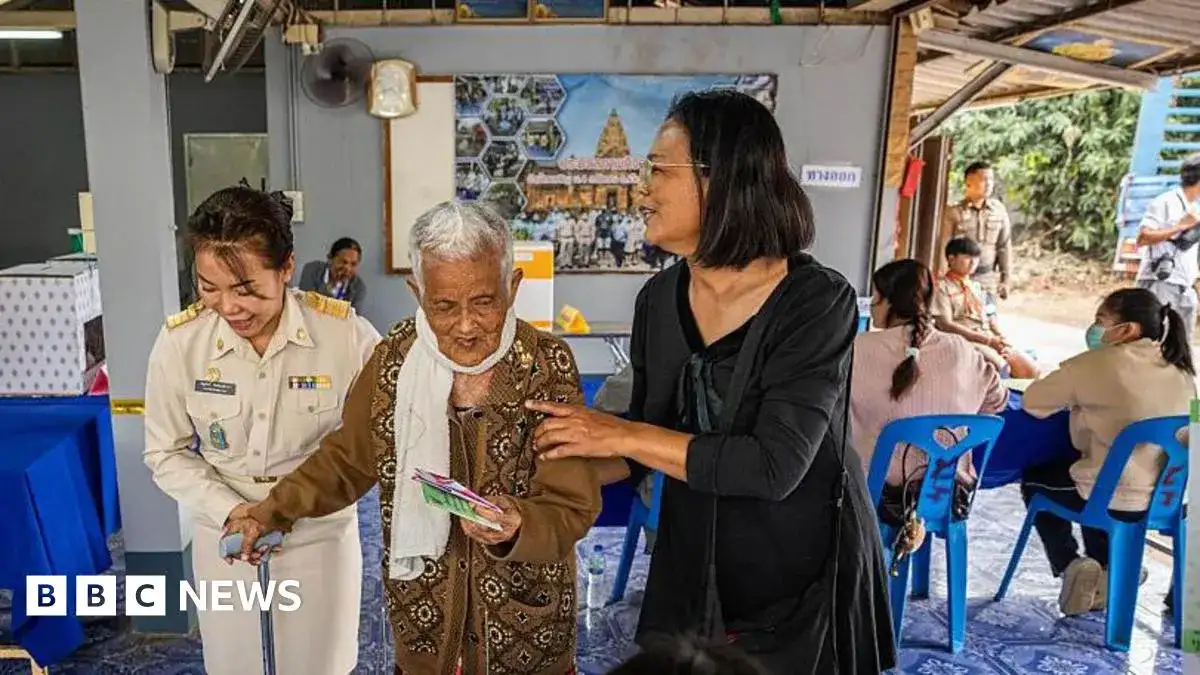
A referendum held concurrently with the election offered voters a chance to express their desire for constitutional reform in principle, though no specific reform measures were presented. This indicates a public yearning for change amidst prolonged political and economic uncertainty.
Expert Observations
"Powerful, unelected forces have repeatedly intervened to block parties challenging the status quo in Thailand." - (Article 1)
"But in Thailand simply winning an election is not enough. When the young reformers won last time the military-appointed senate barred them from forming a government and the constitutional court dissolved the party." - (Article 1)
"Barring a shock last minute swing for the People’s Party, experts say neither of the two leading parties is likely to win a majority on their own, resulting in a coalition government." - (Article 5)
"The courts and other unelected bodies may also have their say – agencies with a long record of giving conservative interests a leg up into power even once they have lost elections." - (Article 5)
Conclusion and Implications
The conclusion of voting in Thailand marks the end of a campaign characterized by a stark ideological divide and significant public expectation for change. The People's Party's strong performance in polls signals a desire for reform, yet the nation's political history suggests that the path to forming a government may be complex and subject to external influences. The reliance on coalition-building and the potential for intervention by unelected bodies indicate that the post-election period could be as consequential as the vote itself. The Pheu Thai party's ambitious economic proposals also present a point of focus, with questions remaining about their viability and legal standing.
Read More: FBI Analysts Review Georgia 2020 Election Data in Fulton County
Sources
BBC News:
"Thailand election 2026: Polls close in election that pitted reformists against conservatives" - Published: Date not specified in input]. Link: [https://www.bbc.com/news/articles/cx2jn4z4eq0o
"Thailand national election 2026: Voters head to the polls in high-stakes election" - Published: 18 minutes ago. Link: https://www.bbc.com/news/live/c4g31zlezp1t
"Thailand election: For the popular People's Party, winning the vote is only the first hurdle" - Published: Date not specified in input]. Link: [https://www.bbc.com/news/articles/cp820jrq3yvo
NBC Right Now:
"Thailand votes after three leaders in two years" - Published: 5 hours ago. Link: https://www.nbcrightnow.com/national/thailand-votes-after-three-leaders-in-two-years/article8017e1ec-b751-503f-908c-d0f202ecdeec.html
France 24:
"Thailand votes in three-way race as country struggles with sluggish economic growth" - Published: 4 hours ago. Link: https://www.france24.com/en/asia-pacific/20260207-thailand-votes-in-three-way-race-as-country-struggles-with-sluggish-economic-growth
South China Morning Post:
"Thailand votes as reformists challenge conservatives amid political turmoil" - Published: 4 hours ago. Link: https://www.scmp.com/week-asia/politics/article/3342794/thailand-votes-reformists-challenge-conservatives-amid-political-turmoil
ABC News:
"Thailand votes in early election with 3 main parties vying for power" - Published: 9 hours ago. Link: https://abcnews.go.com/International/wireStory/thailand-votes-early-election-3-main-parties-vying-129957345
The Hindu:
"Thailand heads to the polls: Three-way battle defines high-stakes general election" - Published: 8 hours ago. Link: https://www.thehindu.com/news/international/thailand-general-election-february-8-2026/article70606435.ece
DW:
"Thailand election: Vote counting underway in 3-way race" - Published: 29 minutes ago. Link: https://www.dw.com/en/thailand-holds-parliamentary-election-and-constitutional-referendum/a-75858485
Al Jazeera:
"Thailand election 2026: What are the main parties? What do polls suggest?" - Published: Date not specified in input]. Link: [https://www.aljazeera.com/news/2026/2/6/thailand-election-2026-what-are-the-main-parties-what-do-polls-suggest
"Polls close in Thailand as reformists, conservatives vie for power" - Published: Date not specified in input]. Link: [https://www.aljazeera.com/news/2026/2/8/polls-open-in-thailand-with-three-main-parties-vying-for-power?trafficsource=rss
ABC News (Australia):
"'They're afraid': Can Thailand's popular progressives finally win government?" - Published: 1 day ago. Link: https://www.abc.net.au/news/2026-02-07/thailand-election-stakes-high-as-progressives-mount-challenge/106312802
The Independent:
"Why Thailand’s vote is historic with young progressive leader ahead in polls" - Published: 1 day ago. Link: https://www.independent.co.uk/asia/southeast-asia/thailand-election-2026-cambodia-border-anutin-charnvirakul-b2913709.html
DW (additional):
"Thailand 2026 election: What you need to know" - Published: 3 hours ago. Link: https://www.dw.com/en/thailand-2026-election-what-you-need-to-know/a-75842543