A significant scientific proposal has emerged suggesting the construction of a massive underwater barrier, an $80 billion endeavor, aimed at safeguarding Antarctica's Thwaites Glacier, often referred to as the "Doomsday Glacier." The potential collapse of this glacier carries the risk of raising global sea levels by over two feet, a prospect that has prompted this innovative but potentially controversial plan.

The Thwaites Glacier, a colossal mass of ice comparable in size to the United Kingdom, holds enough freshwater to cause a substantial global sea level increase. Recent scientific efforts have focused on deploying sensors around the glacier to better understand its instability. This endeavor has been met with divergent opinions within the scientific community, with some characterizing the proposals as unrealistic while others argue that inaction may violate international environmental agreements.
Read More: New Ideas Say Capitalism Makes Climate Problems Worse
The Seabed Curtain Proposal
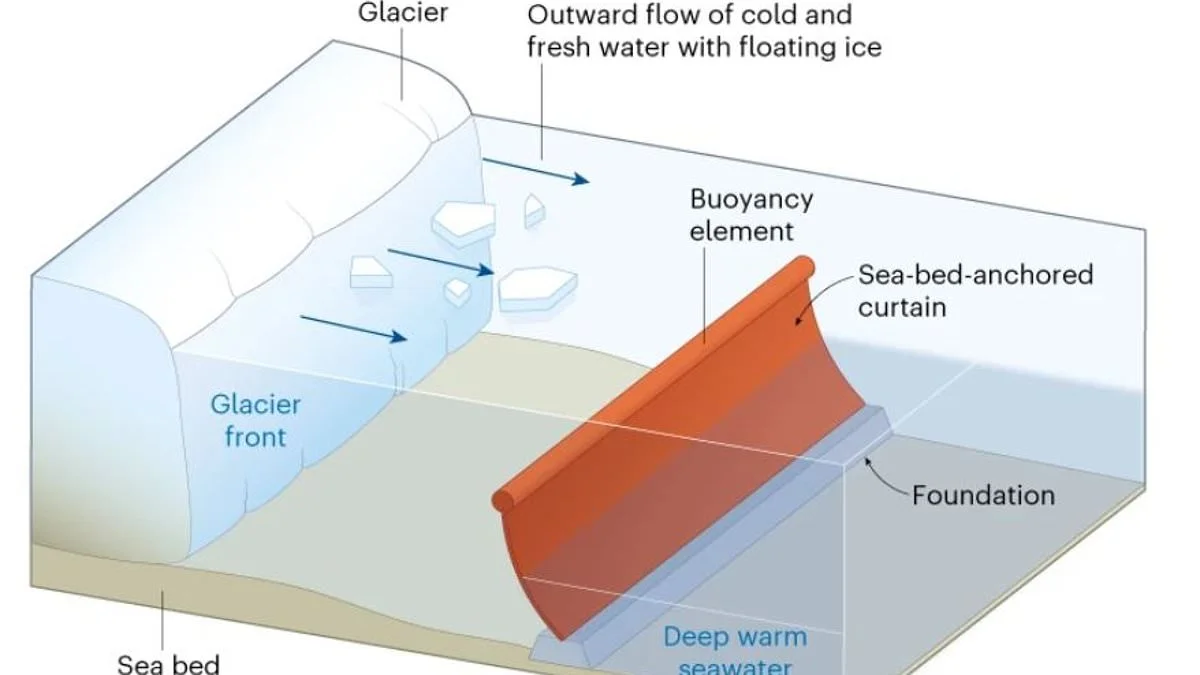
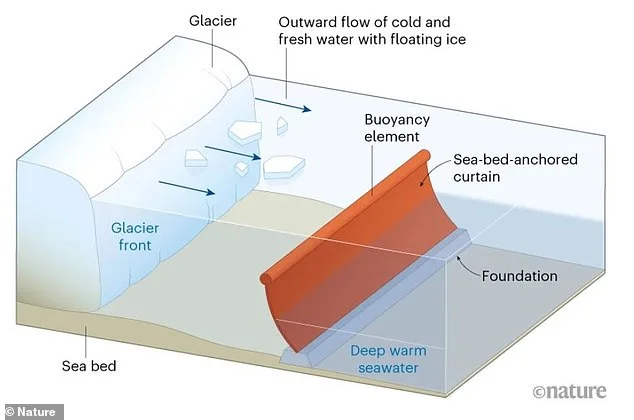
The core of the proposed solution is a structure dubbed the "Seabed Curtain." This barrier would be anchored in front of the glacier's most vulnerable points. Its primary function would be to obstruct the flow of warm ocean currents that are contributing to the glacier's rapid melting and retreat.
The estimated cost of this ambitious project is $80 billion.
The "Seabed Curtain" is designed to prevent warm currents from reaching the ice face.
Such a barrier could potentially halt the glacier's retreat and mitigate the feared consequences of global warming.
Scientific Debate and Environmental Considerations
The proposal to construct a large-scale intervention like the Seabed Curtain has ignited debate among scientists. While some researchers believe such projects are essential to combat the escalating threat of sea-level rise, others express skepticism regarding their feasibility and potential unintended consequences.
Read More: NASA's Swift Telescope Stops Working to Get a Boost to Stay in Space
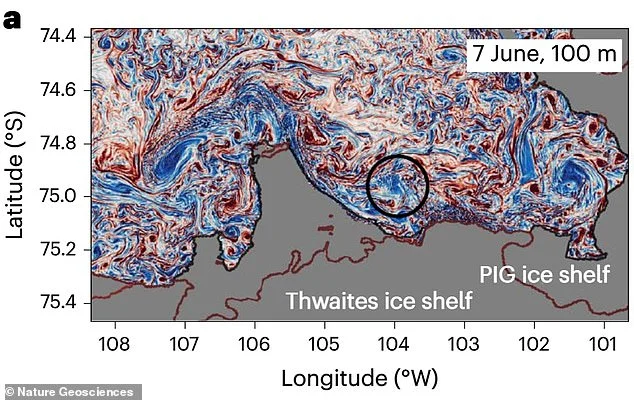
Some scientists view polar geoengineering projects with caution, often characterizing them as misguided.
Conversely, proponents argue that allowing Thwaites Glacier to collapse could be seen as a violation of the environmental preservation clauses within the Antarctic Treaty System.
Potential Impact of Thwaites Glacier Collapse
The implications of Thwaites Glacier's destabilization are far-reaching. Its melting is a key indicator of the broader impacts of climate change on polar ice sheets.
Thwaites Glacier stores enough ice to raise global sea levels by approximately 2.1 feet (65 cm).
The collapse of this glacier could trigger further instability in neighboring ice formations.
Expert Analysis
"It is delusional." - [Attributed Scientist, Article 1]
This sentiment reflects a segment of the scientific community's skepticism towards geoengineering solutions. However, counterarguments suggest that failing to act might carry its own set of ethical and environmental violations.
Conclusion
The proposal for an $80 billion Seabed Curtain to protect the Thwaites Glacier represents a significant and costly attempt to address a pressing environmental threat. The project aims to physically block warm ocean currents, thereby slowing the glacier's melt. While the initiative has generated enthusiasm among some, it has also drawn criticism from others within the scientific community who question its practicality and broader implications. The debate highlights the complexities of confronting climate change and the varied approaches being considered, from direct intervention to policy-driven mitigation. The efficacy and advisability of such large-scale geoengineering projects remain subjects of ongoing scientific scrutiny.
Sources:
The Atlantic: "The ‘Doomsday Glacier’ Could Flood the Earth. Can a 50-Mile Wall Stop It?" Published January 31, 2026. https://www.theatlantic.com/science/2026/01/thwaites-glacier-sea-level-rise-sea-curtain/685846/
Daily Mail: "Scientists want to build $80 billion WALL around the Doomsday Glacier" Published 12 hours ago (as of input). https://www.dailymail.co.uk/sciencetech/article-15552819/Plan-save-Doomsday-Glacier-wall.html
Read More: Cartoonist Rohan Chakravarty Uses Funny Pictures to Teach About Nature