A Cosmic Enigma: 3I/ATLAS Challenges Expectations
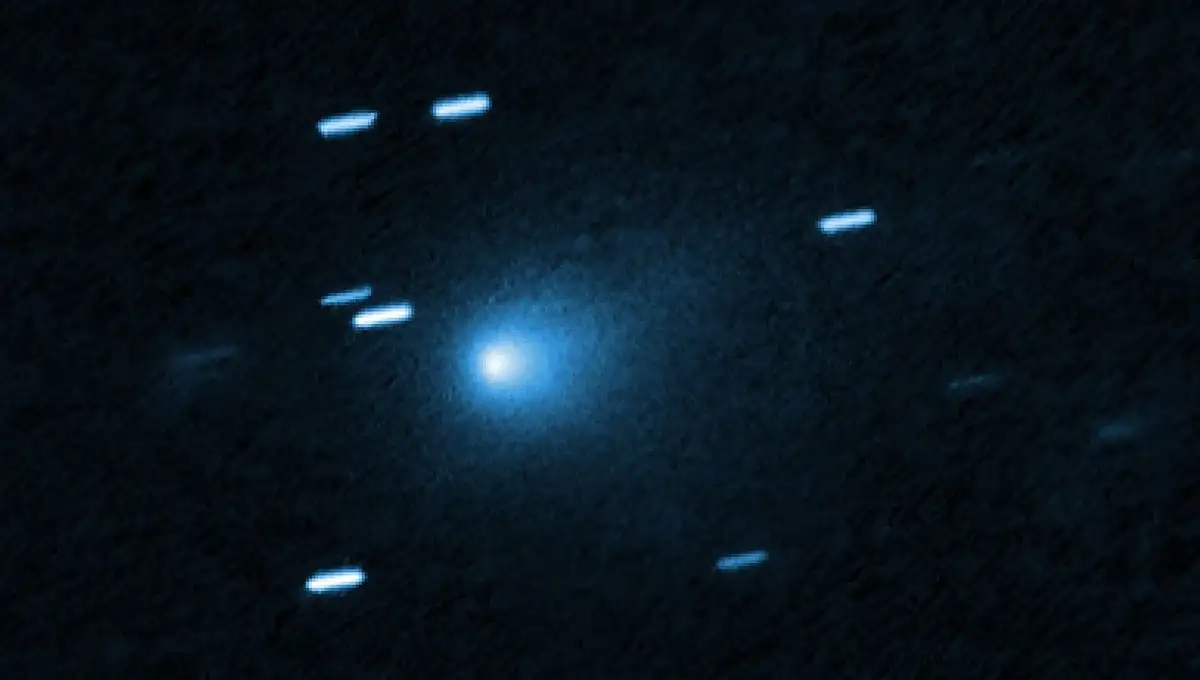
An interstellar visitor, designated 3I/ATLAS, has presented astronomers with a peculiar puzzle. Initially observed with an unbound orbit originating from beyond our solar system, its behavior has taken an unexpected turn. Instead of the typical tail extending away from the sun, 3I/ATLAS has displayed a prominent plume of dust and gas directed toward the sun, while its anti-solar tail remains almost imperceptible. This deviation from expected cometary phenomena has sparked intense observation and analysis within the scientific community.
Observing the Anomalous Visitor
3I/ATLAS was first identified by astronomers in July 2025 as an object on a hyperbolic, unbound trajectory. This classification indicated its extraterrestrial origin, a distinction that immediately elevated its scientific significance. Unlike comets typically originating within our solar system, which are gravitationally bound to the Sun, 3I/ATLAS is on a path to leave our solar system after its passage. NASA has previously stated that 3I/ATLAS poses no threat and functions as a natural interstellar comet. However, its subsequent observable characteristics have introduced a layer of complexity that goes beyond simple classification.
Read More: US Space Force Victus Haze Mission Successfully Tests Orbital Intercepts
Circumstantial Evidence of Rotational Shift
Initial observations revealed 3I/ATLAS possessed a fuzzy atmosphere and a developing tail, as noted on September 3, 2025.
A key observation, reported on August 21, 2025, highlighted the comet's "back-to-front" appearance, with dust seemingly shooting toward the Sun. This is a marked departure from the expected anti-solar tail formation, which is driven by solar wind pushing material away from the Sun.
One analysis suggests that the comet's crust might be hardening, hindering the sputtering of dust and gas. This process could result in a sunward plume dominating over a less visible anti-solar tail.
Reports have surfaced, including one from October 2025, suggesting a halt in the comet's spinning motion, followed by a reversal. This would be an extraordinary event for any celestial body, let alone an interstellar visitor.
Examining the Unconventional Plume
The most striking aspect of 3I/ATLAS's observed behavior is the dominance of its sunward plume. This phenomenon is unusual because the typical formation of a cometary tail, the anti-solar tail, is a direct result of solar radiation pressure and the solar wind pushing volatile materials away from the Sun. The presence of a strong plume directed towards the Sun suggests that forces beyond the standard model are at play.
Hypothesis of Crust Formation: The theory posits that prolonged exposure or specific chemical processes within the comet have led to the development of a hardened crust. This crust might inhibit the regular sublimation and ejection of gases and dust, which are the primary components of a comet's tail.
Dominance of Sunward Ejection: If a crust is formed, it could trap volatile materials beneath its surface. Internal pressures or specific heating events might then lead to localized ejections of material in a direction that appears to defy the Sun's outward push. Could this be the reason for the sunward plume?
Absence of a Strong Anti-Solar Tail: The visual evidence of a barely visible anti-solar tail suggests that the standard mechanisms for tail formation are significantly dampened. This aligns with the idea that less material is being ejected in a way that would be sculpted by the solar wind.
Rotational Anomalies and Potential Explanations
Reports indicating that 3I/ATLAS stopped spinning and then started rotating backward represent an unprecedented celestial event. While direct evidence for this specific sequence of events is less detailed in the provided summaries, its emergence in reports signifies a focal point of scientific inquiry.
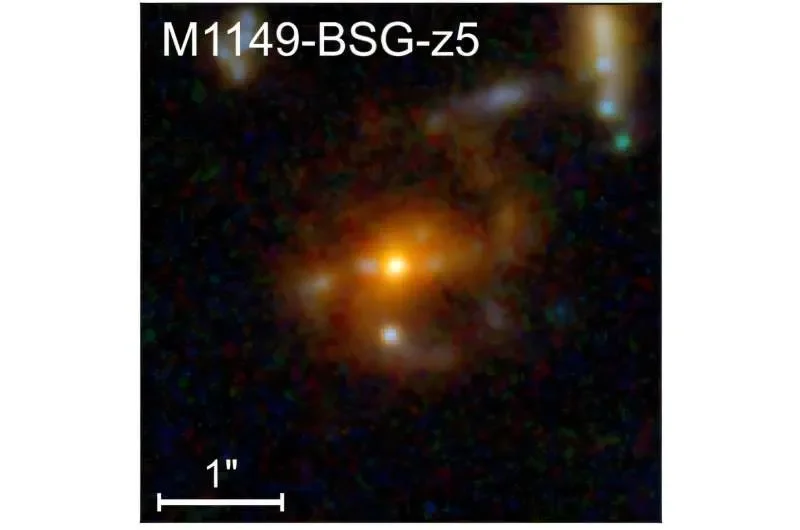
Read More: JWST Finds Oldest Barred Spiral Galaxy M1149-BSG-z5
Mechanisms for Rotational Change: Celestial bodies can alter their rotation due to gravitational interactions, internal mass redistribution, or collisions with smaller objects. The nature of an interstellar object, encountering the Sun's gravitational field, could potentially trigger such a change.
Impact on Comet's Structure: A sudden halt and reversal in rotation could have profound effects on the comet's internal structure. It might cause fractures, further expose subsurface volatiles, or alter the way dust and gas are released. Would such an event explain the unusual plume activity?
Observational Challenges: Observing rotational changes in distant comets is inherently difficult. Such phenomena would likely require sophisticated tracking and analysis of subtle light variations or spectral shifts over time.
Expert Analysis
While the provided data does not contain direct expert quotes or detailed analysis on the rotational reversal, the descriptions of the sunward plume have led to speculation about the comet's internal processes. Scientists are keen to understand how an interstellar object, subjected to the Sun's environment, might evolve in ways distinct from solar system comets. The unusual tail formation is a strong signal that 3I/ATLAS's composition or internal dynamics differ significantly from what has been previously cataloged.
Conclusion and Implications
The behavior of 3I/ATLAS, particularly its prominent sunward plume and the reported, albeit less detailed, rotational anomalies, presents a unique opportunity to study the physics of cometary evolution under interstellar conditions.
Scientific Significance: The comet serves as a valuable case study for understanding the diversity of cometary bodies beyond our solar system and the potential impact of solar system environments on them.
Further Investigation: Continuous observation is crucial to confirm and elaborate on the reported rotational changes and to fully understand the forces driving the sunward plume. Detailed analysis of its chemical composition and internal structure, if obtainable, would provide deeper insights.
Rethinking Cometary Models: The findings from 3I/ATLAS may necessitate a re-evaluation of current models of cometary formation and behavior, especially for objects originating from interstellar space.
Sources Used:
blog.sciandnature.com: Provides context on 3I/ATLAS's unbound orbit and general classification, while noting the public interest in cosmic mysteries.
https://blog.sciandnature.com/2025/10/3iatlas-has-stopped-moving-and-what.html
spaceweatherarchive.com: Details the unusual "backwards" tail and the dominance of the sunward plume, discussing potential crust formation.
https://spaceweatherarchive.com/2025/09/03/the-tail-of-comet-atlas-is-backwards/