The Supreme Court has issued a series of directives concerning the Special Intensive Revision (SIR) of electoral rolls in West Bengal, stepping in amid a dispute between the Election Commission of India (ECI) and the state government. The court's intervention focuses on ensuring fairness and transparency in the process, particularly for voters flagged with 'logical discrepancies'. The apex court has mandated the establishment of appellate tribunals, to be headed by former High Court judges, to hear appeals against exclusions from the voter list. These tribunals are to be constituted under the direction of the Chief Justice of the Calcutta High Court, who may enlist retired Chief Justices and judges from the Calcutta High Court or neighbouring states.

Serving judicial officers, including district judges and civil judges, are being deputed to assist in adjudicating claims and objections, especially for individuals whose names appear on a "logical discrepancy list." This measure arises from the court's observation that the state government had not provided adequate "grade 'A'" officers for the revision exercise. The court has also indicated its disapproval of attempts to obstruct the SIR process, issuing a show-cause notice to the West Bengal Director General of Police.
Read More: Taiwan Holds Nantou County Drills to Prepare for State Collapse
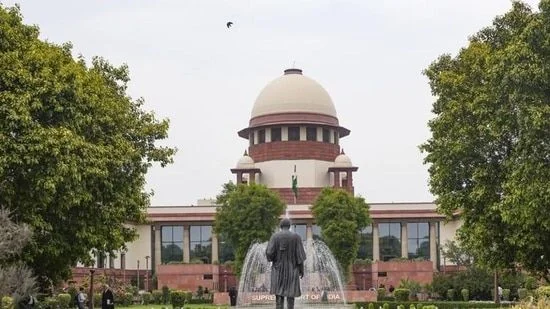
The Supreme Court's involvement comes as the state prepares for upcoming assembly elections. The Trinamool Congress (TMC) has publicly welcomed the court's directives, framing them as a validation of democratic rights and a rebuke to the BJP and the ECI. The TMC has consistently accused the ECI and the BJP of attempting to disenfranchise voters under various pretexts.

The controversy stems from the SIR process, which has seen approximately 1.25 crore notices issued. The "logical discrepancies" include issues such as mismatches in parentage or significant age gaps between a voter and their declared parent. The court has also extended deadlines for voters to submit objections and documents, and has allowed voters to submit these through representatives, addressing concerns raised about large-scale inconvenience and potential arbitrariness.
Read More: Om Birla asks West Bengal MLAs for solutions, not just criticism

The dispute highlights a perceived institutional gap in India's electoral framework, with discussions around the ECI's need for a permanent staff machinery rather than relying on state administrative support for such critical exercises. The court has expressed its dissatisfaction with what it termed an "unfortunate blame game" between the ECI and the state government. In a pointed remark, the Chief Justice of India reportedly admonished petitioners for casting doubt on the integrity of the judicial officers involved in the SIR process.