The erosion of federal voting rights protections, specifically the recent Supreme Court decisions weakening the Voting Rights Act (VRA), may paradoxically empower Black voters through a shift towards race-neutral redistricting, particularly if partisan gerrymandering is curtailed.
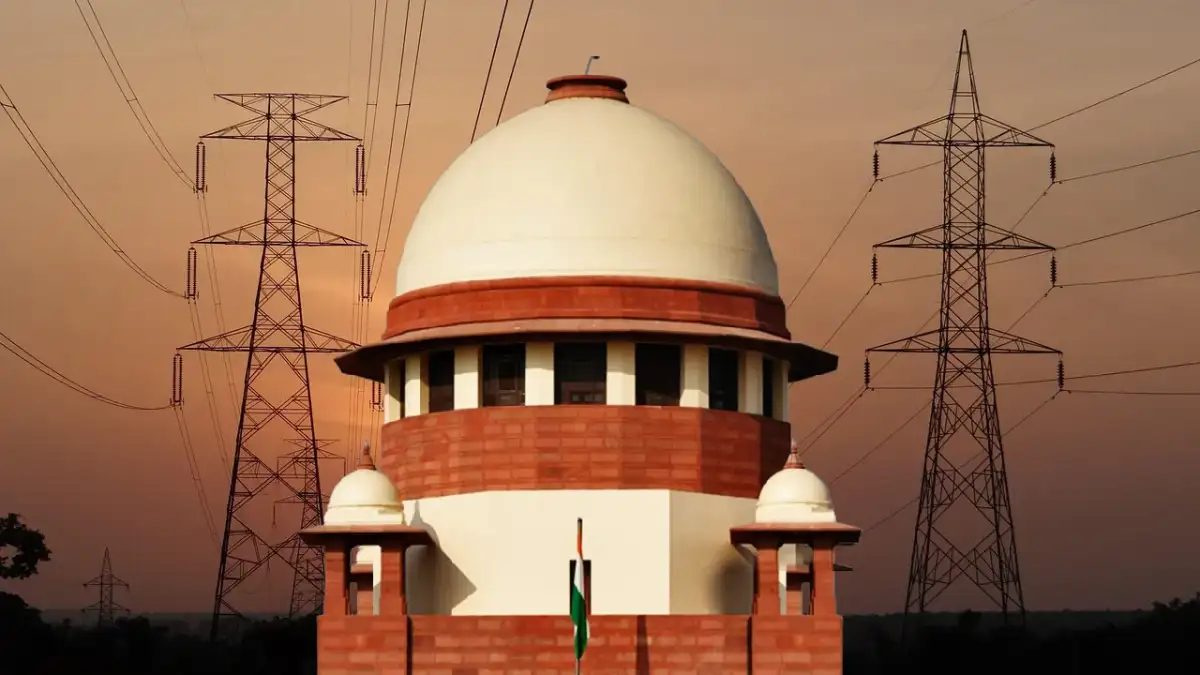
Recent court actions, notably the Supreme Court's decision on April 29, 2026, striking down a Louisiana congressional map designed to preserve Black voting power, have signaled a retreat from robust VRA enforcement. This ruling, described as a "blow to landmark civil rights law" by some outlets, effectively limited protections for minority voting power and has prompted Republican-led Southern states to quickly redraw electoral maps.

Shifting Strategies Amidst Legal Uncertainty
The court's intervention, even as recently as May 19, 2026, regarding Alabama's congressional primary, highlights a complex legal terrain. Federal courts are grappling with the implications of the VRA's weakened status, with groups testing the boundaries of the Supreme Court's pronouncements. While direct VRA enforcement is complicated, analyses suggest that if partisan gerrymandering were addressed, race-neutral redistricting could achieve similar outcomes in minority representation, particularly in Southern states. This is evidenced by simulations indicating that neutral maps could yield comparable results to those previously secured through the VRA.
Read More: Falta Candidate Jahangir Khan Gets Court Protection Until May 26
Local Battles and the New Reality
The impact of the Supreme Court's ruling is expected to be keenly felt at the state and local levels. An NPR analysis indicates active legal challenges concerning at least 17 voting maps or election systems for state and local governments grappling with the court's decision. One notable instance involved a county that agreed to a new voting map, resulting in three out of ten districts being majority Black, following a lawsuit brought by a local NAACP branch and Black voters.

The Partisan Divide in Redistricting
The implications of these legal shifts are significant, particularly as states like Texas and Alabama proceed with map redraws. Critics argue that allowing states to alter election laws close to primaries, especially after the weakening of Section 2 of the VRA, invites manipulation. Concerns persist that weakened vote dilution protections could lead to Republicans gaining additional House seats, a scenario warned against by Democratic voting rights groups. The court's liberal justices dissented in key rulings, underscoring the divisive nature of these decisions.
Read More: Musk Lawsuit Against OpenAI Dismissed in Oakland Court
A Look Back: The VRA's Legacy
Historically, the VRA, passed to safeguard the voting power of racial minorities, has been instrumental in diversifying leadership and ensuring equal participation. Enforcement of the act has been linked to increased voter turnout. For instance, in Louisiana, a prolonged effort to establish a second majority-Black congressional district culminated in a federal court adopting a new map on October 5, 2025, creating two majority-Black districts after a challenge based on Section 2 violations. Similarly, a district court ordered a new map in another state, leading to the creation of a second majority-Black district.
However, the path forward is now shaped by the Supreme Court's interpretation of Section 2, which requires challengers to disentangle race from partisan preference when demonstrating racially polarized voting. This presents a new hurdle for those seeking to prove discriminatory intent or effect in voting maps.
Read More: Trump Administration Economic Claims vs Federal Data May 2026