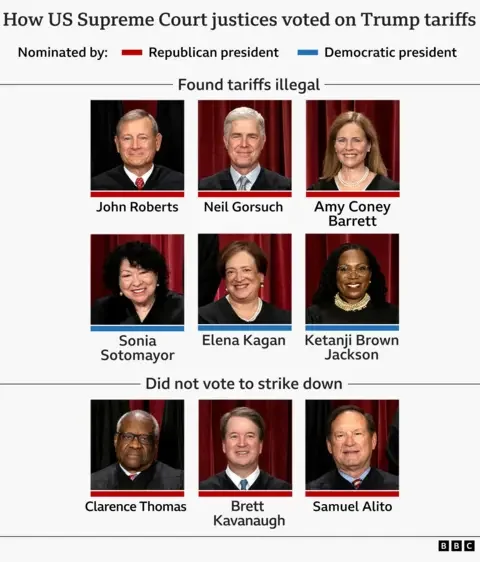
A recent Supreme Court decision has overturned President Trump's broad use of tariffs, a move he has described as "deeply disappointing." The court's ruling, a 6-3 decision, found that the President had exceeded his authority under the International Emergency Economic Powers Act (IEEPA) to impose these tariffs. This marks a significant setback for his economic agenda, which heavily relied on these tariffs as a negotiation tool and to spur domestic manufacturing.
Executive Power and Trade Policy Challenged
The Supreme Court's decision on Friday has struck down President Trump's sweeping global tariffs, challenging a central aspect of his economic policy. This ruling signifies a major defeat for the administration, as the tariffs were a cornerstone of his approach to trade and economic negotiation. The court's judgment suggests that the President's unilateral actions in imposing these tariffs were beyond his granted powers under federal emergency laws.
Read More: President Trump Expresses Anger Over Court Decisions Affecting Policies

The tariffs in question represented approximately half of the total tariff bill implemented during his administration.
The ruling does not prevent the President from imposing duties under different, existing laws.
Despite the court's decision, President Trump has indicated he does not believe Congressional action is necessary to address the matter.
Trump's Reaction and Path Forward
President Trump has expressed strong disapproval of the Supreme Court's decision, criticizing the justices involved and stating his "ashamed[ness]" of their actions. He views the ruling as a failure to "do what's right for our country." In response to this setback, he has outlined plans to seek alternative methods for imposing tariffs, citing specific sections of trade acts that outline more involved processes for such actions.
"I think is deeply disappointing, and I'm ashamed of certain members of the court, absolutely ashamed for not having the courage to do what's right for our country." - President Trump
The President's reaction has been forceful, with reports indicating he "lashed out" at the justices, calling some "fools and lapdogs." This strong language highlights the personal and political significance of the ruling for the President.

Legal Basis for the Tariffs
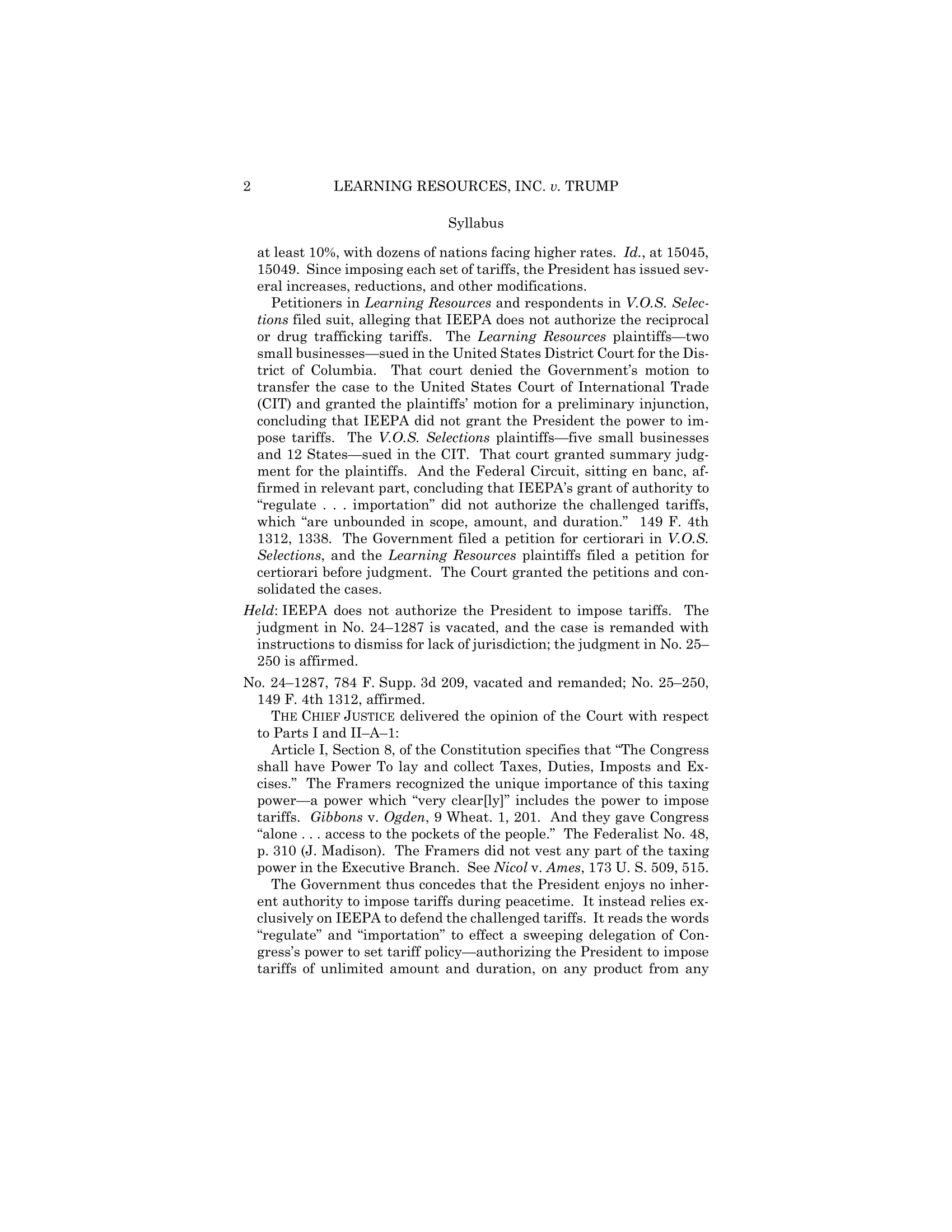
The Supreme Court's ruling centered on the International Emergency Economic Powers Act (IEEPA), finding that it does not authorize the President to impose tariffs. This decision upholds a prior ruling from the U.S. Court of Appeals for the Federal Circuit. The tariffs at issue were enacted under a federal emergency powers law, which the court determined was an illegal use of executive power.
Read More: US Supreme Court Strikes Down Some Trump Tariffs, Causing Trade Worry for Canadian Businesses
The court's decision was based on the interpretation of IEEPA, specifically regarding the President's authority to levy tariffs during emergencies.
The ruling has been described as a "major rebuke" of President Trump's trade policy and his use of executive power.
Economic Ramifications and Market Response
The Supreme Court's decision has significant economic implications. While President Trump had promoted tariffs as a means to spark a revival in U.S. manufacturing and allow domestic factories to raise prices, evidence suggests this has not led to a broad revival of domestic manufacturing. The stock market, however, appeared to "cheer" the ruling, with major U.S. stock indexes erasing early losses after the decision.

The potential for refunds of billions in tariffs has been raised as a consequence of the ruling.
The tariffs represented a substantial source of revenue for the White House.
Alternative Tariffs and Legal Avenues
Despite the Supreme Court's decision, President Trump has indicated his intention to pursue tariffs through different legal channels. He cited specific provisions within the Trade Act of 1974 (Sections 122, 201, 301) and the Tariff Act of 1930 (Section 338) as potential avenues. These statutes outline separate and often more complex processes for presidential tariff imposition, suggesting a shift in strategy rather than an abandonment of the policy itself.
Read More: Supreme Court Stops Trump From Unilaterally Adding Tariffs
"The decision doesn’t stop Trump from imposing duties under other laws."
The President's insistence on not needing Congressional action suggests a belief that existing legislative frameworks, albeit requiring more procedural steps, can still be utilized to achieve his trade objectives.

Contrasting Views on Presidential Authority
The Supreme Court's 6-3 decision underscores a division in the interpretation of executive authority in trade matters. The majority opinion found that the President had overstepped his power, while the dissenting justices likely held a different view on the scope of presidential discretion in national security and trade. Prior to the ruling, arguments presented to the court showed skepticism from conservative-led justices regarding the President's use of national security statutes for his tariff agenda.
The case involved two separate legal challenges to President Trump's use of IEEPA for tariffs.
The ruling highlights the ongoing tension between executive actions and legislative checks on presidential power.
Conclusion: A Shift in Trade Strategy
The Supreme Court's decision to strike down President Trump's sweeping tariffs represents a significant legal and political setback. The ruling clarifies that the President cannot unilaterally impose tariffs under the International Emergency Economic Powers Act. However, President Trump's immediate response indicates a resolve to continue pursuing his trade objectives through alternative legislative avenues. The economic impact of these tariffs and the subsequent refunds remains a point of consideration, while the stock market has reacted positively to the reduced executive overreach. The path forward will involve navigating the more cumbersome processes outlined in other trade laws, potentially requiring greater Congressional involvement or adherence to stricter procedural requirements.
Read More: Supreme Court Ruling Against Trump Tariffs Boosts US Stocks by 207 Points on Tuesday
Sources:
Trump calls SCOTUS tariffs decision 'deeply disappointing' and lays out path forward
Trump lashes out at Supreme Court justices who struck down his tariffs: 'Fools and lapdogs'
Trump tariffs ruling live updates: President slams Supreme Court setback
Supreme Court strikes down Trump’s sweeping tariffs, upending central plank of his economic agenda
Supreme Court rules most Trump tariffs illegal in major setback for economic agenda
7 key things to know about Trump's tariffs after the Supreme Court decision
Supreme Court Strikes Down Trump’s Tariffs: Live Updates, Reaction
Trump says U.S. Supreme Court ending his tariffs would be ‘devastating’ - National | Globalnews.ca