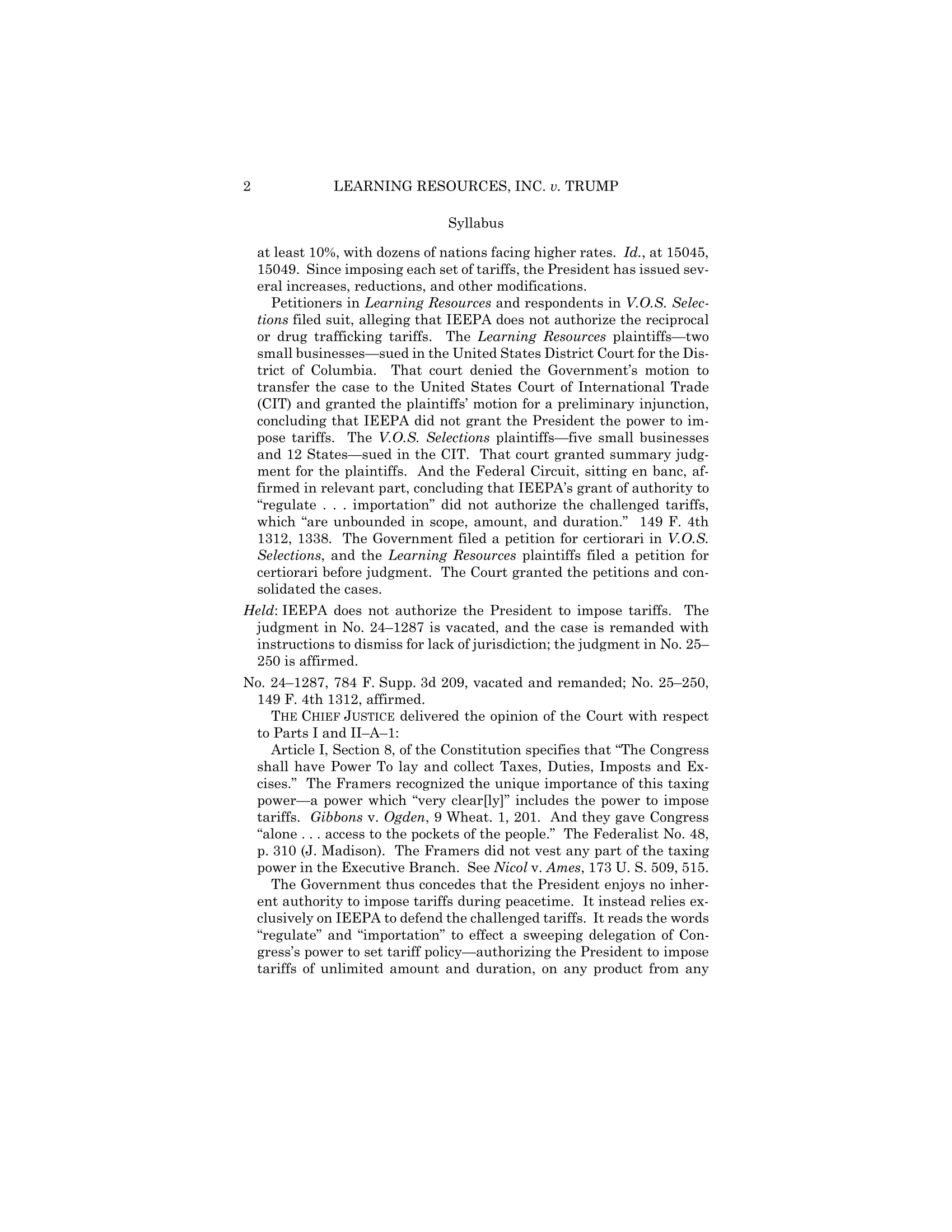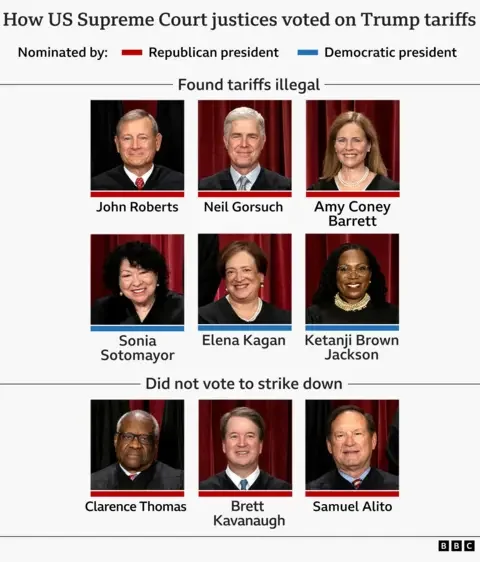
The Supreme Court has ruled that President Trump cannot unilaterally impose broad tariffs under a specific federal law, marking a significant setback for his economic policies and second-term agenda. The decision, which favored a six-justice majority, determined that Congress, not the president, holds the authority to impose tariffs. This ruling challenges the executive branch's broad use of power and could have far-reaching effects on international trade and government revenue.
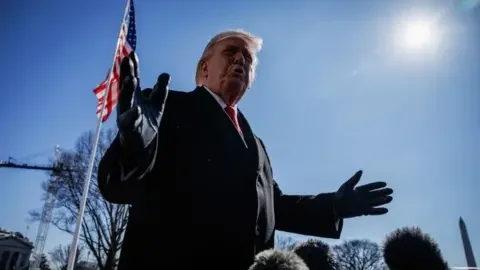
Ruling Against Presidential Tariff Power
A recent Supreme Court decision has declared President Trump's ability to impose sweeping tariffs under the International Emergency Economic Powers Act (IEEPA) to be illegal. The court upheld a lower court's finding that this specific law does not grant the president the power to levy such duties. This landmark ruling directly impacts a core component of Trump's economic strategy.
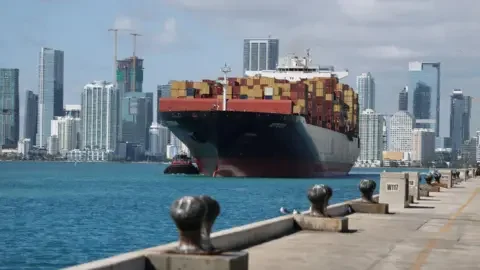
The Supreme Court's decision came from a six-justice majority.
The ruling stated that Congress, not the president, has the power to impose tariffs.
The International Emergency Economic Powers Act (IEEPA) does not authorize the president to impose tariffs, according to the court.
This decision represents a rare check on the president's use of executive authority.
President Trump had warned for months that such a ruling would be "catastrophic."
Impact on Trump's Economic Agenda
The Supreme Court's judgment is seen as a major blow to President Trump's economic policies, particularly those intended for his second term. Tariffs have been a central theme of his presidency, and this ruling challenges his signature approach to trade.
Read More: Supreme Court Stops Trump Tariffs on Friday, Affecting Businesses

Tariffs are a centerpiece of Mr. Trump's economic agenda for his second term.
The ruling upends a central plank of his economic agenda.
President Trump has relied on other laws to impose levies on various products, and this decision does not stop him from imposing duties under different legal frameworks.
The stock market reacted positively to the ruling, with major U.S. stock indexes erasing early losses.
Public Reaction and Future Implications
Public opinion on President Trump's tariffs has been divided. While the president expressed anger over the Supreme Court's decision, some polls indicated public disapproval of his tariff policies.

About 6 in 10 Americans felt Trump had gone too far in imposing new tariffs, according to an AP-NORC poll in January.
President Trump slammed the Supreme Court after the decision.
It remains unclear whether the ruling will specify retroactive refunds of duties already paid or only prevent future tariffs.
There is increased uncertainty for importers following the court's decision.
The administration had reportedly prepared to roll out tariff alternatives quickly if the IEEPA tariffs were overturned.
Expert Analysis and Legal Basis
Legal experts and analysts have weighed in on the Supreme Court's decision, clarifying the legal basis for the ruling and its potential consequences.
The Supreme Court upheld a ruling from the U.S. Court of Appeals for the Federal Circuit that found Trump's tariffs illegal under IEEPA.
Some suggest Trump will try to find another way to pursue his trade agenda.
The case presented a significant challenge to the president's use of emergency power to impose duties.
Conflicting Views on Executive Authority
The ruling highlights a tension between the president's perceived need for broad executive authority in economic matters and the constitutional role of Congress.
President Trump complained about having to justify his use of tariffs to the Supreme Court.
The decision represents a rare check on the president's broad use of executive authority.
The ruling underscores that Congress holds the power to impose tariffs.
Conclusion and Next Steps
The Supreme Court's decision significantly limits President Trump's ability to enact tariffs through emergency powers. While this ruling directly impacts policies enacted under IEEPA, the president may seek alternative legal avenues to pursue his trade objectives. The long-term implications for trade, consumer costs, and the balance of power between the executive and legislative branches remain to be seen. The potential for retroactive refunds of duties paid is a key point of uncertainty.
Read More: Trump Announces 10% Global Tariff After Supreme Court Ruling in February 2026
Sources Used:
BBC News: https://www.bbc.com/news/articles/cx2jqgdn719o (Summary indicates ruling against president on tariffs, limiting executive authority.)
USA Today: https://www.usatoday.com/story/news/politics/2026/02/20/supreme-court-trump-tariffs-ruling/87778248007/ (Summary details President Trump's reaction and market response to the ruling.)
CBS News: https://www.cbsnews.com/news/supreme-court-tariffs-decision-trump/ (Summary specifies ruling against unilateral tariff imposition under IEEPA and the law's limitations.)
AP News (via Bing): https://apnews.com/article/trump-tariffs-supreme-court-whats-next-b8b6d5d44ebb3640a88f7202754cb361 (Summary discusses tariffs being central to Trump's presidency and potential future actions.)
Winnipeg Free Press: https://www.winnipegfreepress.com/business/2026/02/20/supreme-court-strikes-down-trumps-sweeping-tariffs-upending-central-plank-of-economic-agenda (Summary notes the ruling's impact on his agenda and the ability to impose duties under other laws.)
CNBC: https://www.cnbc.com/2025/09/02/what-trump-court-loss-means-for-billions-in-tariffs-paid-to-government.html?msockid=10b2c95243d16fed2033de5442006e03 (Summary discusses uncertainty for importers and the possibility of tariff alternatives and refund clarity.)
New York Post: https://nypost.com/2025/11/04/us-news/supreme-court-could-blow-up-president-trumps-tariff-agenda/ (Summary details the legal challenges and uncertainty surrounding the case before arguments were heard.)