


Key Points:
Pakistan's Prime Minister Shehbaz Sharif has repeatedly praised Donald Trump, calling him a "savior of South Asia" and a "man of peace."
These remarks have drawn significant criticism and online ridicule, with some labeling Sharif's actions as "bootlicking" and embarrassing for Pakistan.
Sharif's positive statements contrast with Pakistan's condemnation of Israel's actions in Gaza.
Supporters argue Sharif is seeking constructive engagement, while critics worry it harms Pakistan's diplomatic standing.
Sharif's Public Commendations of Trump Draw Mixed Reactions
Pakistan's Prime Minister Shehbaz Sharif has made several public statements praising former US President Donald Trump, particularly concerning his role in regional peace and conflict resolution. These commendations, delivered at various international forums and through social media, have become a subject of considerable discussion.
During a "Board of Peace" meeting in Washington D.C., Trump invited Sharif to stand and spoke about Pakistan's leadership, noting he liked both Sharif and Pakistan's Army Chief, Asim Munir. Trump also claimed his actions helped prevent a larger India-Pakistan war in 2025. Sharif, in turn, lauded Trump as a "man of peace" and the "saviour of South Asia." He also invited Trump to visit Pakistan and expressed interest in increased US investment.
Further instances of Sharif's praise include acknowledging Trump's role in easing tensions between Cambodia and Thailand, referencing the Kuala Lumpur Accord, and the Gaza Peace Plan as examples of his impact. Sharif also suggested Trump deserved a Nobel Peace Prize for bringing peace to South Asia and saving millions of lives.
Read More: US Vice President Vance leads Iran talks in Pakistan to reopen Strait of Hormuz

Background: Shifting Diplomatic Landscape
The period surrounding these events saw significant diplomatic interactions between Pakistan and the United States. Weeks before a meeting at the Oval Office, Pakistan and the US had reportedly agreed to a trade deal. Trump had also met with Indian Prime Minister Narendra Modi earlier.
These meetings occurred despite past US rhetoric, with one report noting Trump had previously called Pakistan a "terrorist safe haven." However, Pakistan had split with Trump on his decision to strike Iranian nuclear facilities in June.
Sharif's effusive praise for Trump has also drawn attention in the context of Pakistan's stance on other global issues. While commending Trump, Pakistan has condemned Israel's actions in Gaza.

Evidence of Public Praise and Diplomatic Engagement
Key Statements by Prime Minister Shehbaz Sharif:
"Saviour of South Asia." (Article 1)
"Man of peace." (Article 1)
"He has brought not only peace in South Asia, saved millions of people…" (Article 7)
"I genuinely feel that he (Trump) is the most genuine and most wonderful candidate for the Peace Prize because he has brought not only peace in South Asia, saved millions of people…" (Article 7)
"Mr. President, I would like to salute you for your exemplary leadership, your visionary leadership, and I think that you’re the man the world needed most at this point in time." (Article 7)
Credited Trump with helping ease tensions between Cambodia and Thailand. (Article 5)
Referenced the Kuala Lumpur Accord and the Gaza Peace Plan as examples of Trump's impact. (Article 5)
Key Statements and Actions by Donald Trump:
Asked Prime Minister Sharif to stand during a meeting. (Article 1)
Said he likes both Prime Minister Sharif and Pakistan's Army Chief, Field Marshal Asim Munir, calling them "tough and dedicated." (Article 1)
Claimed his actions helped prevent a larger India-Pakistan war in 2025. (Article 1)
Hosted Prime Minister Sharif and Army Chief Asim Munir at the White House. (Article 6)
Invitations and Interactions:
Sharif invited Trump to undertake an official visit to Pakistan. (Article 2)
Trump hosted Pakistan's Prime Minister Shehbaz Sharif at the White House. (Article 6)
Online Reaction and Public Scrutiny
Sharif's repeated public endorsements of Trump have triggered widespread criticism and mockery online. Many social media users have criticized these statements, with terms like "bootlicking" and "embarrassing" being used.
Read More: US Vice President Vance in Pakistan for Iran Peace Talks on Saturday
Accusations of "Bootlicking": Several reports highlight online ridicule where Sharif was accused of excessive flattery. One headline quotes, "'Give Shehbaz Sharif a Nobel for bootlicking': Pak PM roasted for Trump flattery." (Article 4)
Hypocrisy Allegations: Criticism has also pointed to a perceived hypocrisy, particularly given Pakistan's ban on X (formerly Twitter) while Sharif uses the platform to praise Trump. A "Community Note" on one of Sharif's posts highlighted this contradiction, leading to further trolling. (Article 3)
International Observation: During one summit, observers noted the reactions of Italian Prime Minister Giorgia Meloni and British Prime Minister Keir Starmer, who appeared to be trying not to laugh during Sharif's lengthy praise of Trump. (Article 7)
Erosion of Standing: Some critics argue that such public endorsements by a head of state weaken Pakistan's diplomatic standing. Historian Ammar Ali Jan is cited as stating that "Shehbaz Sharif’s constant and needless flattery of Donald Trump is a source of embarrassment for Pakistanis across the world." (Article 4)
Contrasting Stances on Gaza Conflict
A significant point of discussion arises from the contrast between Prime Minister Sharif's strong praise for Donald Trump and Pakistan's official stance on the conflict in Gaza.
Condemnation of Israel: Pakistan has formally condemned Israel's actions in Gaza. (Article 2)
Praise for Trump's Peace Efforts: Despite this, Sharif has lauded Trump's role in peace efforts, even suggesting he deserved a Nobel Peace Prize for saving millions of lives through his actions in South Asia and potentially in the Middle East. (Article 7)
Perceived Disconnect: This juxtaposition has led to questions about the consistency of Pakistan's foreign policy messaging, with some observers finding it contradictory to praise a US leader while criticizing a key US ally's actions in a region of conflict.
Supporters' Viewpoint: Strategic Engagement
Supporters of Prime Minister Sharif's approach argue that his public commendations of Donald Trump are a strategic move aimed at fostering constructive engagement with the United States.
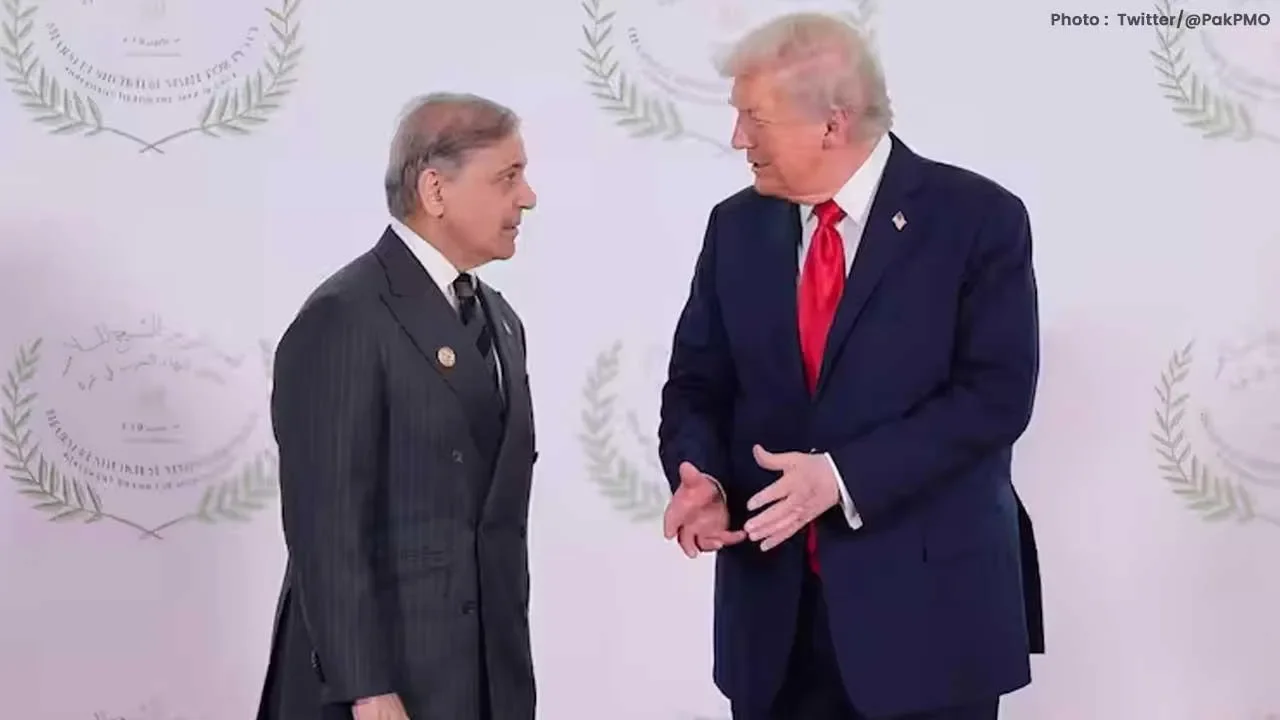
Building Bridges: The argument is that by publicly acknowledging Trump's perceived strengths and contributions, Sharif is attempting to build a rapport that could benefit Pakistan, particularly in terms of diplomatic relations and potential investment.
Diplomatic Necessity: In a complex geopolitical environment, some believe it is pragmatic for leaders to engage with influential figures like Trump, regardless of personal or political differences, to advance national interests.
Focus on Bilateral Partnership: The invitation for an official visit and discussions on enhancing bilateral partnerships, including trade deals and investment, are seen as tangible outcomes of this engagement. (Article 2, Article 6)
Critics' Viewpoint: Detrimental Diplomacy
Conversely, critics express concern that Prime Minister Sharif's effusive praise for Donald Trump could be detrimental to Pakistan's international image and diplomatic standing.
Perception of Weakness: The repeated and seemingly exaggerated commendations are viewed by many as a sign of weakness or subservience, potentially undermining Pakistan's credibility on the global stage.
Online Mockery: The widespread online ridicule and the "bootlicking" tag suggest that these actions are not being perceived positively internationally and are creating an unfavorable public narrative. (Article 4, Article 7)
Contradiction with Policy: The contrast between praising Trump and Pakistan's stance on critical issues like the Gaza conflict raises questions about the coherence and effectiveness of Pakistan's foreign policy communication.
Damage to National Dignity: Some commentators believe that such public displays of flattery by a head of state are embarrassing for the nation and its people. (Article 4)
Expert Analysis and Ongoing Debate
The public pronouncements by Prime Minister Shehbaz Sharif regarding Donald Trump have fueled an ongoing debate among foreign policy analysts and observers.
"Supporters argue Sharif is seeking constructive engagement with the US, while opponents warn such public endorsements could weaken Pakistan's diplomatic standing." (Article 5)
The nature of these commendations—whether they are strategic diplomatic tools or merely performative gestures—remains a key point of contention.

"With reactions from Haqqani and Tharoor prolonging the conversation, debate continues over whether Sharif's repeated commendations are strategic or performative." (Article 5)
The implications of these interactions for the broader US-Pakistan relationship and Pakistan's regional influence are subjects of continued analysis.
Read More: Eric Swalwell California Governor Campaign Hit by Sexual Assault Claims
Conclusion and Potential Implications
Prime Minister Shehbaz Sharif's repeated and strong commendations of former US President Donald Trump have generated significant attention, both domestically and internationally. The evidence indicates a pattern of praise, including terms like "saviour of South Asia" and suggestions of a Nobel Peace Prize nomination for Trump, often linked to perceived contributions to regional peace. These interactions, including meetings at the White House and invitations for official visits, suggest an effort to build a relationship.
However, this consistent praise has been met with considerable public backlash, online mockery, and accusations of hypocrisy, particularly when juxtaposed with Pakistan's policy on other international issues like the Gaza conflict. The debate centers on whether Sharif's actions represent a calculated diplomatic strategy to foster engagement and investment, or if they are performative gestures that risk damaging Pakistan's international standing and national dignity.
Read More: US-Iran Talks Fail: Ceasefire Scope and Regional Demands Cause Disagreement
The long-term implications of this diplomatic approach remain to be seen. It is unclear how these public endorsements will shape the future of US-Pakistan relations or Pakistan's broader diplomatic influence in the region and beyond. The continued scrutiny suggests that the balance between strategic engagement and perceived subservience will remain a critical point of discussion regarding Pakistan's foreign policy.
Sources Used:
Article 1: Timesnownews.com - "Pak PM’s Awkward Moment At Board of Peace: Trump Asks Shehbaz Sharif To Stand, Says PM Modi ‘Watching Us’" (Published: 1 day ago) - https://www.timesnownews.com/world/asia/pakistan-pm-shehbaz-sharif-trolled-after-calling-donald-trump-savior-of-south-asia-at-board-of-peace-meeting-watch-article-153649283
Article 2: Khaleejtimes.com - "Watch: Pakistan PM Sharif meets Trump in US, praises role in ceasefire with India" (Seen on: Bing) - https://www.khaleejtimes.com/world/americas/watch-pakistan-pm-sharif-meets-trump-in-us-praises-role-in-ceasefire-with-india
Article 3: Thedailyjagran.com - "'Brutal': Pakistan PM Sharif Congratulates Trump On X, Gets Trolled After 'Community Note' Unmasks Hypocrisy" (Published: Nov 9, 2024) - https://www.thedailyjagran.com/world/shehbaz-sharif-twitter-community-note-pakistan-pm-x-post-donald-trump-congratulation-trolled-after-hypocrisy-10199803
Article 4: Indiatoday.in - "'Give Shehbaz Sharif a Nobel for bootlicking': Pak PM roasted for Trump flattery" (Published: Oct 14, 2025) - https://www.indiatoday.in/world/story/shehbaz-sharif-effusive-praise-for-trump-gaza-summit-online-ridicule-bootlicker-tag-2803192-2025-10-14
Article 5: Gccnews24.com - "Shehbaz Sharif’s Praise for Donald Trump Draws Mockery and Sparks Debate" (Published: Oct 28, 2025) - https://www.gccnews24.com/sharifs-trump-praise-draws-criticism-and-online-mockery
Article 6: Ndtv.com - "Trump Meets Pakistan PM Shehbaz Sharif In Latest Sign Of Warming Ties" (Published: Sep 26, 2025) - https://www.ndtv.com/world-news/donald-trump-meets-pak-pm-shehbaz-sharif-army-chief-asim-munir-in-latest-sign-of-warming-ties-9346369
Article 7: Timesnownews.com - "'Just Short Of Calling Him Daddy': Why Sharif's Big Talk On Trump Has Internet Amused - Watch" (Published: Oct 14, 2025) - https://www.timesnownews.com/world/just-short-of-calling-him-daddy-why-sharifs-big-talk-on-trump-has-internet-amused-watch-article-153000219
Article 9: Timesofindia.indiatimes.com - "Trump to meet PM of Pakistan, a country he once called a terrorist safe haven" (Published: Sep 25, 2025) - https://www.timesofindia.indiatimes.com/world/us/trump-to-meet-pm-of-pakistan-a-country-he-once-called-a-terrorist-safe-haven/articleshow/124120728.cms


