Astronomers find traces of past galactic collisions around a small Milky Way neighbor, suggesting that even the smallest galaxies may experience mergers.
A recent discovery using the Subaru Telescope has brought to light a previously unseen structure linked to a dwarf galaxy orbiting our own Milky Way. This finding points to the possibility of past mergers, challenging earlier ideas about the interactions of very small galaxies. The structure observed around the Ursa Minor dwarf spheroidal galaxy (UMi dSph) offers clues that even low-mass dwarf galaxies may undergo significant galactic events.
Context of the Discovery
The Subaru Telescope, known for its powerful wide-field imaging capabilities, has been instrumental in this observation. The Ursa Minor dwarf spheroidal galaxy (UMi dSph), a satellite of the Milky Way, was examined using the Hyper Suprime-Cam instrument. Data collected reveals a distinct spatial distribution of stars, particularly in the outer regions, that deviates from expected patterns for a galaxy without external influences. This has led researchers to propose that the structure observed is a remnant of a past merger event.
Read More: JWST Finds Oldest Barred Spiral Galaxy M1149-BSG-z5

The Subaru Telescope: A large optical-infrared telescope located on Mauna Kea, Hawaii.
Hyper Suprime-Cam (HSC): A wide-field camera attached to the Subaru Telescope, used for capturing large areas of the sky with high resolution.
Ursa Minor dwarf spheroidal galaxy (UMi dSph): A small galaxy orbiting the Milky Way, classified as a dwarf spheroidal galaxy.
Galaxy Mergers: The process where two or more galaxies collide and combine into a single, larger galaxy.
Observed Phenomena and Data
The observations focused on the Ursa Minor dwarf spheroidal galaxy (UMi dSph). Analysis of the stellar population within and around this galaxy revealed an unusual pattern.
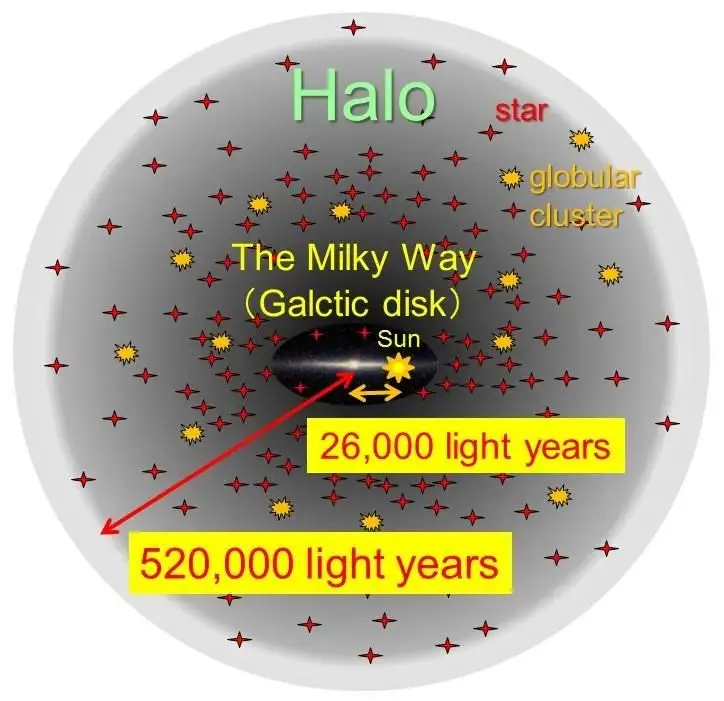
Spatial Distribution of Stars: The stars in the UMi dSph do not follow a simple, smooth distribution. Instead, a notable structure has been identified in its outer regions.
Number Density Profiles: When plotting the number of stars per unit area, the data shows a deviation from what would be predicted for a galaxy that has not experienced a merger. This deviation suggests an extended stellar structure.
"Stealth Merger" Identification: The term "stealth merger" has been used to describe this phenomenon, implying a collision that may not have been immediately obvious through traditional means of observation.
Implications for Dwarf Galaxy Evolution
The presence of this structure around the UMi dSph has significant implications for our understanding of how small galaxies form and evolve.
Challenging Previous Notions: The findings suggest that even very low-mass dwarf galaxies are not isolated and may experience gravitational interactions and mergers, similar to larger galaxies.
Understanding Galaxy Formation: Dwarf galaxies are the most common type of galaxy in the universe. Studying their formation and evolution, including merger events, is key to comprehending the broader picture of galaxy evolution.
Complex Histories: The discovery implies that even a dwarf galaxy can have a complex formation history, possibly involving past collisions and interactions.
Expert Perspectives on Galactic Interactions
Research into galaxy interactions highlights the frequency and importance of these events in the cosmos.
"In the Universe, interactions and mergers between galaxies occur frequently. It is believed that galaxies evolved through a series of interactions and mergers." (Obozrevatel.com)
The Subaru Telescope is noted for its ability to "conduct systematic studies of halo structures of galaxies in our local group," contributing to the understanding that "even a dwarf galaxy has a complex history of formation." (Subarutelescope.org)
Analysis of Merger Evidence
The evidence points towards a past merger event, though further observations are deemed necessary for absolute confirmation.
Remnants of Past Mergers: The newly discovered structure exhibits features that are consistent with remnants of past galaxy mergers.
Confirmation Needed: While the current data is compelling, additional observations are required to fully confirm these findings and understand the details of the proposed merger.
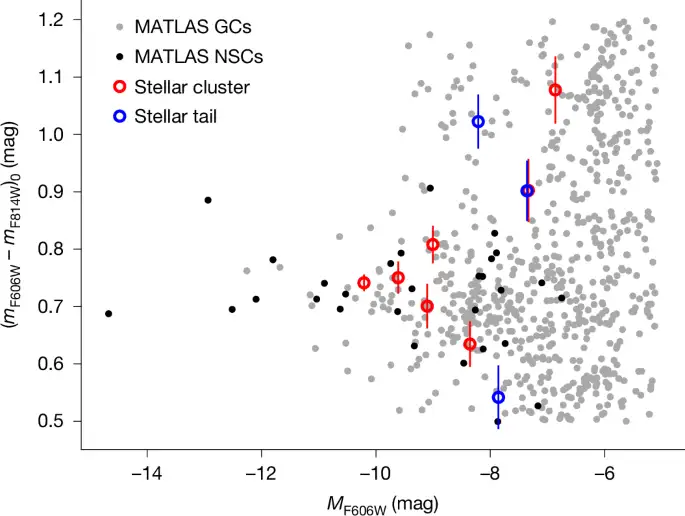
Star Cluster Mergers: In some dwarf galaxies, there is evidence of star clusters migrating to the center and merging, indicating that smaller-scale mergers also play a role in their development. (Nature, Observatoire astronomique de Strasbourg)
Conclusion and Future Directions
The observation of a peculiar stellar structure around the Ursa Minor dwarf spheroidal galaxy (UMi dSph) by the Subaru Telescope provides compelling clues that even low-mass dwarf galaxies may have experienced mergers. This challenges prior assumptions about the interactions of such small galactic systems and adds a new dimension to the study of galaxy evolution.
Read More: US Space Force Victus Haze Mission Successfully Tests Orbital Intercepts
Key Finding: A previously unknown structure around the UMi dSph, suggestive of past mergers.
Significance: Indicates that low-mass dwarf galaxies might undergo mergers, adding complexity to their formation histories.
Next Steps: Further observations are planned to solidify these findings and investigate the nature of the merger.
Sources:
News9live: Subaru Telescope spots merger between dwarf galaxies
https://www.news9live.com/science/subaru-telescope-spots-merger-between-dwarf-galaxies-2928514
Published: 12 hours ago
Subaru Telescope (Observation Results): Do Even Low-mass Dwarf Galaxies Merge? New Clues from the Outer Stars of a Milky Way Satellite
Published: Jan 13, 2026
SpaceNews: Subaru Telescope Captures Images of 'Stealth Merger' of Dwarf Galaxies
https://spacenews.com/subaru-telescope-captures-images-of-stealth-merger-of-dwarf-galaxies/
Published: Feb 8, 2012
Observatoire astronomique de Strasbourg: Star cluster mergers in dwarf galaxies
https://astro.unistra.fr/en/2025/04/09/star-cluster-mergers-in-dwarf-galaxies/
Published: Apr 9, 2025
Nature: Evidence of star cluster migration and merger in dwarf galaxies
Published: Apr 9, 2025
Phys.org: Do even low-mass dwarf galaxies merge? New clues from the outer stars of a Milky Way satellite
https://phys.org/news/2026-01-mass-dwarf-galaxies-merge-clues.html
Published: Jan 14, 2026
Obozrevatel: Subaru telescope captures interaction of galaxies resembling a jellyfish. Photo
https://eng.obozrevatel.com/section-news/news-subaru-telescope-captures-interaction-of-galaxies-resembling-a-jellyfish-photo-03-09-2024.html
Published: Sep 3, 2024
Subaru Telescope (Discovery): The World of Galaxies | Space as Revealed by the Subaru Telescope
https://subarutelescope.org/en/subarudiscovery/4/1.html
Seen on: Bing
Subaru Telescope (Discovery): The Milky Way and its Group | Space as Revealed by the Subaru Telescope
https://subarutelescope.org/en/subarudiscovery/3/
Seen on: Bing
Subaru Telescope (Observation Results): Observation Results
Published: Jul 14, 2025