Atomic-Level Stressing Enhances Chemical Reactions, Promises Advanced Electronics
A novel method for altering the properties of metals through controlled stretching, at the atomic level, has emerged, promising significant advancements in two distinct, yet interconnected, fields: chemical catalysis and the development of next-generation electronic materials. This approach, detailed in recent scientific publications, offers a refined way to influence how metals interact with other substances, thereby tuning their effectiveness in crucial industrial processes and enabling the creation of materials for quantum computing and microelectronics.
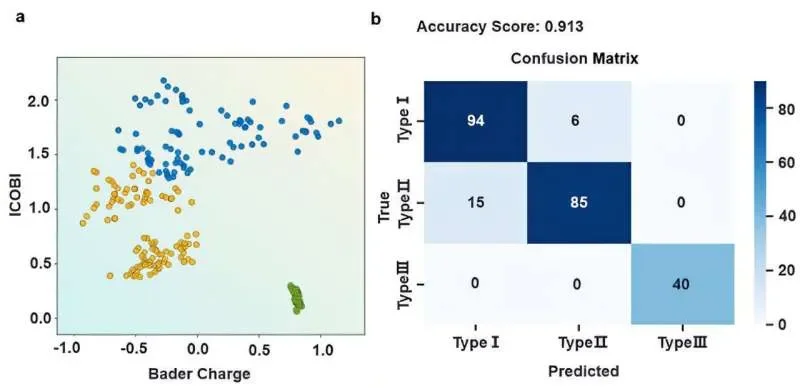
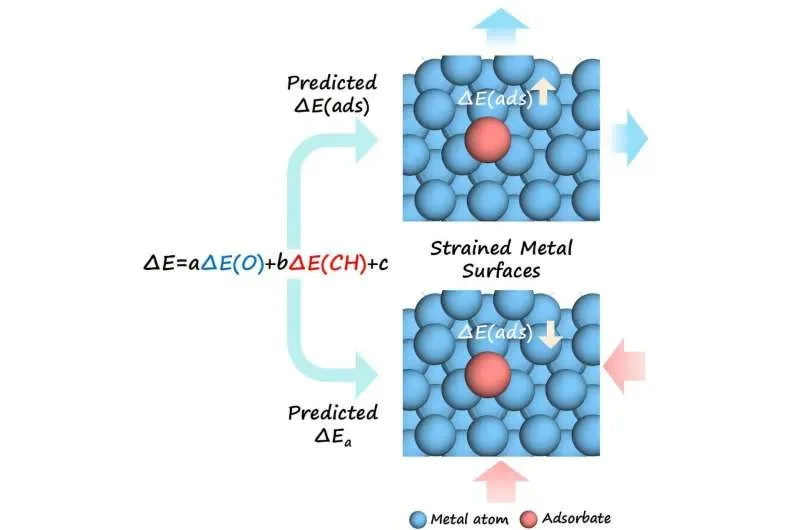
The core innovation lies in understanding how applying mechanical strain to metal surfaces influences their catalytic activity. Researchers have developed a framework, articulated by a linear scaling relationship, ΔE(ads) = a·ΔE(O) + b·ΔE(CH) + c. This equation uses the observed responses of carbon-hydrogen (CH) and oxygen (O) bonds to strain as reference points to classify and predict how different metals will perform in catalytic reactions. This classification system is designed to be transferable across various metal-catalyzed heterogeneous catalysis applications, which include significant industrial processes like ammonia synthesis, the functioning of automobile catalytic converters, methanol production, carbon dioxide reduction, and hydrogen generation.
Read More: Greenland Lakes Make Ice Flow 40% Faster Towards Sea
Predictive Power for Industrial Chemistry
The recently published work highlights the creation of a unified and transferable system for designing strain-engineered catalysts. This framework is specifically cited as supporting the rational design of catalysts for key reactions such as CO2 conversion, nitrogen reduction, and hydrogen evolution. The underlying principle involves observing how straining metal surfaces affects specific chemical bonds – namely carbon-hydrogen and oxygen – to then predict and manipulate the metal's overall catalytic energy landscape. This method offers a more precise way to engineer catalysts for a range of important chemical transformations, moving beyond trial-and-error.
From Catalysis to Quantum Materials
Beyond its implications for chemical reactions, the technique of stretching metals at the atomic level is also proving instrumental in the creation of materials essential for quantum computing, microelectronics, sensors, and spintronic applications. Historically, producing high-quality thin films of metal oxides – compounds critical for these advanced technologies – has presented considerable challenges, particularly when using high-vacuum synthesis methods like molecular beam epitaxy.
Read More: NYT Mini Crossword Answers for April 2 2026 and How to Solve Each Clue
Researchers, through experimentation, discovered that intentionally inducing epitaxial strain in metals provides a breakthrough solution. This process, essentially stretching the metal at the atomic scale, simplifies the oxidation of metals that were previously considered 'stubborn' or difficult to process. The result is the easier creation of high-quality metal oxide films, opening avenues for developing materials with novel quantum, electronic, and spintronic properties. This research involved collaboration among institutions including Auburn University, the University of Delaware, Brookhaven National Laboratory, and Argonne National Laboratory, with contributions from the University of Minnesota.
A Shift in Material Synthesis
The discovery emerged serendipitously while researchers attempted to synthesize metal oxides using conventional, low-energy molecular beam epitaxy techniques within ultra-high vacuum chambers. The team's findings, published in journals such as Cell Reports Physical Science and Nature Nanotechnology, demonstrate that this engineered strain not only facilitates the precise synthesis of quantum materials but also offers significant potential for controlling oxidation-reduction processes. This control is vital for applications in catalysis, as well as in chemical reactions occurring within batteries and fuel cells. Metals like ruthenium and iridium, which form important oxides for quantum information sciences and electronics, are specifically mentioned as benefiting from this strain-engineering approach.
Read More: First Emperor Butterfly Fossil Found in Southern France Clarifies Evolution