a profound cosmic ballet of colliding stars and merging galaxies is being scrutinized, with new findings pointing to these violent celestial events as the genesis of the universe's most precious metals, including gold and platinum. astrophysicists, employing a suite of advanced observatories, are piecing together the chaotic mechanisms that scatter these heavy elements across the cosmos, shaping the very building blocks of worlds, and indeed, our own existence.
the most intense stellar death throes, binary neutron star mergers, are identified as prodigious producers of these sought-after elements. these colossal explosions, releasing unfathomable energy, are not merely fleeting spectacles but potent factories for heavy metals. debris ejected from such collisions can further spawn new radioactive elements, underscoring the intricate and violent nature of cosmic creation.
while these titanic stellar encounters are a primary source, the context of galactic evolution is also proving crucial. observations indicate that the birth of these heavy metals is frequently tied to environments shaped by larger-scale cosmic violence, such as galaxy collisions. the material stripped away during such gravitational tussles can forge the conditions ripe for these element-generating stellar events.
Read More: Indigenous Data Rights Now Key in Conservation Genomics
in a complementary discovery, magnetars, a type of collapsed star boasting extraordinarily powerful magnetic fields, are also implicated in the cosmic synthesis of elements heavier than iron. these magnetar giant flares, though less frequent than neutron star mergers, may contribute a significant fraction, potentially up to 10 percent, of these heavy elements found within our own Milky Way galaxy. researchers, studying faint gamma-ray signals, found that the observed patterns aligned with predictions for heavy-element creation from such magnetar events.
current investigations have leveraged sophisticated instruments like NASA's Chandra X-ray Observatory, the Hubble Space Telescope, and the Very Large Telescope in Chile to pinpoint these explosive phenomena. however, the precise elemental composition of some observed events remains elusive.
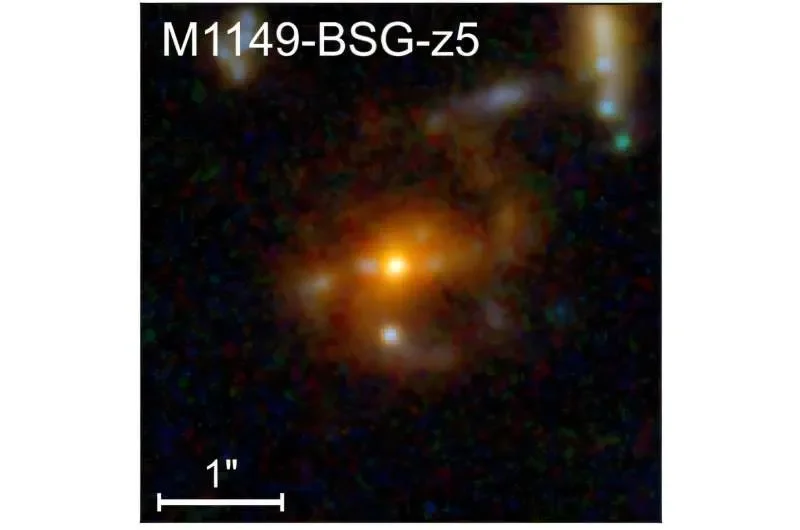
Read More: JWST Finds Oldest Barred Spiral Galaxy M1149-BSG-z5
future observatories, including the James Webb Space Telescope, the Nancy Grace Roman Space Telescope, and next-generation X-ray missions, are poised to offer unprecedented detail. these advancements, coupled with forthcoming gravitational wave detectors like the Einstein Telescope and Cosmic Explorer, promise a new epoch of 'multimessenger astronomy,' uniting different cosmic signals to deepen our comprehension of elemental origins.
historically, the formation of elements heavier than iron has been a puzzle. while some supernovas were long suspected as progenitors, they alone could not fully account for the observed abundance of these heavy elements. the recent focus on binary neutron star mergers and magnetar flares offers a more complete, albeit more turbulent, picture of galactic nucleosynthesis. these dense elements, critical to technologies ranging from medicine to agriculture, are not passively present but are actively forged and dispersed through the universe's most dramatic events.
Read More: New Room Temperature Photon Source for Quantum Tech in Korea