Recent analyses employing collisionless N-body dynamics models have reignited a long-standing discourse regarding the orbital trajectory of the Large Magellanic Cloud (LMC). This particular line of inquiry, focusing on the gravitational interactions between celestial bodies, seeks to ascertain whether the LMC is a newcomer to our galactic vicinity or a more established companion.
The core of the ongoing debate revolves around whether the LMC has made a single, recent pass through the Milky Way's gravitational influence, or if it has undertaken multiple orbits. A recent paper by Dr. Lucchini and co-authors aligns with the perspective that the LMC is indeed a first-time visitor, a stance that directly challenges a segment of the astronomical community that posits a history of repeated passages.
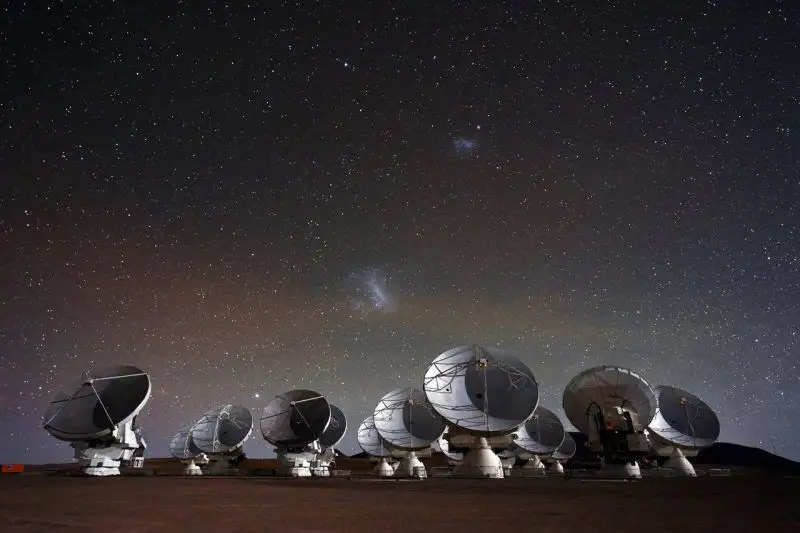
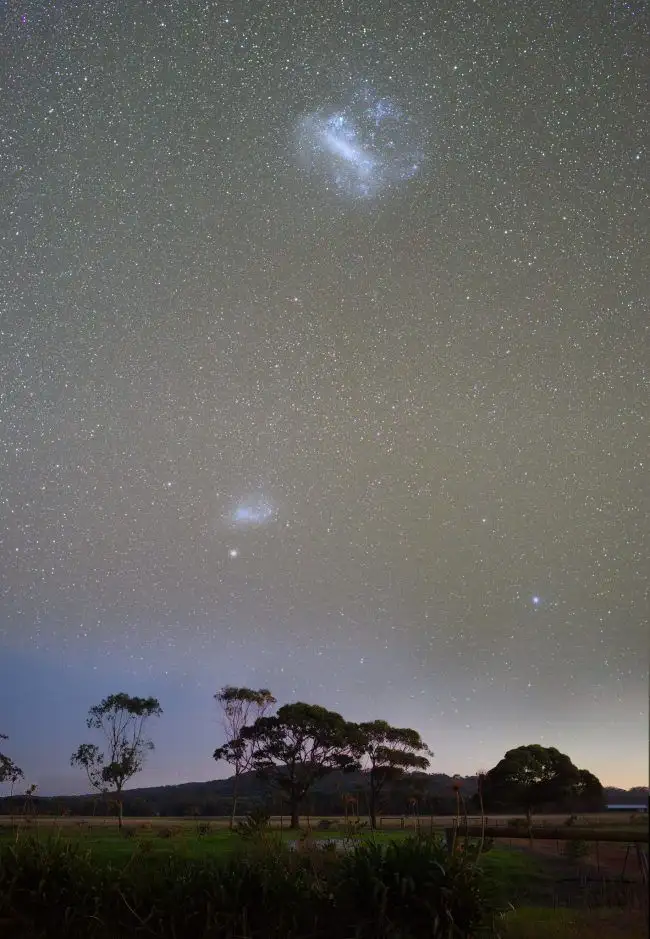
The LMC, a prominent dwarf galaxy, is situated approximately 160,000 light-years from Earth. It is characterized as one of the closest galactic neighbors to the Milky Way, appearing as a luminous patch in the southern sky. Its dimensions are significant, spanning about 14,000 light-years across, positioning it as the fourth-largest galaxy within the Local Group, trailing only the Andromeda Galaxy, the Milky Way itself, and the Triangulum Galaxy.
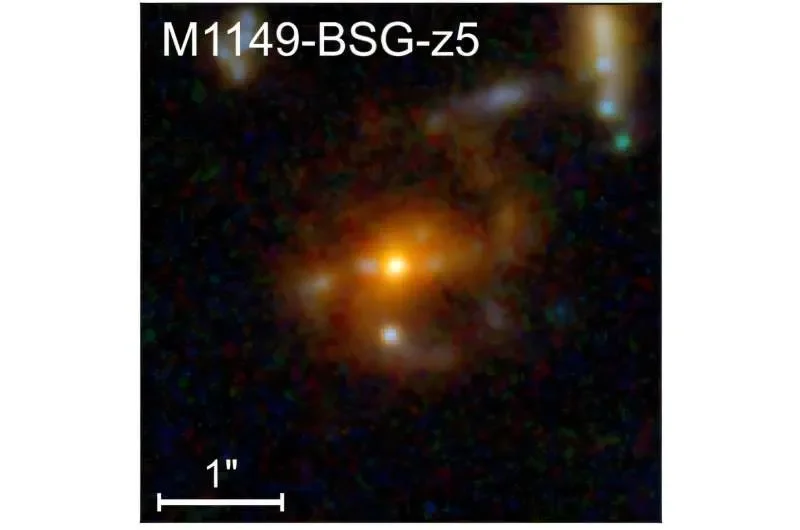
Read More: JWST Finds Oldest Barred Spiral Galaxy M1149-BSG-z5
A Complex Galactic Neighborhood
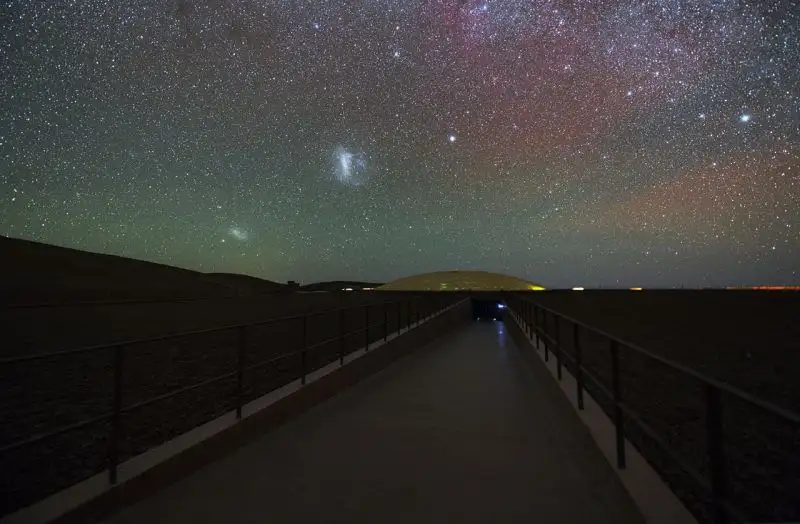
The LMC, alongside its smaller counterpart, the Small Magellanic Cloud (SMC), forms a pair of irregular dwarf galaxies that orbit the Milky Way. These clouds have been recognized as companions to our galaxy since the early 20th century. Historically, navigators utilized these visible celestial objects to orient themselves across southern oceans.
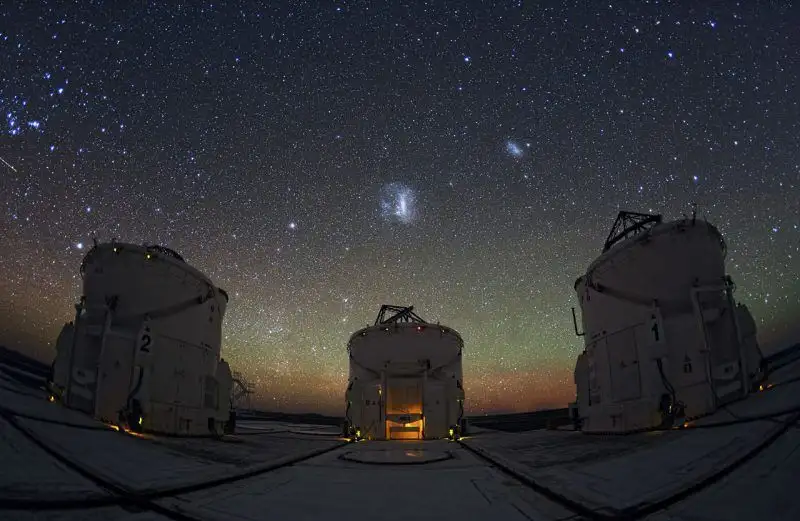
The LMC itself is a rich cosmic landscape, offering astronomers a wealth of observable phenomena. This includes nine massive supergiant shells, sixteen superbubbles, a prominent shimmering bar, the colossal Tarantula Nebula, numerous nebulae, fifteen ancient globular clusters, and a multitude of young star clusters. It also hosts the only known binary globular cluster. Compared to the Milky Way, the LMC is chemically primitive, presenting a distinct composition that distinguishes it from our own galaxy.
Read More: US Space Force Victus Haze Mission Successfully Tests Orbital Intercepts
Celestial Collision and Future Interactions
Despite its current orbital path, predictions suggest a future collision between the LMC and the Milky Way. This cosmic event is anticipated in approximately 2.4 billion years. The LMC's own structure is notable, featuring a significantly warped gaseous disk that extends roughly 10,000 light-years above and below its plane. The galaxy's immense stellar nurseries are constantly forming new stars, illuminating surrounding gas clouds in a vibrant display of cosmic activity.
Historically, the LMC was considered the nearest external galaxy. However, the discovery of the Sagittarius Dwarf Elliptical Galaxy in 1994, situated at a much closer distance of about 80,000 light-years, revised this understanding. The LMC's observable characteristics, when viewed from Earth, appear as a "beautiful shimmer of galactic light painted on a dark canvas sprinkled with stars," a visual testament to its complex and dynamic nature.
Read More: Astronomers' discoveries about comets and cosmic background radiation explained